Try GOLD - Free
MANIFESTING 500 GW
Down To Earth
|January 31, 2025
Ensure that renewable energy is available round the clock.Establish a viable market and reward those who take lead
-
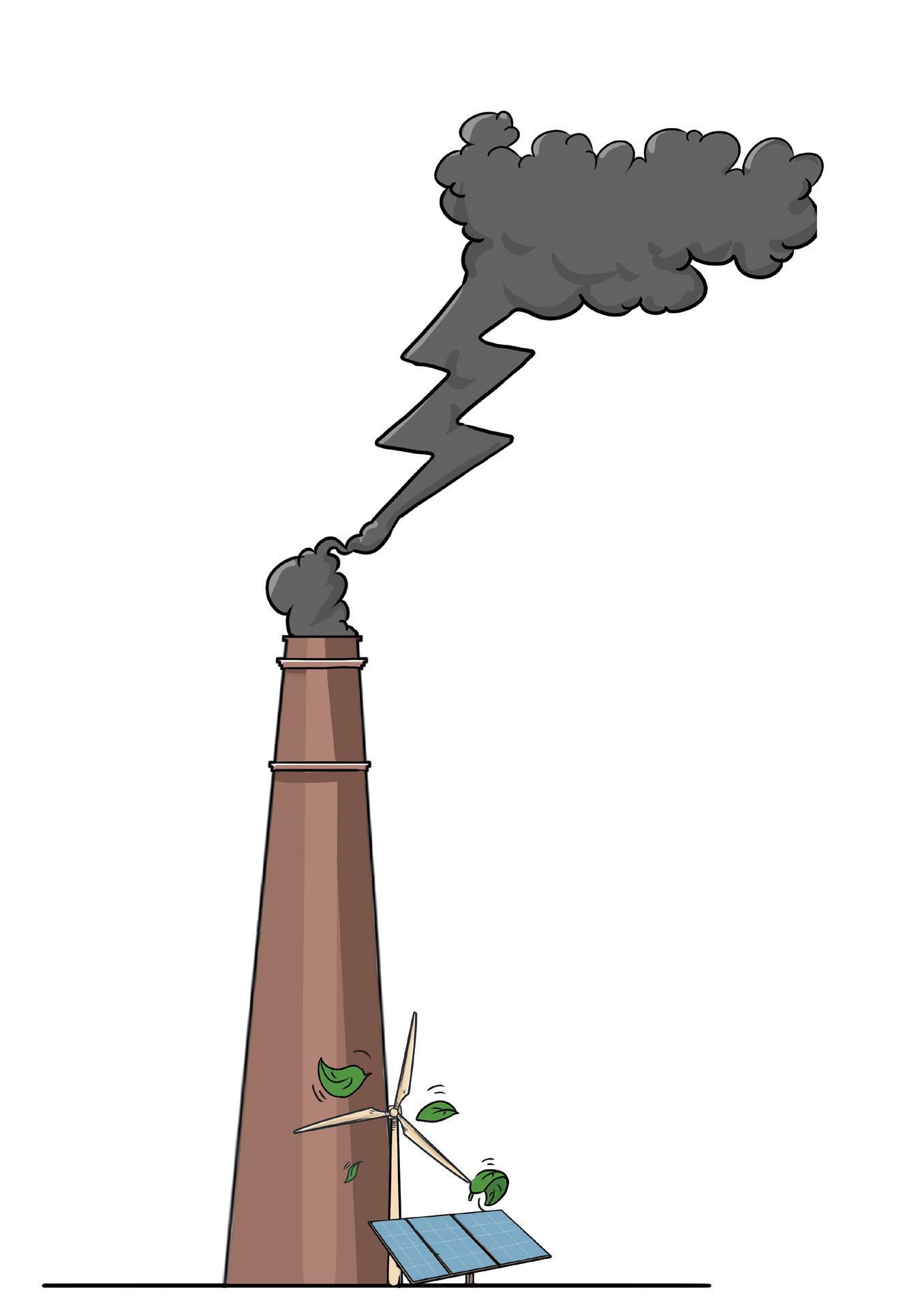
Given the intermittency of new renewables, it is now proposed that the country should move towards roundthe-clock (RTC) projects. In other words, solar and wind projects would include battery or pump storage. The "Economic Survey 2023-24" says the Union Ministry of Power has issued guidelines on tariffs for such projects, terming them as "firm and dispatchable power" from grid-connected renewable projects (FDRE). But will these projects with higher costs be viable for power purchase agreements (PPAS)? According to the "Economic Survey 202324", while inter-state transmission connected solar PV projects were bid out in the range of *2.6-2.74 per kWh, the cost of RTC projects go up to 6 per kWh (see 'Cost of renewable projects', p38 and 'Output intermittent', p42). As yet, little information is available about the commissioning of these projects. The RTC project listed under SECI's hybrid projects, with an effective PPA date of 2021, has not yet been commissioned. Industry insiders are wary of the price of delivered power and whether this will be acceptable to fund-stretched DISCOMS.
But there is another view: this price of RTC projects should remain competitive with that of fossil fuels, which score because of their ability to supply power throughout the year and time of the day.
OPTIMISE ON NATIONAL GRID THROUGH RPOS
The Electricity Act, 2003, mandates the Renewable Purchase Obligations (RPOS) as a mechanism to ensure that states with higher potential of renewables would be able to sell this to others; the mechanism makes it mandatory for all DISCOMS to purchase a certain percentage of their energy from renewable sources. As per this mandate, all states are required to meet 43.3 per cent of their total consumption of electricity from renewable sources by 2030.

This story is from the January 31, 2025 edition of Down To Earth.
Subscribe to Magzter GOLD to access thousands of curated premium stories, and 10,000+ magazines and newspapers.
Already a subscriber? Sign In
MORE STORIES FROM Down To Earth

Down To Earth
BEYOND COLLATERAL DAMAGE
Recent geopolitical conflicts are urging a reconsideration of what constitutes environmental harm in war and the limits of existing legal frameworks

3 mins
April 01, 2026

Down To Earth
Masterstroke
Residents of a small Kerala town reject an inadequate state-led development blueprint and create their own master plan that prioritises protection of historic water systems and urban commons
4 mins
April 01, 2026

Down To Earth
Rethinking E20
It is pertinent to explore potential of ethanol as high-value industrial feedstock
4 mins
April 01, 2026
Down To Earth
Food in the age of climate change
WHEN WE eat, we contribute to climate change. But food is also about livelihoods, about nutrition and about nature.
3 mins
April 01, 2026

Down To Earth
FADING WINTER
India's winters are warming, becoming shorter, shifting and spilling beyond their traditional bounds. The consequences are already evident in meltwater availability, forest-fire intensity and changes in flowering cycles and insect behaviour.
20 mins
April 01, 2026

Down To Earth
War on Iran strikes India's pharmaceuticals sector
Shortages of critical raw materials and rising input costs for the drug industry will have global consequences
4 mins
April 01, 2026

Down To Earth
POWER IN AN AGE OF INSECURITY
Energy transition is no longer solely about emission reduction but also about energy security
3 mins
April 01, 2026
Down To Earth
Re-discovery of fuelwood
THE WEST Asia conflict has made visible a multi-billion dollar energy market in India.
2 mins
April 01, 2026

Down To Earth
A CASE THAT RESHAPED INDIA'S ENVIRONMENT
The case of MC Mehta v Union of India stands as proof that a proactive judiciary can accelerate action even when the executive drags its feet
4 mins
April 01, 2026
Down To Earth
FOREVER DEPENDENT
India depends on global fertiliser supply chains for 70 per cent of its needs, leaving its food security exposed to geopolitical disruptions
6 mins
April 01, 2026
Listen
Translate
Change font size