
Go Unlimited with Magzter GOLD
Get unlimited access to 10,000+ magazines, newspapers and Premium stories for just
Try GOLD - Free
A generation in protest
Down To Earth
|October 01, 2025
ON SEPTEMBER 1, there were 30 anti-government protests globally, according to Carnegie's global protest tracker. In the 12 months prior to this, the world witnessed 159 anti-government protests in 71 countries. What defines these protests is an overwhelming participation from youth. “The proportion of people willing to participate in demonstrations has increased to its highest levels since the 1990s, and the number of protests has also risen in this period,” says a Unicef report. Massive protests have caused change in regimes in Nepal, Bangladesh and Sri Lanka.
The youth-led protests are driven by mass appeal and without formal leadership. They are happening in more informal political spaces and seeing a change in agenda—from being against liberalisation in the early 2000s to climate justice to food and energy inflation; and now to direct action for a change in regime to inequality and the feeling of marginalisation. According to a study, youth protests aiming at regime change, like in Bangladesh and Nepal, have grown since 1990. Interestingly, the protests are seen across poor, developing and developed countries.
One analysis says that from November 2021 to October 2022, protests against the cost-of-living crisis (including food and energy inflation) triggered 12,500 protests and riots in 150 countries. Students led nearly 10 per cent of the protests. In many cases, protests for local issues spread to neighbouring countries. For instance, the Arab Spring in the 2010s started from protests in Tunisia against economic hardship that spread to Egypt, Libya, Syria and Yemen.
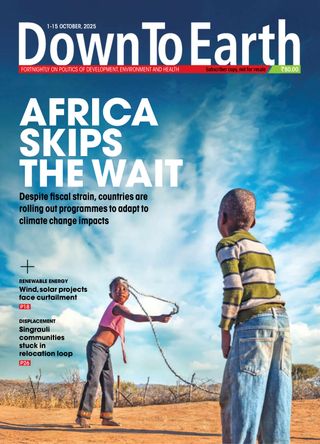

This story is from the October 01, 2025 edition of Down To Earth.
Subscribe to Magzter GOLD to access thousands of curated premium stories, and 10,000+ magazines and newspapers.
Already a subscriber? Sign In
MORE STORIES FROM Down To Earth

Down To Earth
Bitter pill
THE WEB SERIES PHARMA EXPOSES HARSH TRUTHS OF THE PHARMACEUTICAL INDUSTRY, WHERE PROFIT OFTEN BECOMES MORE IMPORTANT THAN HUMAN HEALTH

3 mins
January 16, 2026
Down To Earth
CHAOS IN-DEFINITION
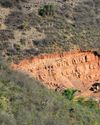
The Aravallis are perhaps India's most litigated hill range. More than 4,000 court cases have failed to arrest their destruction. The latest dispute concerns a narrow legal definition of this geological antiquity, much of which has been obliterated by mining and urban sprawl. While the Supreme Court has stayed its own judgement accepting that definition, it must see the underlying reality and help reconcile development and national security with conservation.
19 mins
January 16, 2026
Down To Earth
BITS: INDIA
Indore has recorded 16 deaths and more than 1,600 hospitalisations between December 24 and January 6.
1 min
January 16, 2026
Down To Earth
GUARANTEE EXPIRES
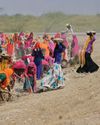
India's rural employment guarantee law is replaced with a centrally controlled, budget-capped scheme. Is this an attack on the right to work?
3 mins
January 16, 2026

Down To Earth
BLOOM OR BANE
Surge of vibrant pink water lilies in Kuttanad, Kerala, provides socio-economic benefits, but the plant's ecological impacts must be understood
4 mins
January 16, 2026
Down To Earth
INVISIBLE EMPLOYER
Field and academic evidence shows sharp falls in casual agricultural employment at places where groundwater access declines
3 mins
January 16, 2026

Down To Earth
Schemed for erasure
Does the VB-G RAMG Act address structural weaknesses long observed in MGNREGA's implementation?
10 mins
January 16, 2026

Down To Earth
School of change
An open school in Panagar, Madhya Pradesh, aims to protect children of tribal settlements from falling into the trap of addiction
2 mins
January 16, 2026

Down To Earth
PULSE OF RESILIENCE
As a climate-ready crop, cowpea shows potential for widespread use in India
3 mins
January 16, 2026
Down To Earth
BITS GLOBAL
Britain recorded its hottest and sunniest year ever in 2025, the country's meteorological office said on January 2.
1 min
January 16, 2026
Listen
Translate
Change font size