
Go Unlimited with Magzter GOLD
Get unlimited access to 10,000+ magazines, newspapers and Premium stories for just
Try GOLD - Free
Space myths BUSTED
BBC Sky at Night Magazine
|June 2025
From frozen astronauts to rampaging black holes, Alastair Gunn debunks 10 things you thought you knew about space
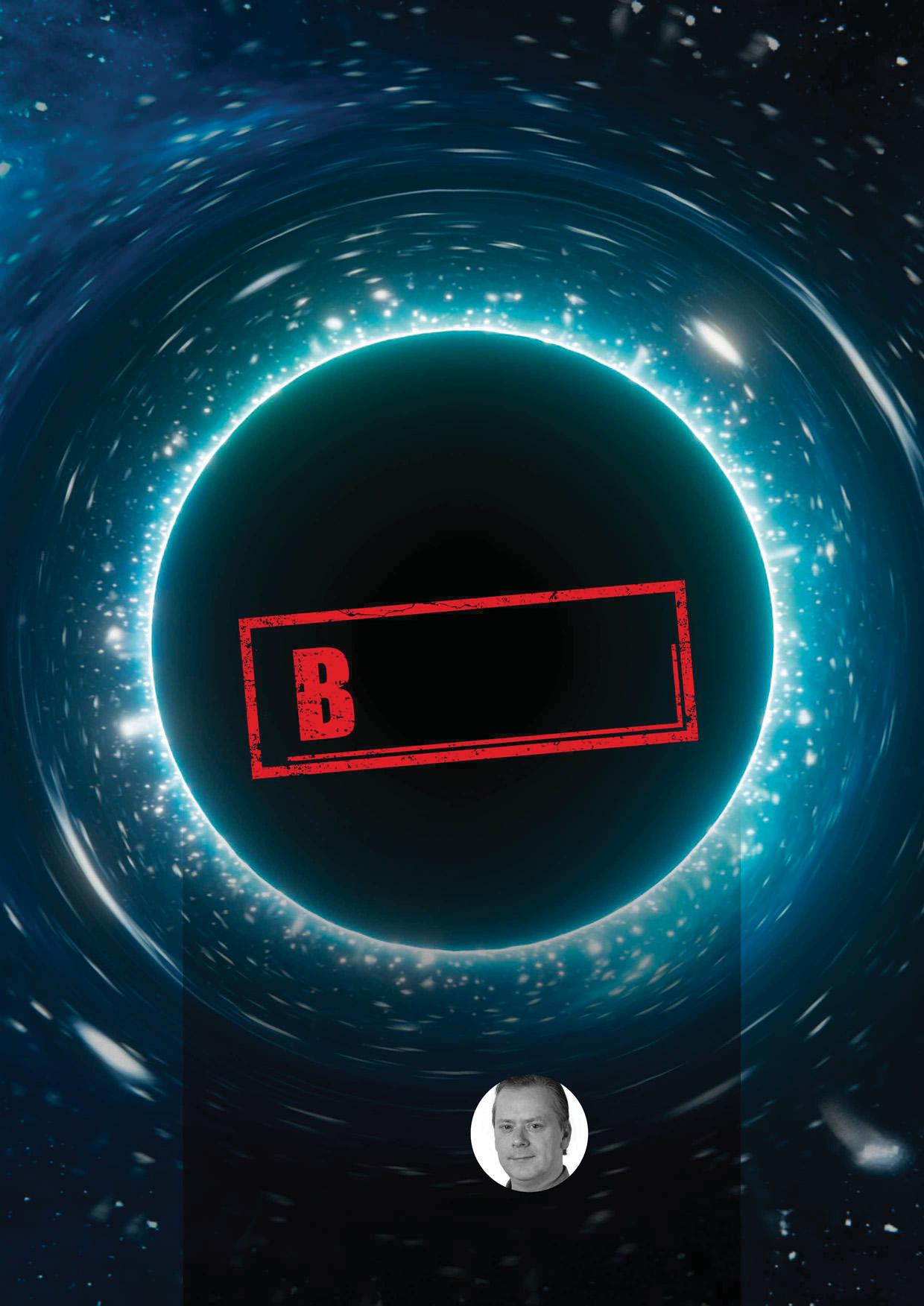
The Universe is a big and complex beast, and doesn't always behave in the way we might expect. So it's not surprising that there are many misconceptions and misunderstandings about space.
Some common myths - like the belief that there's a 'dark side' to the Moon, for example - arise because people generally don't have a reason (or time) to question them. Others arise because they're promoted on TV, in films and online. And some simply persist because, without detailed inspection, they seem perfectly plausible. But in the Universe, not everything is as it seems...
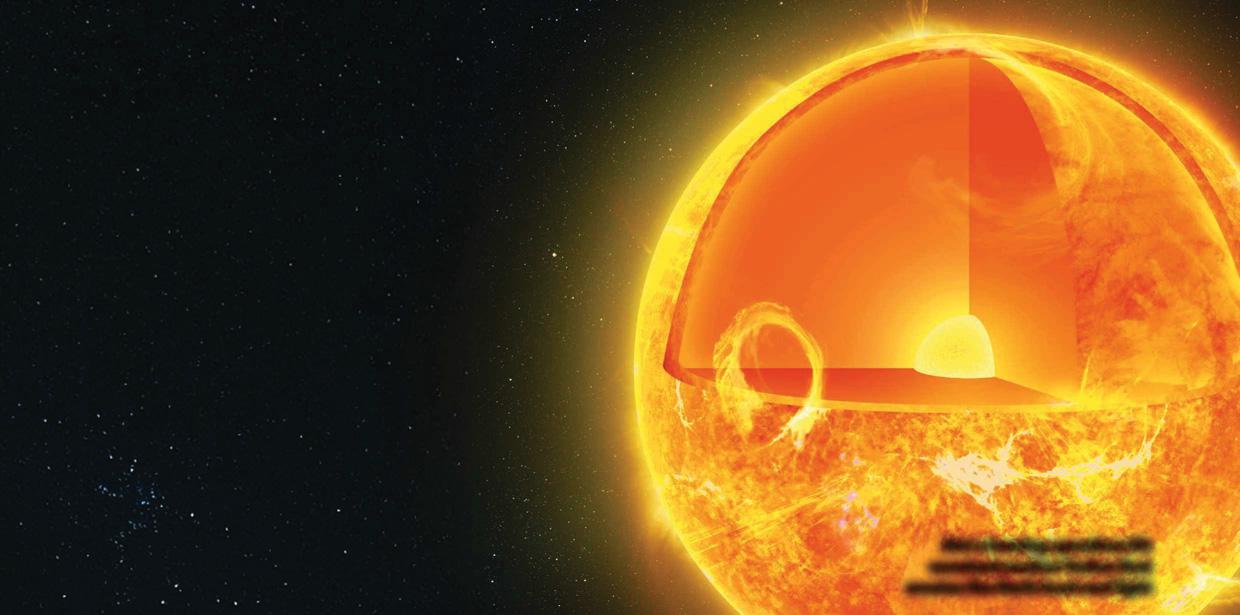 MYTH: The Sun is on fire
Our star certainly looks like a flaming inferno, but that’s not what's really going on...
The idea that the Sun is somehow burning has been around since ancient times. The Sun's heat and light were often attributed to molten metal or burning coal. But, armed with new knowledge of chemistry and thermodynamics, 19th-century scientists realised that no form of chemical energy was sufficient to fuel the Sun for more than a few thousand years. Instead of chemically combining with oxygen, like carbon does when coal is burnt, the Sun's fuel is undergoing thermonuclear reactions. Most of its energy is produced by the fusion of hydrogen into helium deep in the Sun's core, where temperature and pressure are huge.
Astronomers calculate the Sun is losing about 4.26 million tonnes of mass every second due to fusion (140 quadrillion tonnes per year). Since the Sun's mass is about 2 octillion tonnes, this is only 0.000000007 per cent of the Sun's total mass. So even at the end of its life, in about five billion years, the Sun will still have 99.966 per cent of its current mass.

This story is from the June 2025 edition of BBC Sky at Night Magazine.
Subscribe to Magzter GOLD to access thousands of curated premium stories, and 10,000+ magazines and newspapers.
Already a subscriber? Sign In
MORE STORIES FROM BBC Sky at Night Magazine
BBC Sky at Night Magazine
The Giant Leap: Why Space is the Next Frontier in the Evolution of Life
“Earth is the cradle of humanity, but one cannot live in the cradle forever,” wrote Konstantin Tsiolkovsky in 1911.

1 mins
February 2026
BBC Sky at Night Magazine
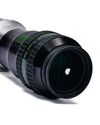
Tele Vue Nagler Type-7 series eyepieces
These premium optics were inspired by Apollo - and deliver a giant leap to your views
4 mins
February 2026
BBC Sky at Night Magazine
Once Upon a Time in Space
While the Space Race of the Cold War years was ultimately a geopolitical contest between the USA and the Soviet Union, the rivalry sparked rapid innovation and inspired multiple generations to look skyward.
1 mins
February 2026
BBC Sky at Night Magazine
The Multiverse: When One Universe Isn't Enough
The concept of a 'multiverse' – the idea that our Universe may be just one of many – is widespread in science fiction and a common thread of online discussions.
1 mins
February 2026
BBC Sky at Night Magazine
Q&A WITH A GAMMA RAY SPECIALIST
In 2025, astronomers detected a blast from space that lasted seven hours. Now they're uncovering the strange processes behind the exceptional outburst
3 mins
February 2026
BBC Sky at Night Magazine
Astronomy Photographer of the Year
The world-leading astrophotography competition returns. Could your image take the top prize of £10,000?
2 mins
February 2026
BBC Sky at Night Magazine
MOONWATCH
February's top lunar feature to observe
2 mins
February 2026
BBC Sky at Night Magazine
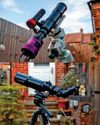
NOVAStar Scarlet A62Q 62mm f/8.4 quadruplet achromatic refractor
Well-built and capable, this beginner scope punches well above its bargain price
4 mins
February 2026
BBC Sky at Night Magazine
STAR OF THE MONTH
Rasalas, Leo the Lion's metal-rich crown
1 min
February 2026
BBC Sky at Night Magazine
Comet 24P/Schaumasse
Having reached perihelion on 8 January, comet 24P/ Schaumasse is now fading. Starting the month at a small-telescope-friendly mag. +10.5, it dims throughout February to below 12th magnitude.
1 min
February 2026
Listen
Translate
Change font size