
Go Unlimited with Magzter GOLD
Get unlimited access to 10,000+ magazines, newspapers and Premium stories for just
How animals use the stars
BBC Sky at Night Magazine
|May 2025
The animal world is intricately entwined with the night sky. Naturalist Megan Shersby looks at some fascinating ways that animals take their cues from the cosmos
-
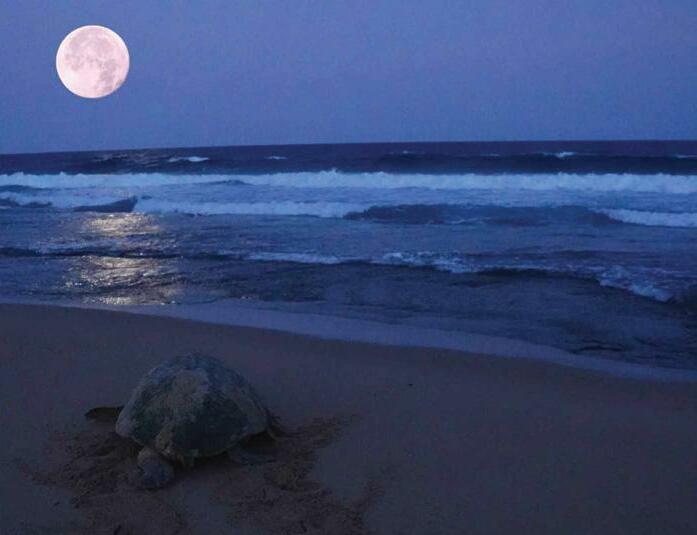
Humans have long marvelled at the night sky above us, inspired by the Moon and the stars to invent stories and myths, travel the oceans and learn more about the Universe in which we live. At the same time, animals have also been using celestial cues to orient themselves. From tiny foraging ants and dung-rolling beetles using moonlight, to birds navigating their migration by the stars, a wide variety of species rely on the night sky to thrive and survive.
Sea turtles
Both the female turtles that lay their eggs on their natal beach and the hatchlings that emerge a few weeks later head towards the brightest horizon to enter the ocean, where the water reflects the light of the Moon - avoiding the darker landward silhouettes. However, artificial lights from urban developments disorient them and they can end up circling the beach in confusion or worse, head towards our roads and buildings - sometimes with fatal consequences.
Moths
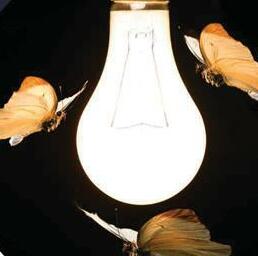 It's well known that many moth species will fly towards a candle, lamp or other light source - a behaviour called positive phototaxis - and it's been theorised that this is because they are mistaking it for a celestial cue that they would use for orientation.
A recent study using three-dimensional flight data suggests that nocturnal moths turn their back on the brightest light - historically the Moon and the sky - and this would tell them which way was up. With the introduction of other, human-made sources of illumination, the insects become trapped in a loop, sometimes flying upside down and occasionally causing an insect to crash. The scientists suggest that the moths are not attracted to artificial lights but trapped by them, similar to being caught in a net.
Bats

This story is from the May 2025 edition of BBC Sky at Night Magazine.
Subscribe to Magzter GOLD to access thousands of curated premium stories, and 10,000+ magazines and newspapers.
Already a subscriber? Sign In
MORE STORIES FROM BBC Sky at Night Magazine
BBC Sky at Night Magazine
MOONWATCH
January's top lunar feature to observe

2 mins
January 2026
BBC Sky at Night Magazine
Speed up your processing workflow
How to use Photoshop's Actions tool to drastically cut your processing time
3 mins
January 2026
BBC Sky at Night Magazine
Chasing Canada's polar lights
With solar maximum peaking and a new Moon promising dark skies, Jamie Carter travels to Churchill, Manitoba to hunt the Northern Lights - and dodge polar bears – in Canada's far north
7 mins
January 2026
BBC Sky at Night Magazine
Beyond Pluto: The search for the hidden planets
Could one – or even two - undiscovered planets lurk at the edges of our Solar System? Nicky Jenner explores how close we are to finding the elusive 'Planet 9'
6 mins
January 2026
BBC Sky at Night Magazine
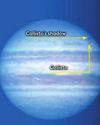
Jupiter moon events
Jupiter is a magnificent planet to observe.
2 mins
January 2026
BBC Sky at Night Magazine
What samples from space have taught us
Alastair Gunn explains what scientists have learnt in the 20 years since the first unmanned mission brought materials back from alien worlds
3 mins
January 2026
BBC Sky at Night Magazine
The Milky Way as you've never seen it before
This is the largest low-frequency radio colour image of our Galaxy ever assembled
1 min
January 2026
BBC Sky at Night Magazine
Merger of ‘impossibly' massive black holes explained
Scientists discover how enormous, fast-spinning black holes can exist after all
1 mins
January 2026
BBC Sky at Night Magazine
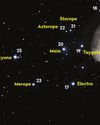
Lunar occultation of the Pleiades
BEST TIME TO SEE: 27 January from 20:30 UT
1 min
January 2026
BBC Sky at Night Magazine
The Universe's expansion may be slowing down
New study suggests current theories of dark energy could be wrong
1 mins
January 2026
Listen
Translate
Change font size