
Go Unlimited with Magzter GOLD
Get unlimited access to 10,000+ magazines, newspapers and Premium stories for just
CUTTING EDGE
BBC Sky at Night Magazine
|September 2022
Our experts examine the hottest new research

Fireball over Jupiter outshines the Sun
The bright flash was caused by an impact the size of the Tunguska event
The spectacular collision of the comet Shoemaker-Levy 9 into Jupiter in 1994 was watched closely by observatories and space probes, and made headlines around the world. Since 2010, six impact flashes on Jupiter have been serendipitously observed, including by amateur astronomers. A simple brightness measurement allows for an estimate of the energy of such impacts, but far more accurate calculations can be made if they are recorded at several different wavelengths.
Ko Arimatsu, at the Astronomical Observatory, Kyoto University, and his colleagues have been using the Planetary ObservatioN Camera for Optical Transient Surveys (PONCOTS), dedicated to monitoring flashes on Jupiter. The system is made up of a 28cm Schmidt-Cassegrain telescope on a rooftop at the university, equipped with two CMOS cameras. This setup allows the astronomers to observe flashes on Jupiter at three different wavelengths simultaneously: the V visible band in the yellow and two near-infrared bands.
On 15 October 2021, Arimatsu and his team observed a particularly bright impact flash on Jupiter, occurring within the north tropical zone. The peak apparent brightness of the flash in the visible band was mag. 4.7, equivalent to an absolute magnitude of -29.0: roughly 300 times brighter than the Sun at Jupiter. And because their PONCOTS system can observe with a high frame rate across three wavelengths simultaneously, they were able to record this impact flash with unprecedented detail.
How big was the bang?


This story is from the September 2022 edition of BBC Sky at Night Magazine.
Subscribe to Magzter GOLD to access thousands of curated premium stories, and 10,000+ magazines and newspapers.
Already a subscriber? Sign In
MORE STORIES FROM BBC Sky at Night Magazine
BBC Sky at Night Magazine
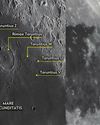
MOONWATCH
January's top lunar feature to observe

2 mins
January 2026
BBC Sky at Night Magazine
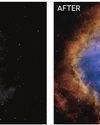
Speed up your processing workflow
How to use Photoshop's Actions tool to drastically cut your processing time
3 mins
January 2026
BBC Sky at Night Magazine
Chasing Canada's polar lights
With solar maximum peaking and a new Moon promising dark skies, Jamie Carter travels to Churchill, Manitoba to hunt the Northern Lights - and dodge polar bears – in Canada's far north
7 mins
January 2026
BBC Sky at Night Magazine
Beyond Pluto: The search for the hidden planets
Could one – or even two - undiscovered planets lurk at the edges of our Solar System? Nicky Jenner explores how close we are to finding the elusive 'Planet 9'
6 mins
January 2026
BBC Sky at Night Magazine
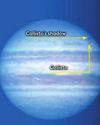
Jupiter moon events
Jupiter is a magnificent planet to observe.
2 mins
January 2026
BBC Sky at Night Magazine
What samples from space have taught us
Alastair Gunn explains what scientists have learnt in the 20 years since the first unmanned mission brought materials back from alien worlds
3 mins
January 2026
BBC Sky at Night Magazine
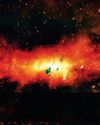
The Milky Way as you've never seen it before
This is the largest low-frequency radio colour image of our Galaxy ever assembled
1 min
January 2026
BBC Sky at Night Magazine
Merger of ‘impossibly' massive black holes explained
Scientists discover how enormous, fast-spinning black holes can exist after all
1 mins
January 2026
BBC Sky at Night Magazine
Lunar occultation of the Pleiades
BEST TIME TO SEE: 27 January from 20:30 UT
1 min
January 2026
BBC Sky at Night Magazine
The Universe's expansion may be slowing down
New study suggests current theories of dark energy could be wrong
1 mins
January 2026
Translate
Change font size