
Go Unlimited with Magzter GOLD
Get unlimited access to 10,000+ magazines, newspapers and Premium stories for just
We finally know why men don't live as long as women, say scientists
BBC Science Focus
|November 2025
Males that spend less energy on sex and more on raising their children tend to live longer
-
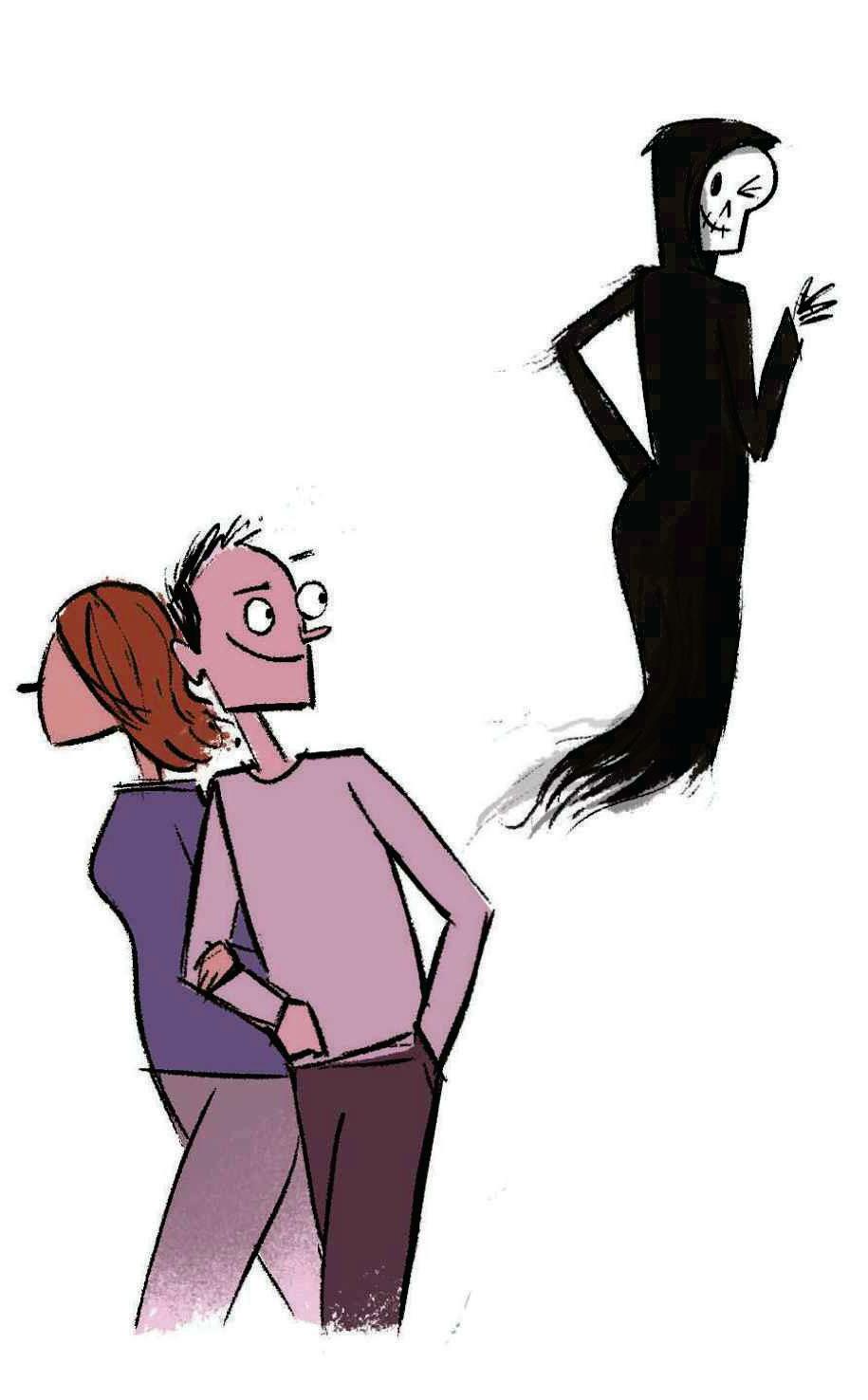
A group of researchers at Germany’s Max Planck Institute for Evolutionary Anthropology has been trying to find out why men tend to live shorter lives than women.
Their study, published in Science Advances, examined over 1,000 animals to track down common evolutionary traits in species where one sex tends to outlast another.
They discovered that although genetics does seem to play a part, monogamy and child-rearing also affect lifespans.
In humans, women live an average of 5.4 years longer than men, but we're not the only species where that happens. In fact, in 72 per cent of mammals, females outlast their male counterparts by an average of 12 per cent.

This story is from the November 2025 edition of BBC Science Focus.
Subscribe to Magzter GOLD to access thousands of curated premium stories, and 10,000+ magazines and newspapers.
Already a subscriber? Sign In
MORE STORIES FROM BBC Science Focus

BBC Science Focus
HOW UNLIKELY IS OUR UNIVERSE?
Our understanding of the Universe has revealed that its existence, and indeed our own, relies on a particular set of rules.

1 mins
December 2025

BBC Science Focus
DOES YOUR NAME AFFECT YOUR PERSONALITY?
Research is revealing that nominative determinism isn't as easy to dismiss as you might think
5 mins
December 2025

BBC Science Focus
HOW DIFFICULT WOULD IT BE TO FLY THROUGH THE ASTEROID BELT?
In the 1980 film Star Wars: The Empire Strikes Back, Han Solo and friends try to escape pursuing imperial forces by flying through an asteroid field. Droid C-3PO remarks, \"the odds of successfully navigating an asteroid field is approximately 3,720 to 1\". The scene depicts a chaotic, dense field of rocks swirling and spinning through space. This scenario has been played out many times in the cinema.
1 min
December 2025

BBC Science Focus
HOW CAN I BE MORE PERSUASIVE?
Most of us like to think we're rational people. If someone shows us evidence that we're wrong, we'll change our minds, right? Well, not necessarily, because it's not always that simple. Being wrong feels uncomfortable and sometimes threatening. That's why changing someone's mind is often much harder than it seems.
2 mins
December 2025

BBC Science Focus
This bizarre optical illusion could teach us how animals think
By seeing which animals fall for a classic visual trick, scientists are uncovering how different brains make sense of the world
1 mins
December 2025

BBC Science Focus
LIFE AT THE PARTY
The secret that keeps the superagers so sprightly could be socialising
3 mins
December 2025

BBC Science Focus
AIN'T NO MOUNTAIN HIGH ENOUGH
Could an exoskeleton help you scale every peak with ease? Ezzy Pearson straps on some cyborg enhancements to find out
5 mins
December 2025

BBC Science Focus
A slice across the sky
The green flash slicing through the skies in this shot is a fireball.
1 min
December 2025

BBC Science Focus
TB is surging. Should we be worried?
Cases of the world's deadliest infection are climbing in the UK and US. Why is tuberculosis returning and how do we fight back?
4 mins
December 2025

BBC Science Focus
I survived the worst fire in the history of space exploration and had to keep it a secret
Astronaut Jerry Linenger opens up about one of the worst accidents in space, and the cover-up that followed
1 mins
December 2025
Listen
Translate
Change font size