Try GOLD - Free
UNCORKED POTENTIAL
BBC Science Focus
|January 2025
How much good can ditching drink for a month really do? Answer: a whole lot. In fact, science shows even short-term abstinence could unlock a cocktail of lasting benefits

As you might already be aware, January isn't the nicest month to give things up - it's cold, it's dark and those holiday TV marathons feel a lifetime away. Yet, in the aftermath of the festive season, Dry January is becoming increasingly popular an estimated 15 per cent of US adults (260 million people) and 9 million Brits took part in 2024. And, according to recent scientific findings, they had good reason to.
First of all, it's worth mentioning that unless you're a heavy-enough drinker to experience withdrawal when you stop, there are no drawbacks to a month without alcohol- or cutting it out of your life entirely.
"The best evidence shows that the relationship between alcohol consumption and health is basically linear it's probably not true that a small amount of alcohol is good for you," says Marcus Munafò, professor of biological psychology at the University of Bristol.
"This is why the World Health Organization has said that there's no 'safe' amount that doesn't affect health in any way."
In other words, absolute abstinence could be your key to a healthier life. But what if that feels completely unachievable, or just undesirable, right now? Whether you're deep into Dry January or planning a break later in the year, you'll be happy to know that a mere month of abstinence could bring lasting benefits. In fact, new research shows that taking a 30-day break can help transform your physical and mental wellbeing.
RAPID RECOVERY
Once you've made the decision to quit, the first benefits you're likely to experience can come surprisingly quickly. For regular drinkers, just 24 hours without alcohol can lead to improvements, such as better hydration and more stable blood sugar levels. From there - full disclosure - you might experience a slight slump for a couple of days as your dopamine levels stabilise. But persevere and the upswing should come.
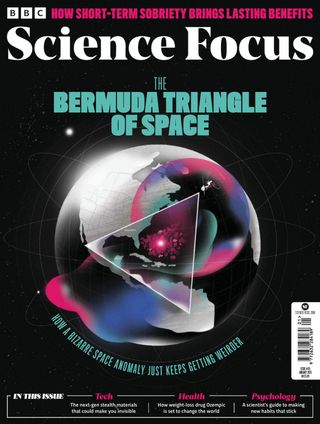

This story is from the January 2025 edition of BBC Science Focus.
Subscribe to Magzter GOLD to access thousands of curated premium stories, and 10,000+ magazines and newspapers.
Already a subscriber? Sign In
MORE STORIES FROM BBC Science Focus

BBC Science Focus
DOES MY DOG HAVE ADHD?
Officially, Attention-Deficit Hyperactivity Disorder (ADHD) is a human condition. People are diagnosed with it. Dogs are not. Yet many of its core features, including hyperactivity, impulsivity and distractibility, can be found in dogs.

1 min
March 2026

BBC Science Focus
DOES MY BRAIN LIVE A LITTLE IN THE PAST?
Yes, your brain does live a little in the past. It can't help it. The information it receives via your senses is always a little out of date. Whether it's light entering the retinas in your eyes, or sounds vibrating the hairs in your ears, it not only takes time for the data to arrive, but your brain then has to process it.
2 mins
March 2026

BBC Science Focus
ASTRONOMY FOR BEGINNERS
RETURN OF THE EVENING STAR (VENUS)
1 mins
March 2026

BBC Science Focus
CAN YOU STOP YOUR SENSE OF TASTE DULLING AS YOU AGE?
Sometimes I hear people say that food just doesn't taste the same as they get older. It's tempting to blame this on age, but there are other factors at play, too.
1 mins
March 2026

BBC Science Focus
MICROBIOMES OF THE SUPERAGERS
BY STUDYING THE INCREASING NUMBER OF PEOPLE WHO ARE LIVING BEYOND THEIR 100TH BIRTHDAYS, SCIENTISTS ARE DISCOVERING THAT THE SECRET TO REACHING A RIPE OLD AGE IN RUDE HEALTH MIGHT LIE IN OUR GUTS
8 mins
March 2026

BBC Science Focus
HOW BIG WERE MEDIEVAL WAR HORSES?
You might picture knights charging into battle on towering steeds, but medieval horses were typically no bigger than modern-day ponies.
1 min
March 2026

BBC Science Focus
FORCES OF HABIT
Could new research on setting up healthy habits resuscitate those stuttering New Year resolutions?
3 mins
March 2026

BBC Science Focus
5 DANGERS HIDING IN YOUR PROCESSED FOOD
We all know that ultra-processed foods are bad for us, but what ingredients should we particularly try to avoid? And what are they doing to our bodies?
9 mins
March 2026
BBC Science Focus
Mosquitoes are becoming thirstier for human blood
Habitat loss may be pushing mosquitoes towards human hosts with deadly consequences
1 mins
March 2026

BBC Science Focus
HOW CAN I GET OVER MY EX?
Relationship breakups can be brutal, just look at the popularity of songs like 'Someone Like You' by Adele, or all the covers of 'Cry Me a River' by Julie London.
1 mins
March 2026
Listen
Translate
Change font size