Try GOLD - Free
SIGNS OF LIFE
BBC Science Focus
|January 2026
The more planets we find outside our Solar System, the better our chances are of finding life on one of them. But if there really is life out there, how do we spot it?
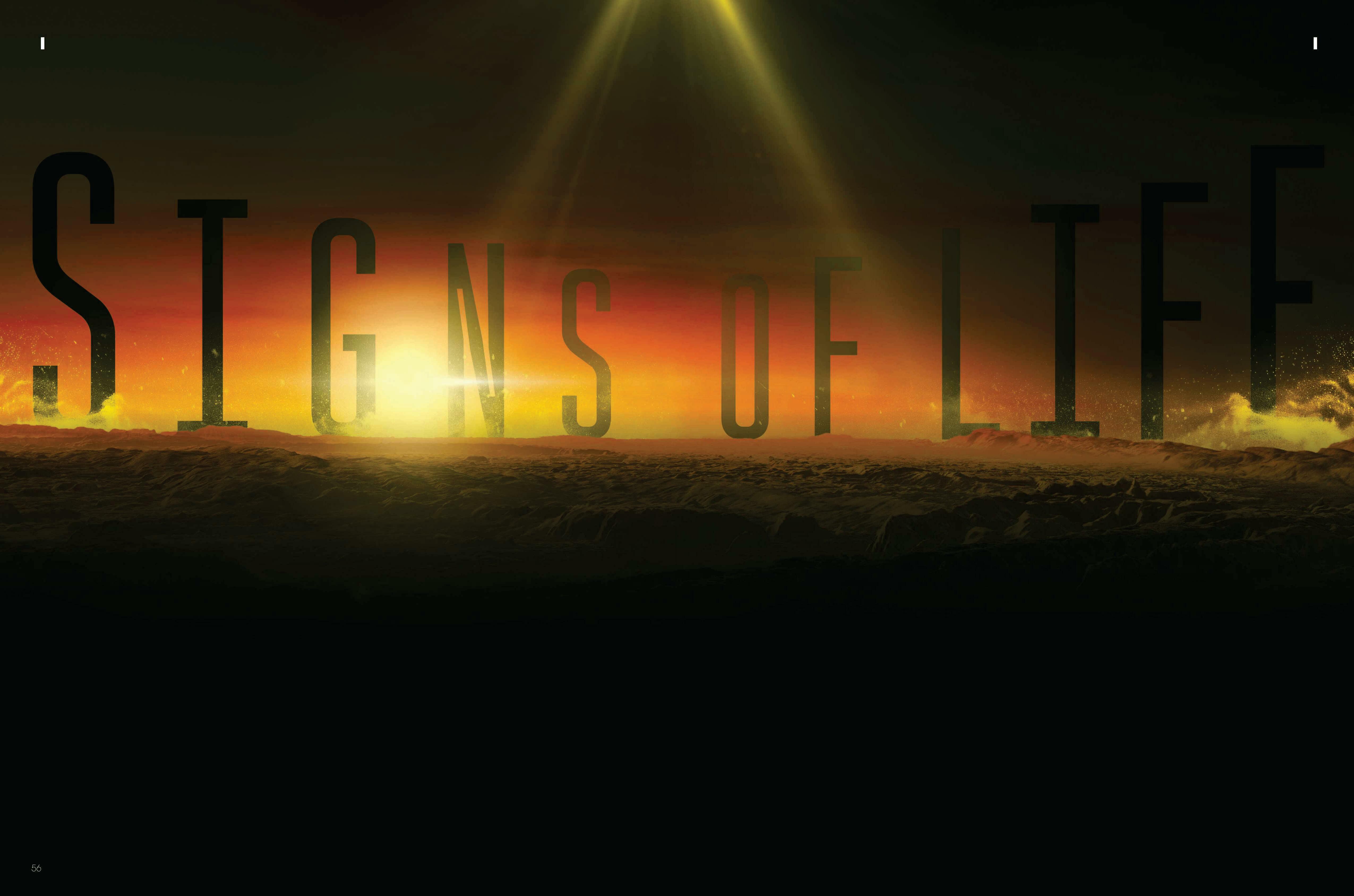
The first confirmed detection of an exoplanet, a planet outside our Solar System, came in 1992. We've found a lot more in the years since then. According to NASA, by the end of October 2025, the tally stood at over 6,000. But as astounding as that number may sound, the big question isn't how many exoplanets there are (more than we could ever count); it's how many of them can - or do - support life.
Answering that question is far from simple.
Exoplanets float far away from us, at unfathomably vast distances. Even the closest, the super-Earth Proxima Centauri b, is more than four light-years away (over 37 trillion kilometres or 22 trillion miles). If life is out there, spotting it won't be easy.
But scientists are coming up with new and innovative ways to improve the search. Alongside building bigger, more capable telescopes, they're considering multiple factors in their hunt - from a planet's colour to the combination of gases in its atmosphere, and even evidence of advanced technology.
PURPLE IS THE NEW GREEN
When you imagine a lush planet full of life, one colour springs to mind immediately: green. But recent research suggests that, when we're looking for alien life, we should be searching for other colours too.
Prof Lisa Kaltenegger, an astrophysicist and astrobiologist at Cornell University in the US, has been working to understand what characteristics microbial life might have if it developed on planets with environments unlike Earth's.
Based on her research, the colour she thinks we should be looking for is purple.


This story is from the January 2026 edition of BBC Science Focus.
Subscribe to Magzter GOLD to access thousands of curated premium stories, and 10,000+ magazines and newspapers.
Already a subscriber? Sign In
MORE STORIES FROM BBC Science Focus

BBC Science Focus
World's biggest cobweb is home to 100,000 spiders
Spiders don't normally create such large colonies, so there's no need to worry about finding one in your basement

1 min
February 2026

BBC Science Focus
A dementia vaccine could be gamechanging – and available already
Getting vaccinated against shingles could protect you from getting dementia, or slow the progression of the disease
1 mins
February 2026

BBC Science Focus
DATA IN SPACE
An unusual spacecraft reached orbit in November 2025, one that might herald the dawn of a new era.
7 mins
February 2026
BBC Science Focus
Climate change is already shrinking your salary
No matter where you live, a new study has found warmer temperatures are picking your pocket
4 mins
February 2026

BBC Science Focus
A MENTAL HEALTH GLOW-UP
Forget fine lines. Could Botox give you an unexpected mental health tweakment?
3 mins
February 2026
BBC Science Focus
Most people with high cholesterol gene don't know they have it
Standard testing struggles to detect the condition
1 mins
February 2026

BBC Science Focus
HOW CAN I BOOST MY IQ?
If you're serious about getting smarter, it's time to ditch the brain-training apps
4 mins
February 2026

BBC Science Focus
Humans are absolutely terrible at reading dogs' emotions
Think you can tell how our furry friends are feeling? Think again
1 mins
February 2026

BBC Science Focus
HOW TO TEACH AI RIGHT FROM WRONG
If we want to get good responses from AI, we may need to see what it does when we ask it to be evil
3 mins
February 2026

BBC Science Focus
What Australia's social media ban could really mean for under-16s
Many people think social media is bad for our kids. Australia is trying to prove it
5 mins
February 2026
Listen
Translate
Change font size