Try GOLD - Free
Olive mill wastewater: a health-boosting tonic hiding in the leftovers
BBC Science Focus
|October 2024
A by-product of the olive oil production process is packed with compounds that lower your cholesterol and reduce your risk of developing cancer.

Olive oil is well known for its health benefits. The star of the Mediterranean diet, it's rich in good fats, packed with antioxidants that have anti-inflammatory properties, and linked to a variety of improved health outcomes.
The olive oil production process does create a lot of waste products, though. Luckily, however, it seems one of them olive mill wastewater might be a potentially health-boosting product in its own right.
Admittedly, olive mill wastewater, or 'OMW' as it's typically called in the scientific literature, isn't a particularly appetising name for a trendy, new, nutrient-dense supplement. But, olive mill wastewater is exactly what the name suggests - the wastewater from olive oil production.
 It's one of many byproducts created when olives are milled and the oil is separated and filtered. To reduce such byproducts and improve profits, the waste is 'valorised' reused, recycled, composted or converted into more useful things that have value, including materials, chemicals or fuels.
The solid waste products from olive oil production - olive pomace, olive oil sediment, olive pit residue and spent olive cake – can all be used as animal feed, compost or biomass fuel.
The liquid waste from the extraction process, which includes water added as part of the processing, is the olive mill wastewater, a dark, cloudy, bitter and slightly acidic liquid-millions of litres of which are generated each year. As a byproduct, it's considered the most harmful waste from olive oil production - its high organic load and phenolic content are a significant environmental concern. If it's not properly managed and treated before release (which adds to the cost of production), it can contaminate waterways and soil, and be toxic to plants and animals.

This story is from the October 2024 edition of BBC Science Focus.
Subscribe to Magzter GOLD to access thousands of curated premium stories, and 10,000+ magazines and newspapers.
Already a subscriber? Sign In
MORE STORIES FROM BBC Science Focus

BBC Science Focus
HOW UNLIKELY IS OUR UNIVERSE?
Our understanding of the Universe has revealed that its existence, and indeed our own, relies on a particular set of rules.

1 mins
December 2025

BBC Science Focus
DOES YOUR NAME AFFECT YOUR PERSONALITY?
Research is revealing that nominative determinism isn't as easy to dismiss as you might think
5 mins
December 2025
BBC Science Focus
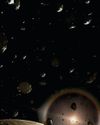
HOW DIFFICULT WOULD IT BE TO FLY THROUGH THE ASTEROID BELT?
In the 1980 film Star Wars: The Empire Strikes Back, Han Solo and friends try to escape pursuing imperial forces by flying through an asteroid field. Droid C-3PO remarks, \"the odds of successfully navigating an asteroid field is approximately 3,720 to 1\". The scene depicts a chaotic, dense field of rocks swirling and spinning through space. This scenario has been played out many times in the cinema.
1 min
December 2025

BBC Science Focus
HOW CAN I BE MORE PERSUASIVE?
Most of us like to think we're rational people. If someone shows us evidence that we're wrong, we'll change our minds, right? Well, not necessarily, because it's not always that simple. Being wrong feels uncomfortable and sometimes threatening. That's why changing someone's mind is often much harder than it seems.
2 mins
December 2025

BBC Science Focus
This bizarre optical illusion could teach us how animals think
By seeing which animals fall for a classic visual trick, scientists are uncovering how different brains make sense of the world
1 mins
December 2025

BBC Science Focus
LIFE AT THE PARTY
The secret that keeps the superagers so sprightly could be socialising
3 mins
December 2025

BBC Science Focus
AIN'T NO MOUNTAIN HIGH ENOUGH
Could an exoskeleton help you scale every peak with ease? Ezzy Pearson straps on some cyborg enhancements to find out
5 mins
December 2025
BBC Science Focus
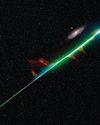
A slice across the sky
The green flash slicing through the skies in this shot is a fireball.
1 min
December 2025

BBC Science Focus
TB is surging. Should we be worried?
Cases of the world's deadliest infection are climbing in the UK and US. Why is tuberculosis returning and how do we fight back?
4 mins
December 2025

BBC Science Focus
I survived the worst fire in the history of space exploration and had to keep it a secret
Astronaut Jerry Linenger opens up about one of the worst accidents in space, and the cover-up that followed
1 mins
December 2025
Listen
Translate
Change font size