
Go Unlimited with Magzter GOLD
Get unlimited access to 10,000+ magazines, newspapers and Premium stories for just
Try GOLD - Free
GOING DEEP
BBC Science Focus
|March 2025
An advanced new research station is being developed to explore the potential for a human settlement under the ocean
-
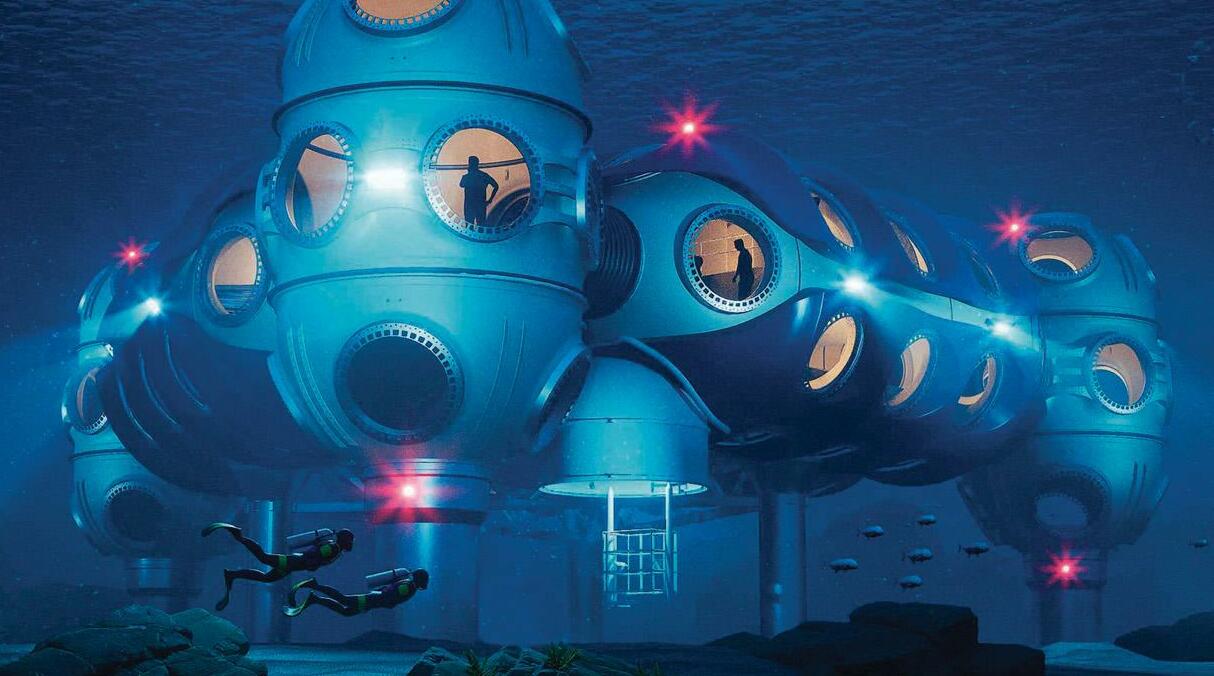
Whether it’s to escape environmental collapse or to explore new, unknown territories, the drive to establish human colonies in places other than on Earth has been gaining momentum in recent years. And while proposed bases on the Moon or Mars might get all the headlines, there’s another equally hostile and largely unknown location a lot closer to home that explorers are also looking towards: the bottom of the ocean.
This is by no means a new idea. Starting with French oceanographer Jacques Cousteau in the 1960s, people have been building and spending limited amounts of time in underwater habitats for decades. More recently, NASA has been sending people to the Aquarius Reef Base, a research facility on the ocean floor just off the coast of Florida, since 2001. Located 20m (approx 65ft) below the surface, scientists, engineers and prospective astronauts typically spend 7–14 days in the module.
New technology is making the prospect of longer-duration stays underwater possible, though, and British company, Deep, is employing it to develop habitats specifically for that purpose. The tech may be up to the task, but the real question is, are we?
ABOVE THE ATMOSPHERE, BELOW THE SEA
Humans are relatively weak. We don’t do well without oxygen or sunlight, and we’re not big fans of major changes in pressure. In other words, we’re not necessarily the best candidates for life at the bottom of the sea.

This story is from the March 2025 edition of BBC Science Focus.
Subscribe to Magzter GOLD to access thousands of curated premium stories, and 10,000+ magazines and newspapers.
Already a subscriber? Sign In
MORE STORIES FROM BBC Science Focus

BBC Science Focus
DOES MY DOG HAVE ADHD?
Officially, Attention-Deficit Hyperactivity Disorder (ADHD) is a human condition. People are diagnosed with it. Dogs are not. Yet many of its core features, including hyperactivity, impulsivity and distractibility, can be found in dogs.

1 min
March 2026

BBC Science Focus
DOES MY BRAIN LIVE A LITTLE IN THE PAST?
Yes, your brain does live a little in the past. It can't help it. The information it receives via your senses is always a little out of date. Whether it's light entering the retinas in your eyes, or sounds vibrating the hairs in your ears, it not only takes time for the data to arrive, but your brain then has to process it.
2 mins
March 2026

BBC Science Focus
ASTRONOMY FOR BEGINNERS
RETURN OF THE EVENING STAR (VENUS)
1 mins
March 2026

BBC Science Focus
CAN YOU STOP YOUR SENSE OF TASTE DULLING AS YOU AGE?
Sometimes I hear people say that food just doesn't taste the same as they get older. It's tempting to blame this on age, but there are other factors at play, too.
1 mins
March 2026

BBC Science Focus
MICROBIOMES OF THE SUPERAGERS
BY STUDYING THE INCREASING NUMBER OF PEOPLE WHO ARE LIVING BEYOND THEIR 100TH BIRTHDAYS, SCIENTISTS ARE DISCOVERING THAT THE SECRET TO REACHING A RIPE OLD AGE IN RUDE HEALTH MIGHT LIE IN OUR GUTS
8 mins
March 2026

BBC Science Focus
HOW BIG WERE MEDIEVAL WAR HORSES?
You might picture knights charging into battle on towering steeds, but medieval horses were typically no bigger than modern-day ponies.
1 min
March 2026

BBC Science Focus
FORCES OF HABIT
Could new research on setting up healthy habits resuscitate those stuttering New Year resolutions?
3 mins
March 2026

BBC Science Focus
5 DANGERS HIDING IN YOUR PROCESSED FOOD
We all know that ultra-processed foods are bad for us, but what ingredients should we particularly try to avoid? And what are they doing to our bodies?
9 mins
March 2026

BBC Science Focus
Mosquitoes are becoming thirstier for human blood
Habitat loss may be pushing mosquitoes towards human hosts with deadly consequences
1 mins
March 2026

BBC Science Focus
HOW CAN I GET OVER MY EX?
Relationship breakups can be brutal, just look at the popularity of songs like 'Someone Like You' by Adele, or all the covers of 'Cry Me a River' by Julie London.
1 mins
March 2026
Listen
Translate
Change font size