Try GOLD - Free
ECHOES OF ATLANTIS
BBC Science Focus
|March 2025
OVER HALF A MILLION PEOPLE MAY HAVE LIVED IN THE LOST LANDSCAPES NORTH OF AUSTRALIA... BEFORE THEY WERE CONSUMED BY THE OCEAN
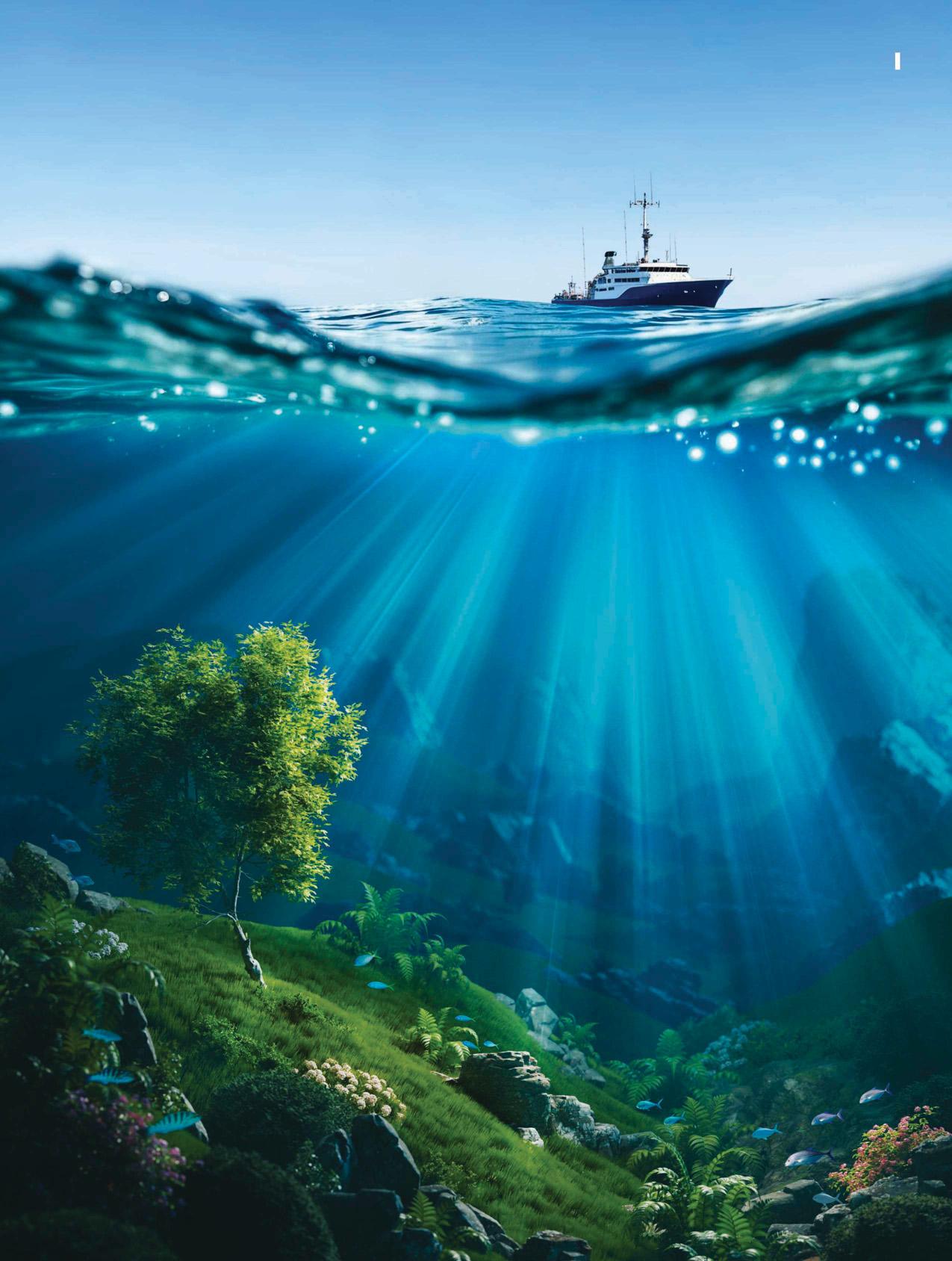
In the works of Plato, a Greek philosopher who lived around 2,400 years ago, the island of Atlantis was said to have been drowned in the Atlantic Ocean after the hubris of its people angered the Gods. Although Atlantis was fictional, the idea that entire civilisations can disappear beneath the waves has intrigued us for millennia. Now, innovative technologies are revealing real sites around the world that our ancestors were forced to abandon before they were swallowed by the oceans.
One such 'Atlantis' lies to the north of Australia. At the height of the last Ice Age, around 21,000 years ago, the continent of Australia was around 20-per-cent larger than it is today. With more water locked up in ice sheets and glaciers, sea levels were around 120m (394ft) lower. This exposed an additional 2,000,000km² (around 772,000 sq miles) of land that connected Australia to New Guinea in the north and Tasmania in the south, creating a supercontinent known as Sahul.
Sahul's Northwest Shelf was a vast landmass that covered 400,000km² (154,000 sq miles) – just over 1.5 times the size of the UK – and joined onto the modern-day Kimberley region in northern Western Australia, and the Arnhem Land region in Australia's Northern Territory. Many archaeologists have argued that these ancient landscapes were unproductive environments and weren't used much by the early Aboriginal people. But new research is challenging this long-held assumption.
The now-submerged region may also hold the secrets to one of the biggest puzzles in anthropology. Lying next to some of the oldest known archaeological sites in Australia, Sahul's Northwest Shelf has long been recognised as a likely point of entry for the first people who made their way to the continent, some 65,000 years ago.
Now, the race is on to uncover the hidden treasures of this Atlantis-like land, before they're destroyed forever.
REVEALING LOST LANDSCAPES

This story is from the March 2025 edition of BBC Science Focus.
Subscribe to Magzter GOLD to access thousands of curated premium stories, and 10,000+ magazines and newspapers.
Already a subscriber? Sign In
MORE STORIES FROM BBC Science Focus

BBC Science Focus
DOES MY DOG HAVE ADHD?
Officially, Attention-Deficit Hyperactivity Disorder (ADHD) is a human condition. People are diagnosed with it. Dogs are not. Yet many of its core features, including hyperactivity, impulsivity and distractibility, can be found in dogs.

1 min
March 2026

BBC Science Focus
DOES MY BRAIN LIVE A LITTLE IN THE PAST?
Yes, your brain does live a little in the past. It can't help it. The information it receives via your senses is always a little out of date. Whether it's light entering the retinas in your eyes, or sounds vibrating the hairs in your ears, it not only takes time for the data to arrive, but your brain then has to process it.
2 mins
March 2026
BBC Science Focus
ASTRONOMY FOR BEGINNERS
RETURN OF THE EVENING STAR (VENUS)
1 mins
March 2026

BBC Science Focus
CAN YOU STOP YOUR SENSE OF TASTE DULLING AS YOU AGE?
Sometimes I hear people say that food just doesn't taste the same as they get older. It's tempting to blame this on age, but there are other factors at play, too.
1 mins
March 2026
BBC Science Focus
MICROBIOMES OF THE SUPERAGERS
BY STUDYING THE INCREASING NUMBER OF PEOPLE WHO ARE LIVING BEYOND THEIR 100TH BIRTHDAYS, SCIENTISTS ARE DISCOVERING THAT THE SECRET TO REACHING A RIPE OLD AGE IN RUDE HEALTH MIGHT LIE IN OUR GUTS
8 mins
March 2026

BBC Science Focus
HOW BIG WERE MEDIEVAL WAR HORSES?
You might picture knights charging into battle on towering steeds, but medieval horses were typically no bigger than modern-day ponies.
1 min
March 2026
BBC Science Focus
FORCES OF HABIT
Could new research on setting up healthy habits resuscitate those stuttering New Year resolutions?
3 mins
March 2026

BBC Science Focus
5 DANGERS HIDING IN YOUR PROCESSED FOOD
We all know that ultra-processed foods are bad for us, but what ingredients should we particularly try to avoid? And what are they doing to our bodies?
9 mins
March 2026
BBC Science Focus
Mosquitoes are becoming thirstier for human blood
Habitat loss may be pushing mosquitoes towards human hosts with deadly consequences
1 mins
March 2026

BBC Science Focus
HOW CAN I GET OVER MY EX?
Relationship breakups can be brutal, just look at the popularity of songs like 'Someone Like You' by Adele, or all the covers of 'Cry Me a River' by Julie London.
1 mins
March 2026
Listen
Translate
Change font size