Try GOLD - Free
DEFENDERS OF EARTH
BBC Science Focus
|July 2025
Meet the people who keep watch for world-ending asteroids
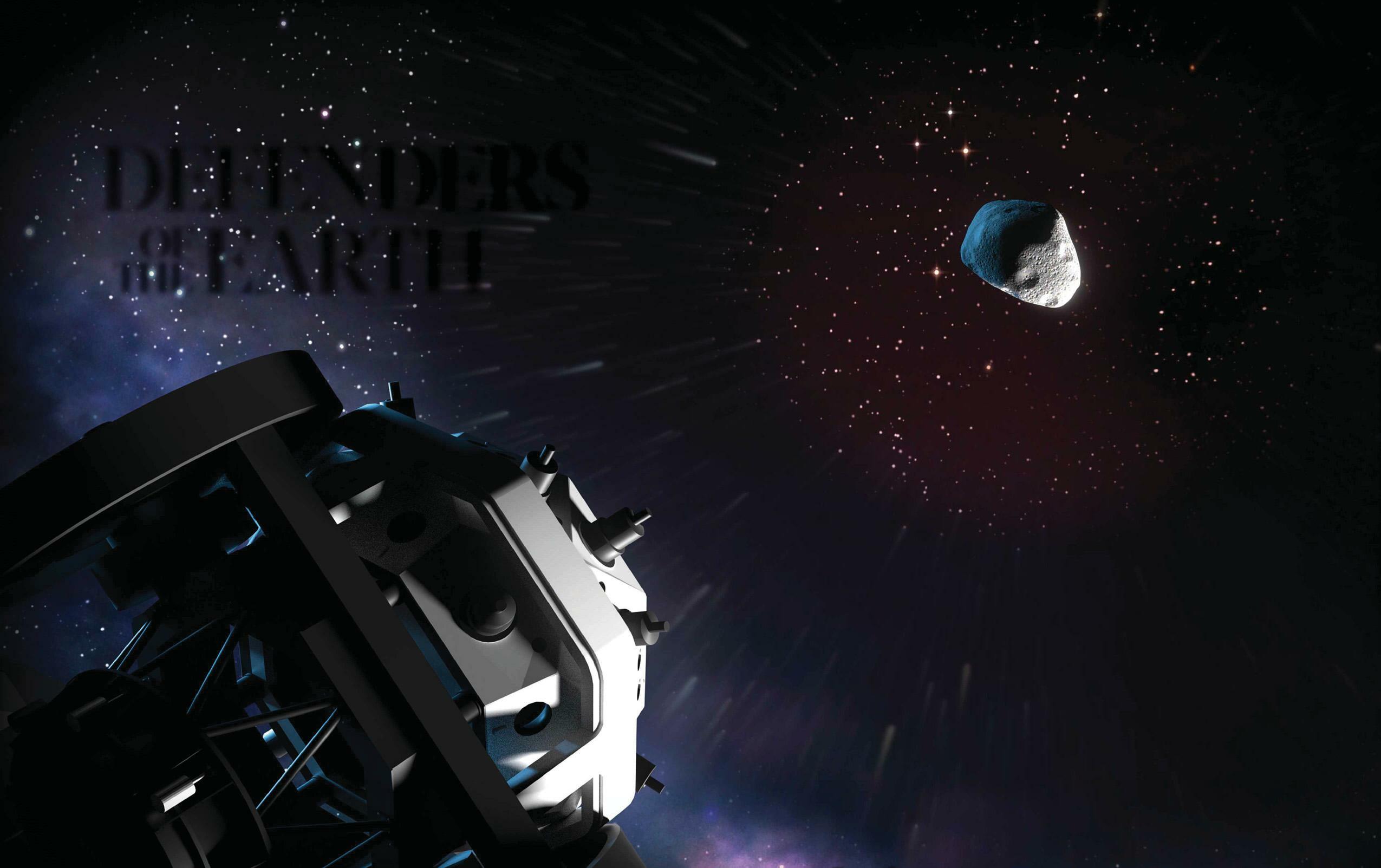
You’re woken in the middle of the night by an urgent phone call. An asteroid is headed straight for Earth and it's your job to find out if it'll strike the planet and rain destruction down upon us all.
It sounds like an overly-dramatic movie trailer, but that’s the real-life task of the people in the European Space Agency’s (ESA) Near-Earth Objects Coordination Centre, or NEOCC – a multidisciplinary centre staffed by astronomers, mathematicians and engineers who work on predicting asteroid impacts. People like Richard Moissl, Marco Fenucci and Dora Föhring (see ‘Meet the asteroid hunters’, p55). They're part of the dedicated team monitoring our skies to protect the planet from potential threats from above.
ON THE LOOKOUT
When it comes to defending a planet, the first step is finding out where the largest asteroids are.
“You can only do something to address a threat if you know about it,” Moissl says. “So the very first step in the whole chain is observations. You need to find the asteroids.”
The aim here is to identify any potential threats with as much advance warning as possible, so that there’s time to take action to protect us and the planet. For example, we could launch an intervention like NASA’s DART (Double Asteroid Redirection Test) mission in 2022, which saw a spacecraft deliberately crash into an asteroid to alter its course. With enough time, even a relatively small intervention such as this would be enough to deflect a very large, dangerous asteroid.
But if it helps to set your mind at ease, know that the vast majority of very large asteroids have already been located. “The kind of objects that we're really worried about are the ones that could destroy a city,” Föhring says. The advantage of searching for these objects, which are over 100m (almost 330ft) across, is that they’re big enough to spot easily. “These really dangerous ones, we think we've discovered 99 per cent of them.”

This story is from the July 2025 edition of BBC Science Focus.
Subscribe to Magzter GOLD to access thousands of curated premium stories, and 10,000+ magazines and newspapers.
Already a subscriber? Sign In
MORE STORIES FROM BBC Science Focus

BBC Science Focus
DOES MY DOG HAVE ADHD?
Officially, Attention-Deficit Hyperactivity Disorder (ADHD) is a human condition. People are diagnosed with it. Dogs are not. Yet many of its core features, including hyperactivity, impulsivity and distractibility, can be found in dogs.

1 min
March 2026

BBC Science Focus
DOES MY BRAIN LIVE A LITTLE IN THE PAST?
Yes, your brain does live a little in the past. It can't help it. The information it receives via your senses is always a little out of date. Whether it's light entering the retinas in your eyes, or sounds vibrating the hairs in your ears, it not only takes time for the data to arrive, but your brain then has to process it.
2 mins
March 2026
BBC Science Focus
ASTRONOMY FOR BEGINNERS
RETURN OF THE EVENING STAR (VENUS)
1 mins
March 2026

BBC Science Focus
CAN YOU STOP YOUR SENSE OF TASTE DULLING AS YOU AGE?
Sometimes I hear people say that food just doesn't taste the same as they get older. It's tempting to blame this on age, but there are other factors at play, too.
1 mins
March 2026
BBC Science Focus
MICROBIOMES OF THE SUPERAGERS
BY STUDYING THE INCREASING NUMBER OF PEOPLE WHO ARE LIVING BEYOND THEIR 100TH BIRTHDAYS, SCIENTISTS ARE DISCOVERING THAT THE SECRET TO REACHING A RIPE OLD AGE IN RUDE HEALTH MIGHT LIE IN OUR GUTS
8 mins
March 2026

BBC Science Focus
HOW BIG WERE MEDIEVAL WAR HORSES?
You might picture knights charging into battle on towering steeds, but medieval horses were typically no bigger than modern-day ponies.
1 min
March 2026

BBC Science Focus
FORCES OF HABIT
Could new research on setting up healthy habits resuscitate those stuttering New Year resolutions?
3 mins
March 2026

BBC Science Focus
5 DANGERS HIDING IN YOUR PROCESSED FOOD
We all know that ultra-processed foods are bad for us, but what ingredients should we particularly try to avoid? And what are they doing to our bodies?
9 mins
March 2026
BBC Science Focus
Mosquitoes are becoming thirstier for human blood
Habitat loss may be pushing mosquitoes towards human hosts with deadly consequences
1 mins
March 2026

BBC Science Focus
HOW CAN I GET OVER MY EX?
Relationship breakups can be brutal, just look at the popularity of songs like 'Someone Like You' by Adele, or all the covers of 'Cry Me a River' by Julie London.
1 mins
March 2026
Listen
Translate
Change font size