Try GOLD - Free
DAMAGE ASSESSMENT
BBC Science Focus
|October 2024
Could we deflect an asteroid to stop it from hitting Earth? The success of NASA's DART mission suggests so, but only after ESA's soon-to-launch Hera mission has checked the results will we know if this approach to planetary defence is a viable possibility

Another day, another rocket launch. So many, in fact, it's easy to get blasé. In 2023, almost 200 rockets lifted off from Earth, carrying satellites and other spacecraft into orbit. By early September this year, the number for 2024 had already reached 158, most of them from Elon Musk's SpaceX company which has launched 89 rockets and is aiming for around 150 by year's end.
In October, one of those additional SpaceX launches will carry the European Space Agency's (ESA) Hera mission into space. Although one more launch may seem almost insignificant, Hera could prove to be one of the most important missions ever launched, because it'll tell us how capable we are of deflecting asteroids.
In November 2021, NASA launched the Double Asteroid Redirection Test (DART) mission. It targeted Dimorphos, a small asteroid with a diameter of 177m (580ft) in orbit around a larger one called Didymos. The DART spacecraft would collide with Dimorphos on purpose to see if it could alter its orbit around Didymos. Any change would be reflected in a shift in the small moonlet's orbital period.
The mission was designed to test a deflection technique known as the kinetic impactor essentially smashing one thing into another - and it succeeded spectacularly. The spacecraft impacted Dimorphos at a speed of approximately 6.6km/s (over 14,750mph) in September 2022, changing its orbital period around Didymos by 33 minutes - far more than had been expected.
It was a historic moment, marking the first time we had intentionally altered the trajectory of a celestial body.
"DART has really shown how effective a kinetic impactor can be in moving and diverting small asteroids. It was a complete and utter success of a mission," says Prof Alan Fitzsimmons, an astronomer from Queen's University Belfast, Northern Ireland, who specialises in asteroid research.
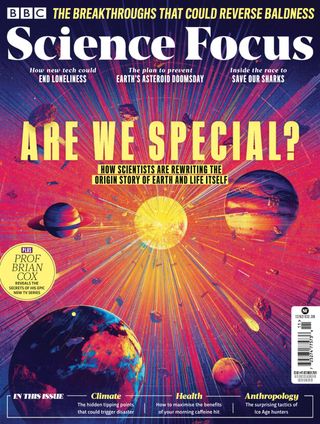

This story is from the October 2024 edition of BBC Science Focus.
Subscribe to Magzter GOLD to access thousands of curated premium stories, and 10,000+ magazines and newspapers.
Already a subscriber? Sign In
MORE STORIES FROM BBC Science Focus

BBC Science Focus
DOES MY DOG HAVE ADHD?
Officially, Attention-Deficit Hyperactivity Disorder (ADHD) is a human condition. People are diagnosed with it. Dogs are not. Yet many of its core features, including hyperactivity, impulsivity and distractibility, can be found in dogs.

1 min
March 2026

BBC Science Focus
DOES MY BRAIN LIVE A LITTLE IN THE PAST?
Yes, your brain does live a little in the past. It can't help it. The information it receives via your senses is always a little out of date. Whether it's light entering the retinas in your eyes, or sounds vibrating the hairs in your ears, it not only takes time for the data to arrive, but your brain then has to process it.
2 mins
March 2026
BBC Science Focus
ASTRONOMY FOR BEGINNERS
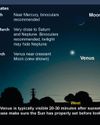
RETURN OF THE EVENING STAR (VENUS)
1 mins
March 2026

BBC Science Focus
CAN YOU STOP YOUR SENSE OF TASTE DULLING AS YOU AGE?
Sometimes I hear people say that food just doesn't taste the same as they get older. It's tempting to blame this on age, but there are other factors at play, too.
1 mins
March 2026
BBC Science Focus
MICROBIOMES OF THE SUPERAGERS
BY STUDYING THE INCREASING NUMBER OF PEOPLE WHO ARE LIVING BEYOND THEIR 100TH BIRTHDAYS, SCIENTISTS ARE DISCOVERING THAT THE SECRET TO REACHING A RIPE OLD AGE IN RUDE HEALTH MIGHT LIE IN OUR GUTS
8 mins
March 2026

BBC Science Focus
HOW BIG WERE MEDIEVAL WAR HORSES?
You might picture knights charging into battle on towering steeds, but medieval horses were typically no bigger than modern-day ponies.
1 min
March 2026

BBC Science Focus
FORCES OF HABIT
Could new research on setting up healthy habits resuscitate those stuttering New Year resolutions?
3 mins
March 2026

BBC Science Focus
5 DANGERS HIDING IN YOUR PROCESSED FOOD
We all know that ultra-processed foods are bad for us, but what ingredients should we particularly try to avoid? And what are they doing to our bodies?
9 mins
March 2026
BBC Science Focus
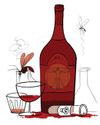
Mosquitoes are becoming thirstier for human blood
Habitat loss may be pushing mosquitoes towards human hosts with deadly consequences
1 mins
March 2026

BBC Science Focus
HOW CAN I GET OVER MY EX?
Relationship breakups can be brutal, just look at the popularity of songs like 'Someone Like You' by Adele, or all the covers of 'Cry Me a River' by Julie London.
1 mins
March 2026
Listen
Translate
Change font size