
Go Unlimited with Magzter GOLD
Get unlimited access to 10,000+ magazines, newspapers and Premium stories for just
Try GOLD - Free
OVING M TARGET
Geopolitics
|January 2025
India's evolving battlefield strategies emphasise the need for the Indian Army to accelerate the induction of Self-Propelled Howitzers, enhancing firepower, survivability, and precision, as highlighted by ATUL CHANDRA, driven by lessons from global conflicts and emerging technological advancements
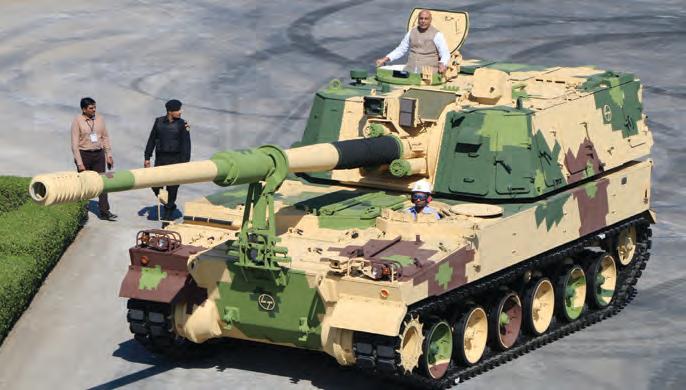
The Indian Army needs to induct a greater number of mobile artilleries, if it needs to be adequately prepared for any future conflict. The army has already taken into account the lessons from the ongoing Ukraine-Russia War, which has made it clear that large-calibre self-propelled artillery systems are key for the success of future military offensives. The war in Ukraine has reinforced the need for self-propelled artillery, which are able to survive drone attacks, can cross the frontline and engage targets as far away as 40 km.
Modern battles are largely fluid, with swathes of territory being transferred rapidly between opposing forces. The fluidity of the battlespace, combined with 24/7 reconnaissance and strike capability courtesy of drones and loitering munitions, means mobile weapon systems have a greater chance of survival. The ability of large-calibre self-propelled artillery systems and multiple rocket launchers to strike at ever increasing distances is also crucial for the success of battlefield campaigns. As a result, countries producing self-propelled artillery are not only increasing production rates but also introducing new features that will make them even more potent and battleworthy. As per the Indian Army's Field Artillery Rationalisation Plan (FARP) it has a requirement for 814 155mm/52cal Mounted Gun Systems (MGS), 1,580 Towed Gun Systems (TGS), 180 wheeled Self-Propelled Howitzers (SPH), 145 Ultra-Light Howitzers (ULH) and 100 tracked SPHs. At the present moment only the ULH and tracked SPH requirements have been met.
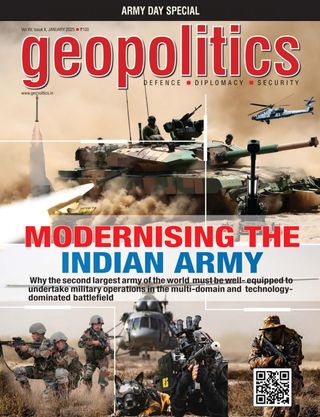

This story is from the January 2025 edition of Geopolitics.
Subscribe to Magzter GOLD to access thousands of curated premium stories, and 10,000+ magazines and newspapers.
Already a subscriber? Sign In
MORE STORIES FROM Geopolitics
Geopolitics
IAF seeks Ecuador Jaquar airframes
The Indian Air Force has initiated discussions with the Ecuadorian Air Force to acquire its remaining grounded SEPECAT Jaguar airframes, as part of a broader effort to extend the service life of India's Jaguar strike fleet through 2035.

1 min
January 2026
Geopolitics
INDIA TO LAUNCH INDIGENOUS 6-TONNE HALE UAV
India's effort to build an indigenous High Altitude Long Endurance (HALE) unmanned aerial vehicle has moved into a critical transition stage. The Aeronautical Development Establishment has issued an Expression of Interest to identify a Development-cum-Production Partner for the proposed six-tonne class HALE UAV, while simultaneously preparing to seek cabinet committee on Security approval to formally initiate the development phase.
2 mins
January 2026

Geopolitics
IAF evaluates SPICE 250 for precision strikes
The Indian Air Force is evaluating the SPICE 250 precision-guided munition as part of its effort to strengthen standoff strike capabilities against a wide range of targets in contested environments.
1 min
January 2026
Geopolitics
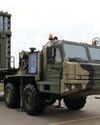
Russia offers S-350 Vityaz with full tech transfer to India
Russia has renewed its offer to supply the Rundian Armed Forces with the S-350 Vityaz air defence system, positioning it as a complementary layer to India's existing S-400 Triumf regiments.
1 min
January 2026

Geopolitics
India inducts first indigenous Pollution Control Vessel
Defence Minister Rajnath Singh recently commissioned Indian Coast Guard Ship Samudra Pratap, the first of two Pollution Control Vessels, calling it a reflection of India's increasingly mature and capable defence industrial ecosystem.
1 min
January 2026
Geopolitics
DAC clears indigenous EW suite for IAF's Mi-17 V5 fleet
The Defence Acquisition Council has accorded Acceptance of Necessity (AON) for multiple DRDO-developed systems, including an advanced Electronic Warfare (EW) Suite for the Indian Air Force's Mi17 V5 helicopter fleet.
1 min
January 2026

Geopolitics
WHY PSLV-C62 FAILURE WILL BADLY HURT INDIA
In space research, satellite launch failures are not uncommon. Yet the failure of ISRO's PSLV-C62 will hurt India, its space ambitions, and its military capabilities for years to come
5 mins
January 2026

Geopolitics
Prime Toolings targets 10 kN thrust milestone by March
Prime Toolings has reiterated its confidence in achieving a 10 kN thrust benchmark by March 2026, even after recent propulsion trials initially fell short of expectations. The company said the development effort was originally structured around an 8 kN thrust objective, but early test runs stabilised at approximately 6 kN. Rather than treating this outcome as a setback, the company views it as a valuable learning phase inherent to complex propulsion development.
1 min
January 2026
Geopolitics
IRRELEVANT UNITED NATIONS
If anything, the U.S. invasion of Venezuela and the capture of its President Nicolás Maduro, or, for that matter, President Donald Trump's habit of imposing economic sanctions on countries effortlessly, constitute a trend that makes the existence of the United Nations (U.N.) irrelevant in its present form. It is an affront to the world body by undermining the principles of collective security and multilateralism.
4 mins
January 2026

Geopolitics
Indian startup Carbine Systems tests first private DEW prototype
Belgaum-based Carbine Systems has testing of its first directed-energy weapon prototype, H.A.R.A. Mk 1 (Hyper Amplification Radiant Array),. marking a notable milestone for India's indigenous laser-weapons ecosystem.
1 min
January 2026
Listen
Translate
Change font size