Try GOLD - Free
AFFORDABLE LETHALITY THE INDIAN DILEMMA
Geopolitics
|November 2024
India's defence dilemma is now being complicated by the lessons learnt in the Ukraine and Gaza wars because these conflicts are reshaping the way wars are fought in the modern world.
-

Much has been written about how these wars are revolutionising military affairs, but AMIT GUPTA argues that for a variety of reasons, India can only adopt some of these technological changes. Instead, the country should go for a policy of Affordable Lethality, i.e. where the Indian armed forces increase their deterrent capability-inflicting unacceptable damage on the aggressor-while not imposing unaffordable costs on the Indian government and taxpayer.
Only a few of the lessons of Gaza and Ukraine can be applied in the Indian context because both wars have characteristics that do not apply to this country. In the Ukrainian case, the U.S. and the European Union have paid $300 billion to the Ukrainians, in arms and financial assistance, to fight the war and there is no expectation in the West that this amount will be repaid. In a future war, the West will not subsidise India to even cover one percent ($3 billion) of what has been spent in Ukraine. Similarly, the Watson Institute's Cost of War project has shown that Israel has been given a $22.76 billion subsidy to wage war in Gaza and Lebanon. That does not include the dozens of deals that have been cut between the U.S. and Israel which do not require Congressional clearance. Again, India cannot avail of such financial largesse and will have to depend on its own financial resources to fight a future war.
Secondly, in both cases the West has given technologies like the Storm Shadow missile to Ukraine which will not be easily transferred to the Indian armed forces. One only has to see the trouble India has faced in signing agreements to obtain relatively older technologies from the United States (because of American concerns about the security of these technologies) to understand why India will not be able to avail of these systems.


This story is from the November 2024 edition of Geopolitics.
Subscribe to Magzter GOLD to access thousands of curated premium stories, and 10,000+ magazines and newspapers.
Already a subscriber? Sign In
MORE STORIES FROM Geopolitics

Geopolitics
Indian Navy Boosts Decoy Capabilities
The Indian Navy is launching a major procurement initiative to acquire advanced naval decoys to protect its frontline warships against increasingly sophisticated anti-ship missile threats.

1 min
March 2026

Geopolitics
India Evaluates Sky Shield Pods
India is considering the considering Lacquisition of the Israeliorigin SKY SHIELD electronic attack pod to enhance the Indian Air Force's capabilities in contested airspace.
1 min
March 2026

Geopolitics
LEAKED IMAGE REVEALS LIGHT TANK
Alimited leaked image has revealed Armoured Vehicles Nigam Limited's (AVNL) new light tank concept, marking the third such design to emerge from India.
1 min
March 2026

Geopolitics
INDIA'S MRO MOMENTUM
Considering India's potential as a global defence MRO (maintenance, repair, and overhaul) hub for naval vessels and aircraft, JOSEPH P CHACKO examines the industrial supply chain, demand drivers, policy and regulatory challenges and opportunities, infrastructure and human capital needs, as well as commercial and strategic implications, along with a practical transformation roadmap.
15 mins
March 2026

Geopolitics
SIGNIFICANCE OF ANTI-SUBMARINE WARFARE FOR INDIA
VENUGOPAL MENON examines the underwater threats in India's maritime domain and highlights the Indian Navy's current capabilities.
12 mins
March 2026

Geopolitics
SKY SENTINEL MEERUT'S HIGH-TECH DRONE HUB
The construction of the Meerut drone base marks a significant milestone in the modernisation of India's military infrastructure, signalling a shift towards a \"drone-first\" defence stance.
6 mins
March 2026

Geopolitics
Goyal Venture Acquires Defence Startup
LAT Aerospace, founded by Zomato's Deepinder Goyal and Surobhi Das, has acquired the Gurugram-based defence robotics startup, Sharang Shakti.
1 min
March 2026

Geopolitics
New Missile Facility Opens Doors
Raksha Mantri Rajnath RSingh inaugurated a new Missile Integration facility at Bharat Electronics Limited (BEL) in Bengaluru.
1 min
March 2026
Geopolitics
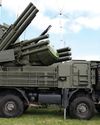
PANTSIR SYSTEMS SHIELD INDIAN SKIES
India is strengthening its layered air defence by acquiring 13 Russian-made Pantsir-S1 self-propelled missile and gun systems.
1 min
March 2026

Geopolitics
AgniKul Tests Cluster Rocket Engines
AgniKul Cosmos has successfully test-fired three semi-cryogenic rocket engines simultaneously as a cluster, marking a first for India.
1 min
March 2026
Listen
Translate
Change font size