Try GOLD - Free
Decoding digital public infrastructure for India's future
The Sunday Guardian
|July 06, 2025
As the country marks 10 years of Digital India, its future approach to DPI will be determined by critical privacy laws. India differs from the routes to digitalisation adopted by other big economies. India's DPI is neither led by state nor by tech sector but by a collaboration between the two.

Speaking at the AI Action Summit in Paris in February 2025, Prime Minister Narendra Modi declared, "India has successfully built a digital public infrastructure (DPI) for over 1.4 billion people at a very low cost. It is built around an open and accessible network. It has regulations, and a wide range of applications to modernise our economy, reform governance and transform the lives of our people."
Indeed, DPIs and related digital goods and services have proven their potential for driving digital inclusion, boosting service delivery and innovation, and ensuring digital human rights without compromising on trust and security. Encouraged by the scale of success, several other states in the Global South have begun to build their DPIs with India's support.
The enthusiasm around DPIs goes well beyond the South. The European Union is working with India to make their respective DPIs more interoperable, and the two have "pledged to promote DPI solutions to third countries." Similarly, the United States has made a commitment with India to enter into a Global Digital Development Partnership to pool technology and resources and help build DPIs in developing nations. The G20 too, has been promoting the uptake and benefits of DPI since the Indian presidency of 2023, through the Brazilian presidency of 2024, and the ongoing presidency of South Africa.
WHAT ARE DPIS?
DPIs refer to "a set of shared digital systems which are secure and interoperable, built on open standards, and specifications to deliver and provide equitable access to public and private services at societal scale, and are governed by enabling rules to drive development, inclusion, innovation, trust, and competition, and to respect human rights and fundamental freedoms."

This story is from the July 06, 2025 edition of The Sunday Guardian.
Subscribe to Magzter GOLD to access thousands of curated premium stories, and 10,000+ magazines and newspapers.
Already a subscriber? Sign In
MORE STORIES FROM The Sunday Guardian

The Sunday Guardian
The world order changeth gradually, though surely
No single nation or its leader, including the USA or China, can assume stewardship of the emerging, diffused global order.

6 mins
January 04, 2026

The Sunday Guardian
WHY THE SHANTI BILL CAN REDEFINE INDIA’S ENERGY FUTURE
India’s clean energy transition is primarily discussed in terms of solar additions, wind corridors, and storage technologies.
4 mins
January 04, 2026
The Sunday Guardian
Fantasies about Russia may spark World War III
Peace would result in it being too obvious to hide even within Zelenskyy's European backers, that the war being conducted at great human cost was futile from the start.
5 mins
January 04, 2026

The Sunday Guardian
New jihadi module IMK busted in Assam
An offshoot of Bangladesh-based JMB, IMK propagates the ideology of ‘Ghazwatul Hind’
4 mins
January 04, 2026
The Sunday Guardian
Delhi court convicts man in 2017 murder case
A Delhi court has convicted a man for murdering a youth by hitting him with a bamboo stick during a late-night quarrel at the Anand Vihar ISBT in 2017.
1 mins
January 04, 2026

The Sunday Guardian
INDIAN NAVY PLANS TO INDUCT A WARSHIP EVERY SIX WEEKS
The Indian Navy is on track to induct ships at the rate of one every one-and-a-half months in the coming year, fuelling the economy as its maritime muscle is strengthened.
3 mins
January 04, 2026
The Sunday Guardian
PM to flag off first Vande Bharat sleeper train from Guwahati
Ahead of the upcoming assembly elections, Assam and West Bengal will get the country's first Vande Bharat sleeper train.
1 mins
January 04, 2026
The Sunday Guardian
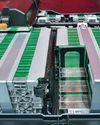
Transport Ministry proposes Aadhaar-like numbers for EV batteries
The transport ministry has proposed assigning Aadhaar-like unique identification number to EV batteries to ensure their end-to-end traceability and efficient recycling.
2 mins
January 04, 2026
The Sunday Guardian
Congress’ seat claim strains Assam opposition unity
Congress's aggressive seat target unsettles allies as opposition struggles to finalise Assam election strategy.
3 mins
January 04, 2026

The Sunday Guardian
How CCP is ‘assimilating’ Inner Mongolia
The most decisive tool of assimilation has been language policy. Mongolian-medium education has been systematically dismantled, replaced with Mandarin instruction.
2 mins
January 04, 2026
Listen
Translate
Change font size