Try GOLD - Free
Careless Management of Water Poses India an Existential Threat
Mint Bangalore
|June 05, 2025
A systemic approach to managing resources should include plans to harness the impact of climate change for water security
The warnings are dire. India is running dry. There is a looming water crisis—a threat to India's future. Alarm bells around a water shortage have become increasingly shrill and loud over the past few decades. Experts in India have long lamented the poor state of water storage capacities in the country, the extent of pollution in our rivers, the annual cycles of drought and floods, the over-exploitation of ground water and the provision of water as a free good—often exacerbated by free electricity for agricultural groundwater pumps given to farmers as an election sop.
India provides drinking water access to nearly 95% of its population, albeit at a fairly basic level. The World Bank's broadened definition of 'access' includes people using safely managed water services as well as those using basic water services, which is drinking water from an improved source (like a piped-in tap, borehole or tube-well, protected dug well, protected spring and packaged/delivered water), provided the collection time is not more than 30 minutes for a round trip.
The 79th round of the National Sample Survey 2022-23 brings out a paradoxical reality: 48% of rural India continues to be dependent on hand pumps or tube-wells for water, while nearly 15% of urban India is dependent on bottled drinking water. Both ends of the spectrum have their health and related problems, the first due to unacceptably high levels of physical, chemical and/or biological contamination reported from various geographies across India, and the other due to over-purification leading to the demineralization of water, presence of cancer-causing substances and plastic pollution at a very large scale.

This story is from the June 05, 2025 edition of Mint Bangalore.
Subscribe to Magzter GOLD to access thousands of curated premium stories, and 10,000+ magazines and newspapers.
Already a subscriber? Sign In
MORE STORIES FROM Mint Bangalore

Mint Bangalore
A modern-day throwback to 'Malgudi Days'
Sita Bhaskar's latest novel revisits writer R.K. Narayan’s legacy to explore class, caste, and community in Mysuru

4 mins
December 13, 2025

Mint Bangalore
Come for the 'baithak', stay for the shopping
Fashion brands are hosting workshops, talks, music gigs and 'baithaks' to take a culture-first approach to customer loyalty
4 mins
December 13, 2025
Mint Bangalore
Novo Nordisk debuts Ozempic at ₹2,200 a week
Danish drugmaker Novo Nordisk on Friday launched its blockbuster diabetes drug Ozempic in India, with a starting price of ₹2,200 per week.
1 mins
December 13, 2025
Mint Bangalore
Tushar Adhav and politics of the dance floor
There's a 1983 song by English new wave band Re-Flex that keeps popping up in my mind every time I find myself on an Indian club floor.
4 mins
December 13, 2025

Mint Bangalore
English's place in history is not black and white
In 1784, two white men joined forces to establish an English school in Thanjavur, Tamil Nadu.
4 mins
December 13, 2025

Mint Bangalore
Rajasthan limits e-NAM 2.0 pilot amid snags; 1.0 to stay
The Centre restricted e-NAM 2.0 pilot to 10 mandis, including Tonk, Jodhpur and Sujangarh
3 mins
December 13, 2025

Mint Bangalore
GST cuts, easing inflation drive rural demand revival
India’s rural economy expanded and recovered strongly in late 2025, with consumption, incomes and investment improving after a key tax reform and as inflation eased, a survey showed.
2 mins
December 13, 2025
Mint Bangalore
Sebi weighs easier unified penalty rules for listed cos
Explores framework like the one for brokers that standardized and reduced fines
2 mins
December 13, 2025

Mint Bangalore
The loss of Srinagar as a cosmopolitan city
Sameer Hamdani's book brings alive the details that once defined life in one of South Asia's oldest cities but stops short of reflecting on the present
5 mins
December 13, 2025
Mint Bangalore
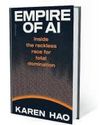
'We need 100 Earths to sustain generative Al'
Karen Hao, author of ‘Empire of AI’, explains how AI and tech companies are no less than extractive colonial empires
4 mins
December 13, 2025
Listen
Translate
Change font size