
Go Unlimited with Magzter GOLD
Get unlimited access to 10,000+ magazines, newspapers and Premium stories for just
Financial institutions at crossroads: Redefining risk management in the age of climate change
Daily FT
|October 03, 2025
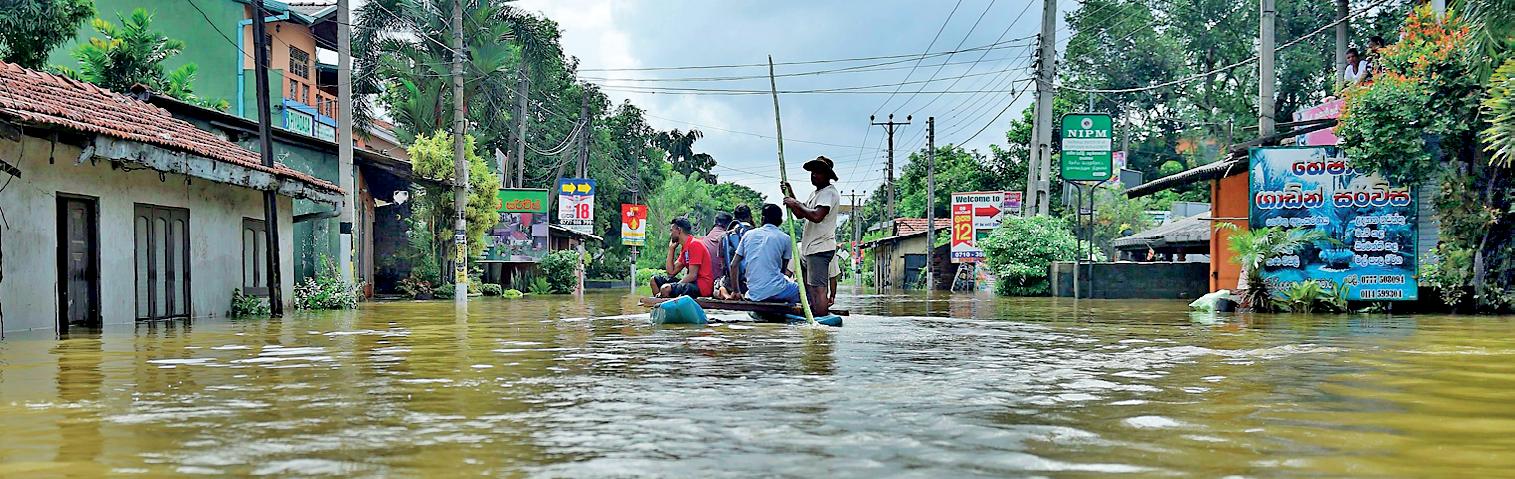
THE recent flash floods in Uttarakhand, India where over 100 people went missing, are just one among thousands of climate-related disasters in recent years. For banks, the impact is direct washed-out assets, loan defaults, and rising credit risk. This is not tomorrow's threat; climate risk is already reshaping financial stability today. In the end, banks become the ultimate receivers of climate shocks, bearing the financial fallout of environmental catastrophes. Banking risk management is entering a new era. Traditional frameworks built around credit, market, liquidity, and operational risk are no longer sufficient to address the growing complexities of a changing world.
Among the most disruptive forces is climate risk, which is rapidly emerging as a critical, system-wide challenge. I strongly believe despite increasing global awareness, many financial institutions have yet to fully grasp the gravity of climate risk and its potential to fundamentally reshape the financial landscape. The implications spanning credit risk, operational resilience, regulatory exposure, and reputational damage are often underestimated or overlooked. As climate related disruptions intensify, institutions that delay integration of climate risk into their governance and strategy may face systemic vulnerabilities, eroding stakeholder trust and losing access to global capital markets What makes it distinct is not just its severity or frequency, but its ability to reshape the entire risk landscape demanding a fundamental transformation in how banks assess, manage, and govern risk.
With my three decades of experience in banking and research across various subjects, including risk management, this article aims to provide an overview of how climate risk is poised to redefine banking risk management, potentially overtaking traditional risk areas in both significance and impact. To start with, as Mark Carney, then Governor of the Bank of England, famously said in 2015, "Climate risk is not just environmental it's financial." This statement marked a turning point in how global financial institutions began to view climate change not merely as an environmental concern, but as a systemic risk to financial stability and long-term economic resilience.
Climate risk demonstrate in two main forms:
Physical risk: Damage caused by extreme weather events such as floods, droughts, cyclones, and rising sea levels.
Transition risk: Arising from regulatory, technological, and market changes as economies shift toward a low-carbon future. For banks, these risks can severely impact:


This story is from the October 03, 2025 edition of Daily FT.
Subscribe to Magzter GOLD to access thousands of curated premium stories, and 10,000+ magazines and newspapers.
Already a subscriber? Sign In
MORE STORIES FROM Daily FT
Daily FT
SEC eases Minimum Public Holding rules for listings via Introductions
Says move aimed at boosting market flexibility

3 mins
January 01, 2026
Daily FT
Govt. unveils National Electricity Policy in push for cost-reflective tariffs, reforms
Energy Ministry invites public consultations on or before 9 January Energy pricing, reforms crucial components of IMF EFF program
3 mins
January 01, 2026
Daily FT
Right of Reply: BPPE responds to PMAC over water contracts
BUSINESS Promoters & Partners Engineering Ltd., (BPPE) has issued the following Right of Reply to the artide headlined RTI exposes irregularities in SL water contracts involving Chinese SOES-PMAC calls for accountability and urgent probe into unsolicited bids and inflated costs published in the Daily FT on 29 November 2025:
1 min
January 01, 2026

Daily FT
Gangaramaya Temple City taking shape to be world-class tourist and cultural hub
Rs. 600 m initiative part of Colombo City Tourism Attraction Enhancement Program being implemented in collaboration with Western Province Governor, UDA, and Gangaramaya Temple/ Sri Jinarathana Adyapana Ayathana Palaka Sabhawa 550-seat performance hall, heritage galleries, exhibition spaces, and outdoor recreational areas designed to host cultural performances, educational workshops, and community events
2 mins
January 01, 2026

Daily FT
Staying competitive by transferring pay risks through performance-based compensation
MY interest in performance-based compensation in Sri Lanka heightened when combating the trickle-down effects of the Global Financial Crisis of 2008 and the end of the civil war in 2009.
9 mins
January 01, 2026
Daily FT
Sri Lanka needs more than transparency to break the cycle of corruption: University of London Economists
SRI Lanka will not escape another cycle of unsustainable public debt if it relies only on transparency and traditional “good governance” reforms without creating real pressure from actors who can enforce rules in their own interest, senior economists from SOAS University of London warned in Colombo last week.
9 mins
January 01, 2026
Daily FT
CCPI remains steady in December
HEADLINE inflation, as measured by the year-on-year (YoY) change in the Colombo Consumer Price Index (CCPI), remained steady in December 2025 for the second consecutive month.
1 mins
January 01, 2026

Daily FT
India doubles financial commitment to 3 housing projects in North and South
INDIAN has announced a doubling of financial commitment to three housing projects in the Northern and Southern Provinces.
2 mins
January 01, 2026
Daily FT
New CEO at Siyapatha Finance assumes office today
■Veteran Ananda Seneviratne concludes his tenure as Managing Director
2 mins
January 01, 2026

Daily FT
Rebranding Sri Lanka is a collective responsibility: Booking.com Regional Chief
BOOKING.COM Regional Head for South Asia Santosh Kumar said rebranding Sri Lanka and unlocking its next phase of economic growth will require a collective national effort that goes well beyond Government-led initiatives, stressing that recovery alone is not a long-term strategy for sustainable development.
2 mins
January 01, 2026
Listen
Translate
Change font size