Try GOLD - Free
From ministries to markets
Business Standard
|October 22, 2025
There are reports that India is looking to set up asovereign wealth fund (SWE).
-
The idea of an SWF isn’t new.
The first SWF was created in 1953 by Kuwait to invest its oil wealth for future generations. Since then, two waves of such funds have reshaped how nations manage their assets. The first wave in the 1970s and 1980s came from oil-rich countries like Abu Dhabi and Brunei, seeking to stabilise volatile commodity revenues, and Singapore, aiming to be fiscally prudent by professionalising how government companies were run. The second wave, in the 2000s, was driven by fast-growing, export-led economies such as China, Korea, and Russia. These countries wanted to diversify their reserves away from US Treasuries and earn better, long-term returns.
Today, SWFs collectively manage over $11 trillion, making them some of the most powerful investors in the world. Within these funds, Temasek stands out as both a pioneer and a departure. While it shares the essential characteristics of sovereign wealth funds as enunciated in the Santiago Principles, it serves as an example of what's possible when the state behaves as a smart owner. Temasek wasn’t built on oil or foreign-exchange reserves. It began when Singapore transferred ownership of companies like Singtel, Singapore Airlines, and DBS Bank into a single investment holding company. Temasek then diversified globally, reinvesting profits and expanding beyond national borders. It pioneered the “state-as-shareholder” model, proving that public ownership and commercial performance can go hand in hand.

This story is from the October 22, 2025 edition of Business Standard.
Subscribe to Magzter GOLD to access thousands of curated premium stories, and 10,000+ magazines and newspapers.
Already a subscriber? Sign In
MORE STORIES FROM Business Standard

Business Standard
Stockbroker rules' revamp may broaden cross-regulator scope
Separate business units, sandbox timelines part of proposed changes

2 mins
January 07, 2026
Business Standard
Avoid maxing out on loan limit, maintain 20% valuation buffer
GOLD LOAN RISKS AMID HIGH PRICES
3 mins
January 07, 2026
Business Standard
Amazon Pay ties up with 7 entities for fixed deposits
Amazon Pay, the fintech arm of the e-commerce major, is expanding its fixed-income asset business with the introduction of fixed deposits (FDs) for its users through the fintech application.
1 min
January 07, 2026
Business Standard
Hudco, NHB-anchored fund for affordable rental housing
The NITI Aayog has proposed a dedicated fund under the National Housing Bank (NHB) and Housing and Urban Development Corporation (Hudco) to provide long-term financing for affordable rental housing.
1 min
January 07, 2026
Business Standard
'DIL-Sapphire merged entity to cross $1 bn annual revenue'
The combined entity formed from the merger of Devyani International (DIL) and Sapphire Foods India Ltd (SFIL) is likely to cross an annualised revenue mark of $1 billion, DIL Non-Executive Chairman, Ravi Jaipuria told analysts on Tuesday.
1 mins
January 07, 2026
Business Standard
We need capabilities across entire AI value chain: India AI CEO
India must develop capabilities across the entire artificial intelligence (AI) value chain to create a self-reliant AI ecosystem, rather than remain a consumer of global AI services, Abhishek Singh, chief executive officer of the IndiaAI Mission, said.
1 mins
January 07, 2026
Business Standard
RBI proposes to cap banks' dividend payout at 75% of PAT
‘The Reserve Bank of India (RBI) on Tuesday came up with a draft framework on declaration of dividend by banks, as it proposed capping dividend payout to shareholders at 75 per cent of their net profit — also called profit after tax (PAT).
1 min
January 07, 2026
Business Standard
Iran protests: Toll reaches 35, forces clash with protesters
Protesters angry over Iran’s ailing economy conducted a sit-in on Tuesday at Tehran’s Grand Bazaar, witnesses said, with security forces ultimately firing tear gas and dispersing demonstrators as the rest of the market shut down.
1 min
January 07, 2026

Business Standard
Thalapathy Vijay’s final act faces a last-minute twist
JANA NAYAGAN STALLS AT THE CENSOR BOARD WHILE POLITICS TAKES THE SPOTLIGHT OFF-SCREEN
2 mins
January 07, 2026
Business Standard
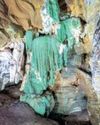
Green cave in Bastar district soon to boost tourism
The Chhattisgarh government will soon open to the public the rare green cave of Kanger Valley National Park in once Maoists-affected Bastar district.
1 min
January 07, 2026
Listen
Translate
Change font size