Try GOLD - Free
How world's super-rich are rewriting the rules
Bangkok Post
|February 13, 2026
Ongoing efforts to derail multilateral tax cooperation lie at the heart of a global programme to replace democratic governance with coercive rule by the extremely wealthy — or what we call 21st-century Caesarism.

Any strategy to counter this programme, therefore, must recognise that taxing extreme wealth is essential to saving democracy.
Fortunately, there has been some progress here. The African Union continues to champion the United Nations Framework Convention on International Tax Cooperation; Colombia, Brazil, Spain, and Tunisia have implemented progressive tax reforms; the French public has signalled strong support for a 2% tax on the ultra-wealthy; and a proposed California ballot initiative would enact a onetime 5% tax on billionaires' net worth.
But tax justice remains hotly contested. At the OECD/G20 Inclusive Framework negotiations in early January, more than 145 countries agreed to give big US multinationals a free pass. Having been compromised by power imbalances from the outset, the OECD/G20 process was easy for US President Donald Trump to hijack. Following intensive lobbying by the United States, large American energy, technology, and pharmaceutical firms secured sweeping exemptions from the 15% global minimum tax that had been agreed in 2021 after a decade of painstaking negotiations.
Of course, the OECD/G20 Inclusive Framework could not state its surrender openly. Instead, it suddenly "discovered" that the existing US tax regime is equivalent to Pillar Two of the original agreement, implying that other countries are barred from imposing additional taxes on multinationals headquartered in the US. But the two are not the same: the global minimum tax applies a country-by-country computation to determine the amount, whereas US rules apply to US-based multinationals' total foreign profits. The latter allows companies to offset high taxes paid in some countries against zero taxes paid in others, thus restoring the advantages of zero-tax jurisdictions.

This story is from the February 13, 2026 edition of Bangkok Post.
Subscribe to Magzter GOLD to access thousands of curated premium stories, and 10,000+ magazines and newspapers.
Already a subscriber? Sign In
MORE STORIES FROM Bangkok Post

Bangkok Post
Life segment forecasts watershed year in 2026
Premiums projected to hit B700bn

2 mins
February 20, 2026
Bangkok Post
Airbus softens output goal, blames Pratt & Whitney
Airbus softened its main jet production target yesterday, blaming engine maker Pratt & Whitney for failing to strike a crucial supply agreement, in the latest sign of tension between plane makers and their main suppliers over shortages.
2 mins
February 20, 2026

Bangkok Post
Stock slide, slow sales hit China EVs
Investors are selling shares of Chinese EV companies, concerned that intensifying competition and shorter production cycles mean the years of easy growth are over, writes Aaron Krolik from Seoul
3 mins
February 20, 2026
Bangkok Post
'No country can deprive Tehran of enrichment rights'
Iran's atomic energy chief Mohammad Eslami said yesterday that no country can deprive the Islamic republic of its right to nuclear enrichment, after US President Donald Trump again hinted at military action following talks in Geneva.
2 mins
February 20, 2026
Bangkok Post
Police cuff fraudster
Aninfamous cryptocurrency scammer from China behind a fraudulent trading platform which caused losses equivalent to four billion baht was arrested in Samut Prakan on Wednesday.
1 min
February 20, 2026
Bangkok Post
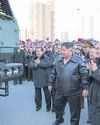
Kim shows off new nuclear rocket system
SEOUL: North Korean leader Kim Jong-un has unveiled a battery of huge nuclear-capable rocket launchers ahead of a key congress of the nation's ruling party, state media said yesterday.
2 mins
February 20, 2026
Bangkok Post
Analysts warn disruption could slow GDP growth
The Thai economy could continue its growth trajectory and expand by 3% a year if the incoming Bhumjaithai-led coalition administration can complete its four-year term, say economists, though they warned any disruption in government formation might cause GDP growth to slide below 1.5% this year.
2 mins
February 20, 2026
Bangkok Post
Prasert mum on Worldcoin MoU
Former digital economy minister Prasert Jantararuangtong declined yesterday to disclose details of his statement to the Department of Special Investigation (DSI) over a controversial memorandum of understanding (MoU) signed between the ministry and a Singapore-based firm related to cryptocurrency.
1 mins
February 20, 2026
Bangkok Post
Democrat forum talks animal welfare
The Democrat Party convened a public forum bringing together animal rights advocates and wildlife experts to push for amendments to the country’s anti-animal cruelty law to explicitly cover wild animals.
1 min
February 20, 2026

Bangkok Post
Sovereign technology key to national security, say pundits
Thailand must develop its own sovereign technology and innovative infrastructure to ensure long-term national security and economic growth, say tech researchers and a military official.
3 mins
February 20, 2026
Listen
Translate
Change font size