
Go Unlimited with Magzter GOLD
Get unlimited access to 10,000+ magazines, newspapers and Premium stories for just
FOG LIGHT
The Caravan
|December 2025
Samayantar's two-and-half-decade fight against the shrinking of Hindi's world
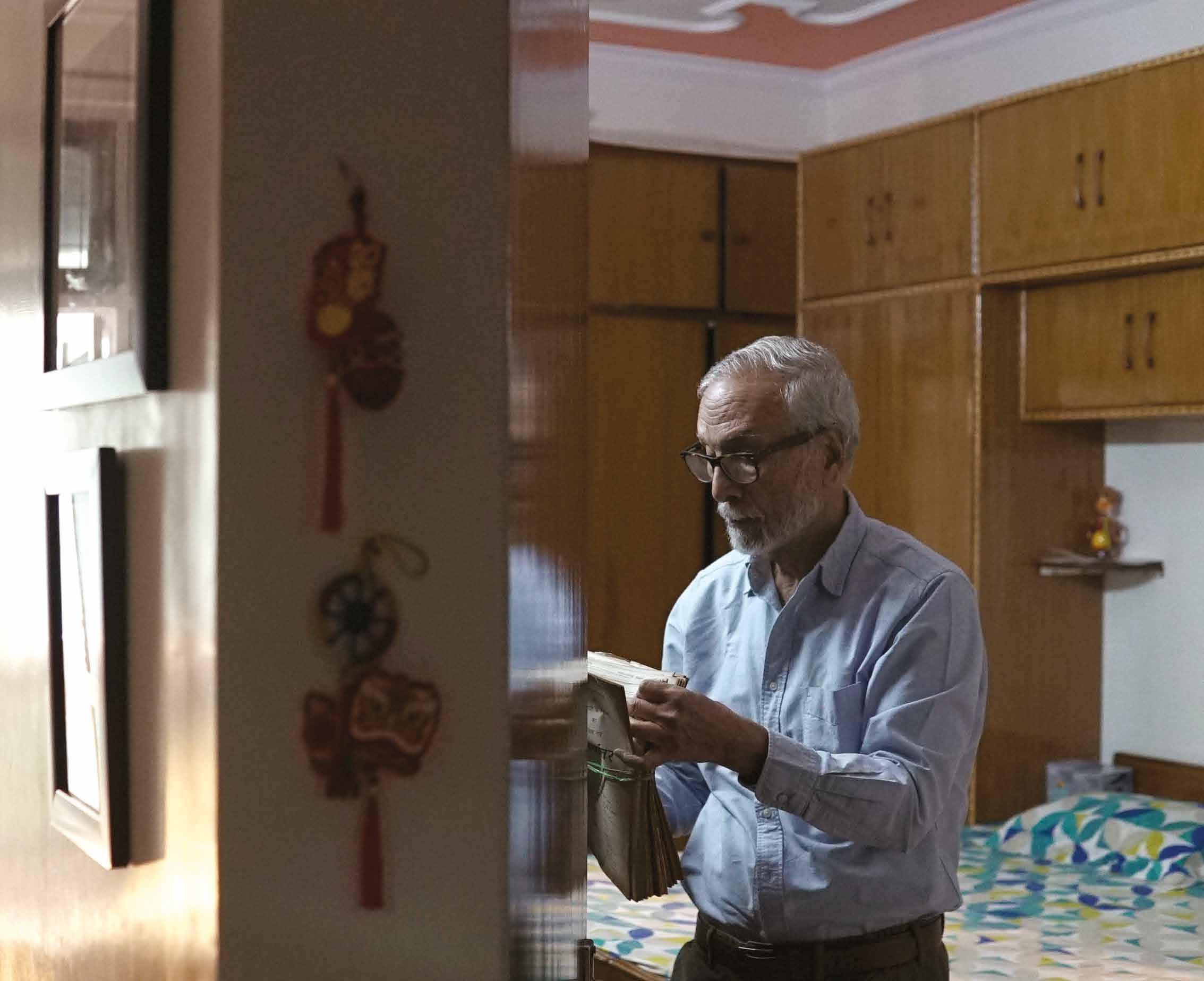
IN OCTOBER THIS YEAR, the Hindi monthly magazine Samayantar completed 26 years of existence. For its more than four thousand subscribers, each issue provides a record of an India that has changed almost beyond recognition. Several of its earlier contributors are no longer alive, while many new names have established themselves as journalists, writers and intellectuals in its pages. If its focus during the initial years—as India opened up to the world during the 1990s—was on the impact of globalisation, liberalisation and privatisation, and the struggles of women, farmers and workers, today its issues regularly discuss the assault on democracy, the rise of Hindutva politics, and the persistent question of caste. In the aftermath of the 2002 anti-Muslim pogrom in Gujarat, the magazine began to publish a series of articles, reports and editorials on majoritarian violence as well as on religion in Indian politics and society.
“Samayantar is the only Hindi magazine today that is alive to the present,” Siddharth Ramu, an author and rights activist, told me. Pointing to its regular coverage of the country’s Northeast and Adivasi regions, he said, “The whole country has been on its map, which is very difficult for a Hindi magazine.” A cursory look at the magazine’s special issues over the years shows how it has retained its political edge while expanding the ambit of its engagement: “Religion: questions of relevance” (March 2003); “Scientific temperament and our society” (February 2004); “1857 and the discourse of change” (February 2007); “Hindu Rashtra at the door” (April 2017); “Dalit pawns of Savarna politics” (July 2017); and “Caste and India’s revolution” (November 2017).
“Since its inception, Samayantar has refused to take the middle ground, demonstrating how a publication can remain true to its commitment to truth and awareness,” Shobha Akshar, a poet and an editor at Hans magazine, told me.

This story is from the December 2025 edition of The Caravan.
Subscribe to Magzter GOLD to access thousands of curated premium stories, and 10,000+ magazines and newspapers.
Already a subscriber? Sign In
MORE STORIES FROM The Caravan
The Caravan
ANY RESEMBLANCE TO ACTUAL EVENTS IS NOT COINCIDENTAL
INTERFAITH ROMANCE FICTION IN THE ERA OF LOVE JIHAD

31 mins
December 2025
The Caravan
Manufacturing Legitimacy
How a Washington Post columnist laundered the Sangh's violent history
7 mins
December 2025

The Caravan
DEATH of REPORTAGE
THE DISMANTLING OF OUTLOOK'S LEGACY
32 mins
December 2025

The Caravan
FOG LIGHT
Samayantar's two-and-half-decade fight against the shrinking of Hindi's world
22 mins
December 2025

The Caravan
THE FINE PRINT
ON 19 MARCH 2005, thousands came out on the streets of Udupi, in coastal Karnataka, to protest a gruesome incident that had shaken the region a week earlier.
23 mins
December 2025

The Caravan
CHARACTER BUILDING
The enduring language of Indian streets
5 mins
December 2025

The Caravan
THE CONVENIENT EVASIONS OF RAJDEEP SARDESAI
DRESSED IN A turban and white kurta pyjama, Narendra Modi sat in the passenger seat of a van crossing the Patan district of Gujarat, in September 2012. Next to him sat Rajdeep Sardesai, the founder-editor of the news channel CNN-IBN.
63 mins
December 2025

The Caravan
Ahmed Kamal Junina: “Every class we hold is a defiant refusal to surrender”
A professor in Gaza on teaching during a genocide / Conflict
11 mins
December 2025

The Caravan
Bangla Pride, Urdu Prejudice
The language wars have primed West Bengal for the RSS
8 mins
November 2025

The Caravan
THE INTERVIEW
\"The people are naked before the government but the government is opaque to them\"
16 mins
November 2025
Listen
Translate
Change font size