Try GOLD - Free
WHY CONCORD?
The Atlantic
|November 2025
The geological origins of the American Revolution
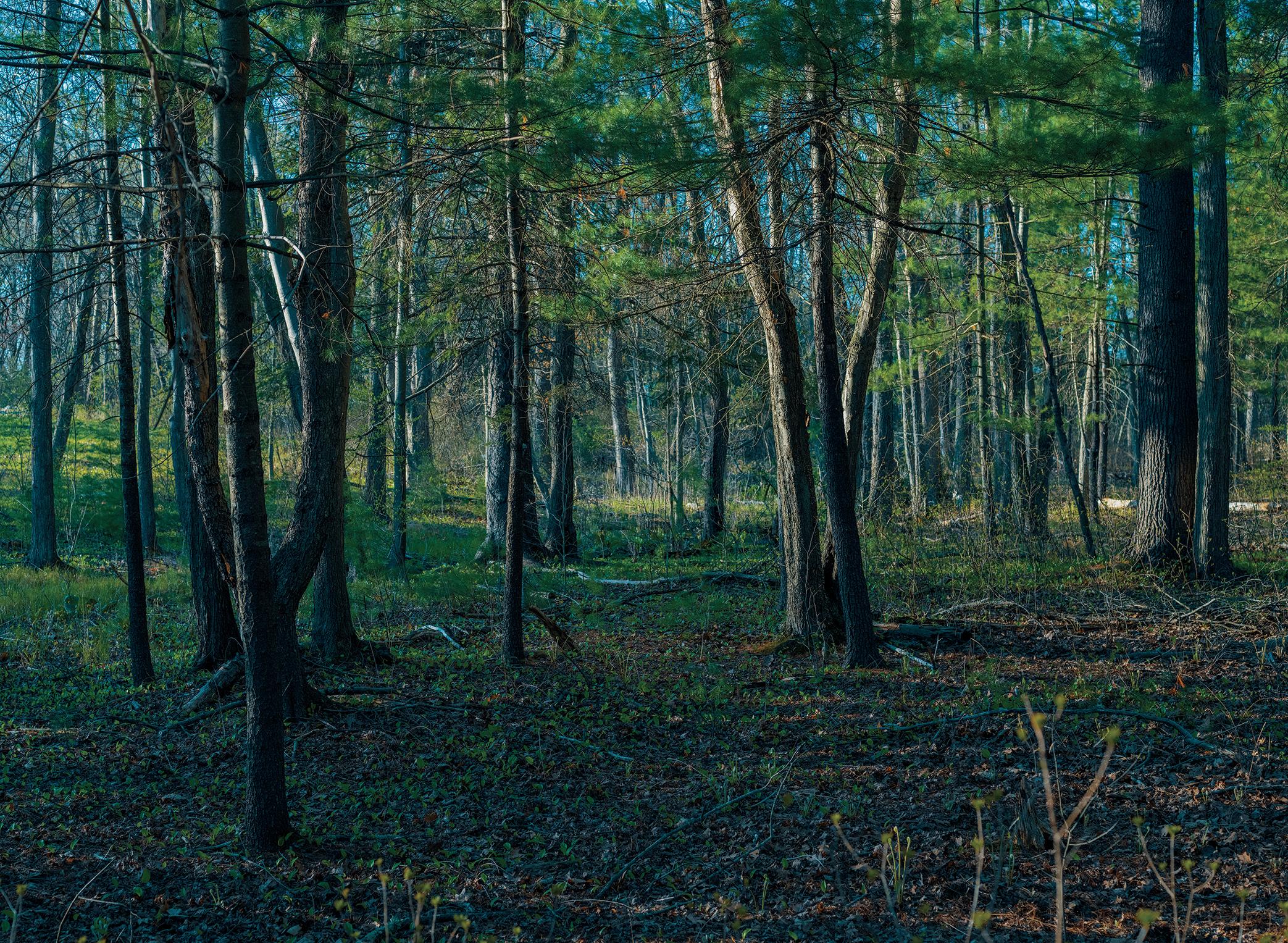
Concord, Massachusetts, 18 miles northwest of Boston, was the starting point for the War of Independence. On April 19, 1775, militia and minutemen from Concord and neighboring towns clashed with British regulars at the Old North Bridge and forced a bloody retreat by the King's men back to safety in Boston. Some 4,000 provincials from 30 towns answered the call to arms.
Concord claimed precedence as the site of THE FIRST FORCIBLE RESISTANCE TO BRITISH AGGRESSION, the words inscribed on the town's 1836 monument to the battle (to the enduring resentment of nearby Lexington, which actually suffered the first American deaths that day). Concord's boast took hold thanks to Ralph Waldo Emerson, who in 1837 portrayed the brief skirmish at the bridge as “the shot heard round the world.” That moment has been a key to local identity ever since.
Concord is widely known for another aspect of its history: It is intimately associated with the Transcendentalist movement in the quarter century before the Civil War. That distinction, too, it owes to Emerson. Born and raised in Boston, the most prominent public intellectual of Civil War America was the scion of six generations of New England divines, going back to Concord’s founding minister. In 1835, at age 32, Emerson returned to “the quiet fields of my fathers,” and from that ancestral base forged his career as a lecturer in Boston and beyond. He quickly became known as an eloquent voice for a new philosophy—calling on Americans to shed outmoded ways of thinking rooted in the colonial and British past and to put their trust in nature and in themselves. Partaking, as he saw it, of a divinity running through all Creation, Americans had an unprecedented opportunity to build an original culture on the principles of democracy, equality, and individual freedom. Emerson's project was to unleash this infinite force.

This story is from the November 2025 edition of The Atlantic.
Subscribe to Magzter GOLD to access thousands of curated premium stories, and 10,000+ magazines and newspapers.
Already a subscriber? Sign In
MORE STORIES FROM The Atlantic

The Atlantic
You Had to Be There
An emerging field of history asks if we can ever really understand how our forebears experienced love, anger, fear, and sorrow.

23 mins
January 2026

The Atlantic
By the Horns
The week before the biggest bullfight of her career, in Cádiz, Spain, this past July, 24-year-old Miriam Cabas posted a carefully produced video on Instagram.
1 mins
January 2026

The Atlantic
The New German War Machine
After World War II, Germany embraced pacifism as a form of atonement. Now the country is arming itself again.
18 mins
January 2026
The Atlantic
The Eloquence
The prime minister was watching a disaster movie when we found him.
4 mins
January 2026

The Atlantic
What's for Dinner, Mom?
The women who want to change the way America eats
12 mins
January 2026

The Atlantic
How Terror Works
A 1947 German novel explores the sometimes corrosive, sometimes energizing nature of fear.
8 mins
January 2026

The Atlantic
Yesterday's Idea of a Modern Man
Sam Shepard, a self-made cowboy, was also a poet of masculine angst.
7 mins
January 2026

The Atlantic
ACCOMMODATION NATION
America's colleges have an extra-time-on-tests problem.
11 mins
January 2026

The Atlantic
Respect the Drummer
A new history of rock, told through its overlooked heroes
5 mins
January 2026

The Atlantic
THE MOST POWERFUL MAN IN SCIENCE
WHY IS ROBERT F. KENNEDY JR. SO CONVINCED HE'S RIGHT?
42 mins
January 2026
Listen
Translate
Change font size