
Go Unlimited with Magzter GOLD
Get unlimited access to 10,000+ magazines, newspapers and Premium stories for just
Try GOLD - Free
THE NEW ARMS RACE
The Atlantic
|August 2025
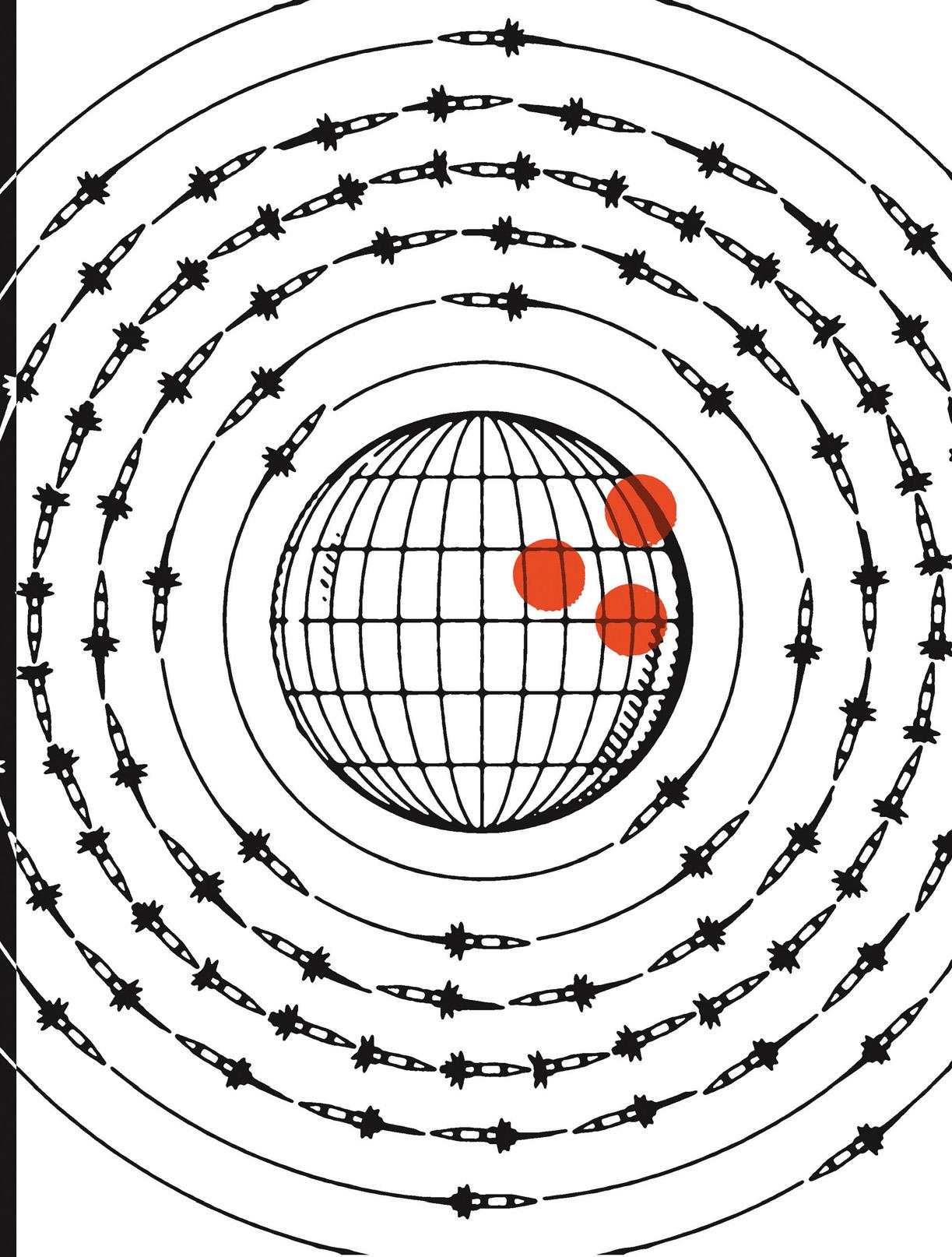
As American power recedes, South Korea and even Japan may pursue the bomb.
KEIKO OGURA WAS just 8 years old when the atoms in the Hiroshima bomb started splitting. When we met in January, some 300 feet from where the bomb struck, Ogura was 87. She stands about five feet tall in heels, and although she has slowed down some in her old age, she moves confidently, in tiny, shuffling steps. She twice waved away my offered arm as we walked the uneven surfaces of the Hiroshima Peace Memorial Park, first neutrally and then with some irritation.
Ogura can still remember that terrible morning in August, 80 years ago. Her older brother, who later died of cancer from radiation, was on a hilltop north of the city when the Enola Gay made its approach. He saw it shining small and silver in the clear blue sky.
Ogura was playing on a road near her house; her father had kept her home from school. “He had a sense of foreboding,” she told me. She remembers the intensity of the bomb’s white flash, the “demon light,” in the words of one survivor. The shock wave that followed had the force of a typhoon, Ogura said. It threw her to the ground and she lost consciousness—for how long, she still doesn’t know.
Like many people who felt the bomb’s power that day, Ogura assumed that it must have been dropped directly on top of her. In fact, she was a mile and a half away from the explosion’s center. Tens of thousands of people were closer. The great waves of heat and infrared light that roared outward killed hundreds of Ogura’s classmates immediately. More than 20,000 children were killed by the bomb.

This story is from the August 2025 edition of The Atlantic.
Subscribe to Magzter GOLD to access thousands of curated premium stories, and 10,000+ magazines and newspapers.
Already a subscriber? Sign In
MORE STORIES FROM The Atlantic
The Atlantic
Deadlier Than Gettysburg
How the cruelty of the Confederacy's prison camps gave rise to the rules of war

10 mins
March 2026

The Atlantic
THE MAN WHO BROKE PHYSICS
One of the pleasures of watching Ilia Malinin, apart from his indifference to gravity, is to witness him becoming.
16 mins
March 2026

The Atlantic
How Toni Morrison Saw History
In her novels, she located the missing story of Black America.
12 mins
March 2026

The Atlantic
The Madness of Lord Tennyson
The Victorian poet was startlingly modern.
5 mins
March 2026

The Atlantic
THE PLOT AGAINST THE HUMANITIES
What is the Andrew W. Mellon Foundation doing to higher education?
22 mins
March 2026

The Atlantic
Why Do Democrats Hate Winning?
Ken Martin has one of those resting dread faces, as if he's bracing for someone to dump a bucket of rocks on his head.
37 mins
March 2026

The Atlantic
ROD DREHER'S DEMONS
HE DERIDES THE ENLIGHTENMENT, SECULARISM, AND THE MODERN WORLD. CONSERVATIVES-INCLUDING THE VICE PRESIDENT-ARE JOINING HIM ON A MARCH BACK TO THE MIDDLE AGES.
20 mins
March 2026

The Atlantic
Every Nation for Itself
President Trump wants to return to the 19th century's international order. He will leave America less prosperous—and the whole world less secure.
19 mins
March 2026

The Atlantic
The Secrets of Indigenous Art
Major exhibits are upending the way people understand Native American and Aboriginal artists.
14 mins
March 2026

The Atlantic
The Novel as Extended Op-Ed
If anyone could write good fiction about immigration, it would probably be Lionel Shriver. Instead, her latest book goes off the rails.
10 mins
March 2026
Listen
Translate
Change font size