Try GOLD - Free
WATERGATE'S REAL LEGACY
TIME Magazine
|August 26, 2024
When Richard Nixon resigned, 50 years ago this August, he became the first and (so far) only U.S. President driven from the nation's highest office. His departure was the result of the political establishment coming together in the wake of Watergate. The experience, Nixon's successor asserted, had vindicated American democracy. "Our Constitution works," President Gerald Ford declared.
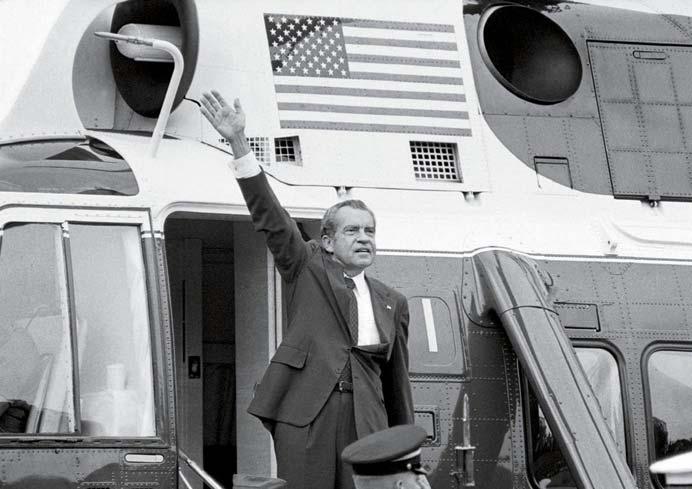
In the early 1970s, it seemed as if the nation's leadership, Republicans and Democrats alike, had closed ranks to preserve widely held norms. Half a century later, the lessons of Watergate look very different. Instead of constraining the Executive Branch, Nixon's ouster marked the beginning of a long-term effort to strengthen the presidency, which culminated with the July 1 presidential-immunity ruling from the Supreme Court. Today's Americans live not in the reassuring afterglow of Watergate, but in its long, destabilizing shadow.
After Nixon's resignation, Congress reformed the campaign-finance system and passed an Ethics in Government Act that included a mechanism for independent-counsel investigations of Executive Branch scandals. And after the Supreme Court ruled in U.S. v. Nixon that the President must comply with subpoenas, the Presidential Records Act of 1978 made clear that the papers of the President and Vice President belonged to the public.


This story is from the August 26, 2024 edition of TIME Magazine.
Subscribe to Magzter GOLD to access thousands of curated premium stories, and 10,000+ magazines and newspapers.
Already a subscriber? Sign In
Listen
Translate
Change font size