Try GOLD - Free
Those who help themselves
TIME Magazine
|January 27, 2025
In Sudan, locals are saving lives that international aid agencies can't reach
PARADOXICALLY, SUDAN IS HOME TO both the worst humanitarian crisis in the world and the most heartening possible response to it. The government of the Northeast African country has ceased to function, the first casualty of a feud between rival generals whose war has also shattered the economy and driven farmers from their land, placing half the population of 50 million at risk of starvation. The same combat that has devastated Sudan has made it so dangerous that international aid organizations cannot ride to the rescue.
So the people have instead.
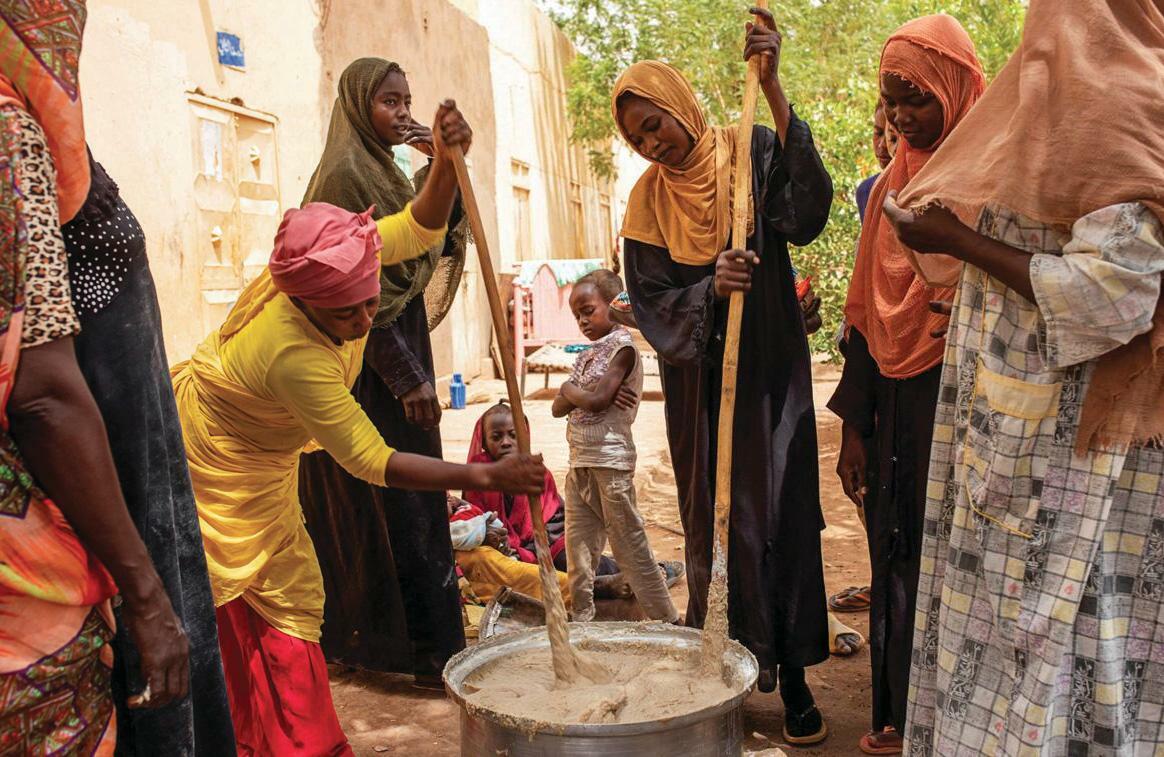
Across Sudan, ordinary citizens have organized themselves to feed their neighbors, accommodate strangers, rescue the wounded, and aid children traumatized by what is happening around them. More than 600 pop-up community centers, known as Emergency Response Rooms (ERRs), are now in operation, a grassroots effort that has become the central relief apparatus. Rising to meet a desperate need, the communal enterprise is also accelerating a global movement that represents a shifting tide in the way humanitarian aid is distributed, with reduced roles for major agencies and new prominence for locally led groups.
“We are helping our people,” says Hanin Ahmed, an early ERR organizer. “To save them. To bring food. To provide protection. We have women’s response rooms, trauma healing centers. We have children in alternative education, schools. We have a lot of stuff.”
The ERRs started when the fighting did. On April 15, 2023, a simmering rivalry between the head of Sudan’s armed forces and the leader of an allied militia erupted into full-blown war. With shells exploding across Khartoum, the capital, Ahmed and fellow students first mobilized to evacuate their university. The next day, a triage center was set up to sort which of the wounded should risk transport to hospitals. Next came a community kitchen, followed by counseling for victims of sexual assault.


This story is from the January 27, 2025 edition of TIME Magazine.
Subscribe to Magzter GOLD to access thousands of curated premium stories, and 10,000+ magazines and newspapers.
Already a subscriber? Sign In
Listen
Translate
Change font size