Try GOLD - Free
Art Is a Way: Struggle, Loss, And Black Living
TIME Magazine
|May 12, 2025
LARCENIA FLOYD DIED IN 2018, TWO years before George. But when her son was being asphyxiated to death by Derek Chauvin, he screamed for her. It was the “Mama!” heard around the world, an anguished incantation that called millions into the streets to protest.
That wail of loss—the sound of a ripped-apart parent and child—to the cold hands of premature death has been a commonplace of Black American life throughout history. Scholar Ruth Wilson Gilmore has described it this way: “Racism, specifically, is the state-sanctioned or extralegal production and exploitation of group-differentiated vulnerability to premature death.” Poet laureate Gwendolyn Brooks put the same thought in these terms: “we jazz June/ we die soon,” she wrote in her seminal poem “We Real Cool.”
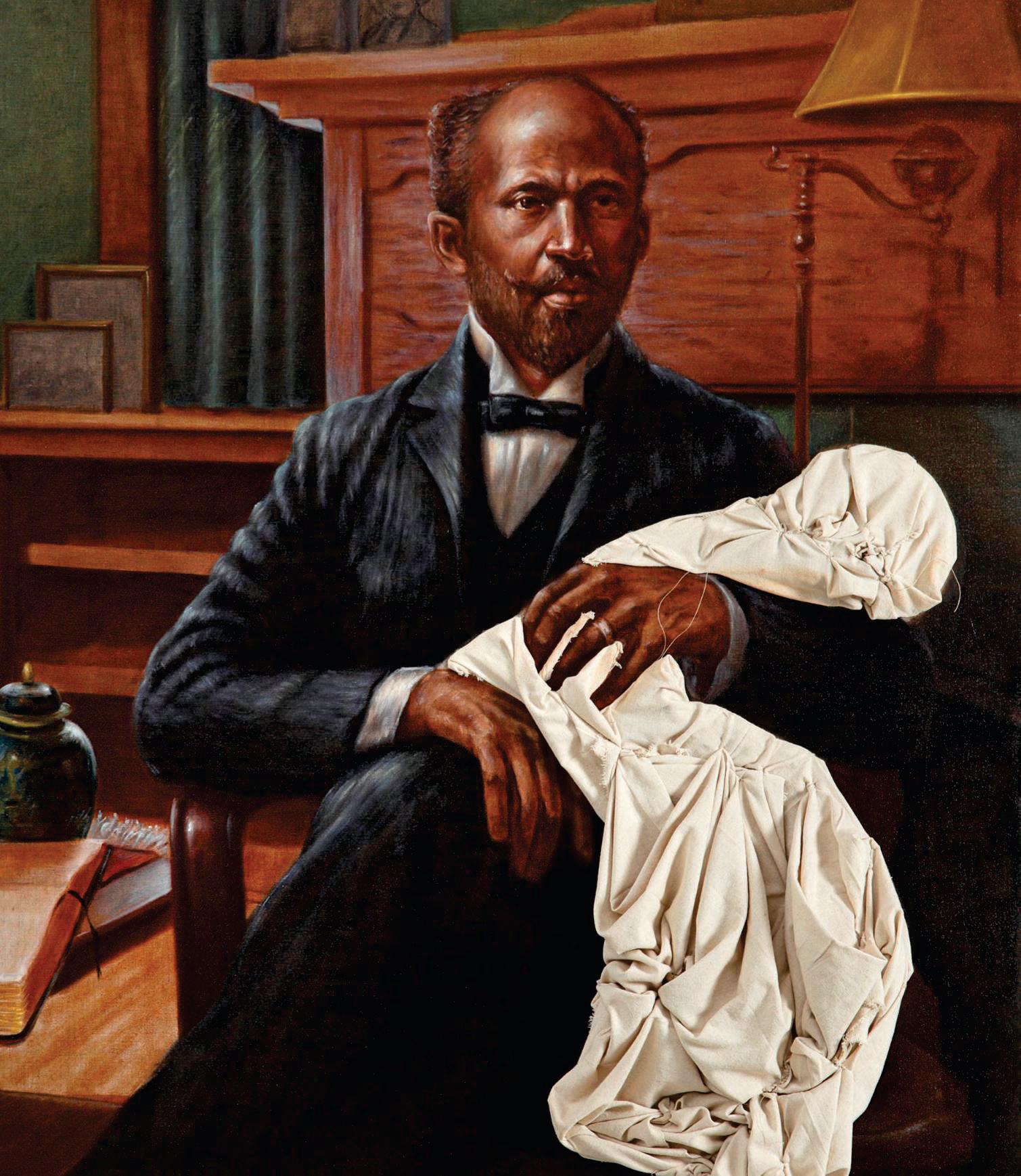
In 2010, fine artist Titus Kaphar completed the painting Father and Son. It depicts scholar W.E.B. DuBois—arguably the greatest thinker of the 20th century—with a cutout where his son might have been, lying across his lap. Kaphar’s piece is a contemporary pietà, one not based in the story of Mary cradling the body of Jesus after his descent from the cross, but instead, one from Black history. In DuBois’ 1903 classic, The Souls of Black Folk, he included the autobiographical essay “Of the Passing of the First Born” about the death of his toddler son Burghardt, a death that might have been avoided had the diphtheria vaccine been made available to Black people in Atlanta, where DuBois was working as a professor at Atlanta University. DuBois carried that grief with him as he wrote essays, fiction, and pageants; as he edited The Crisis, the journal of the NAACP; as he rose and fell as a leader when the nation and many of his peers grew to consider him too strident, too far left, too unflinching. Kaphar’s stirring portrait was completed 107 years after Souls and 47 years after DuBois’ death. It followed, but it also foretold. Father and Son preceded what we think of as the beginning of the Black Lives Matter era by three years, which we tend to date to the acquittal of George Zimmerman, the man who shot and killed 17-year-old Trayvon Martin, in 2013.

This story is from the May 12, 2025 edition of TIME Magazine.
Subscribe to Magzter GOLD to access thousands of curated premium stories, and 10,000+ magazines and newspapers.
Already a subscriber? Sign In
Listen
Translate
Change font size