Try GOLD - Free
LESSONS FROM SINDOOR
THE WEEK India
|June 22, 2025
While India's military actions on May 7 and 10 were successful, it is vital to assess strategic and tactical lessons and shortcomings
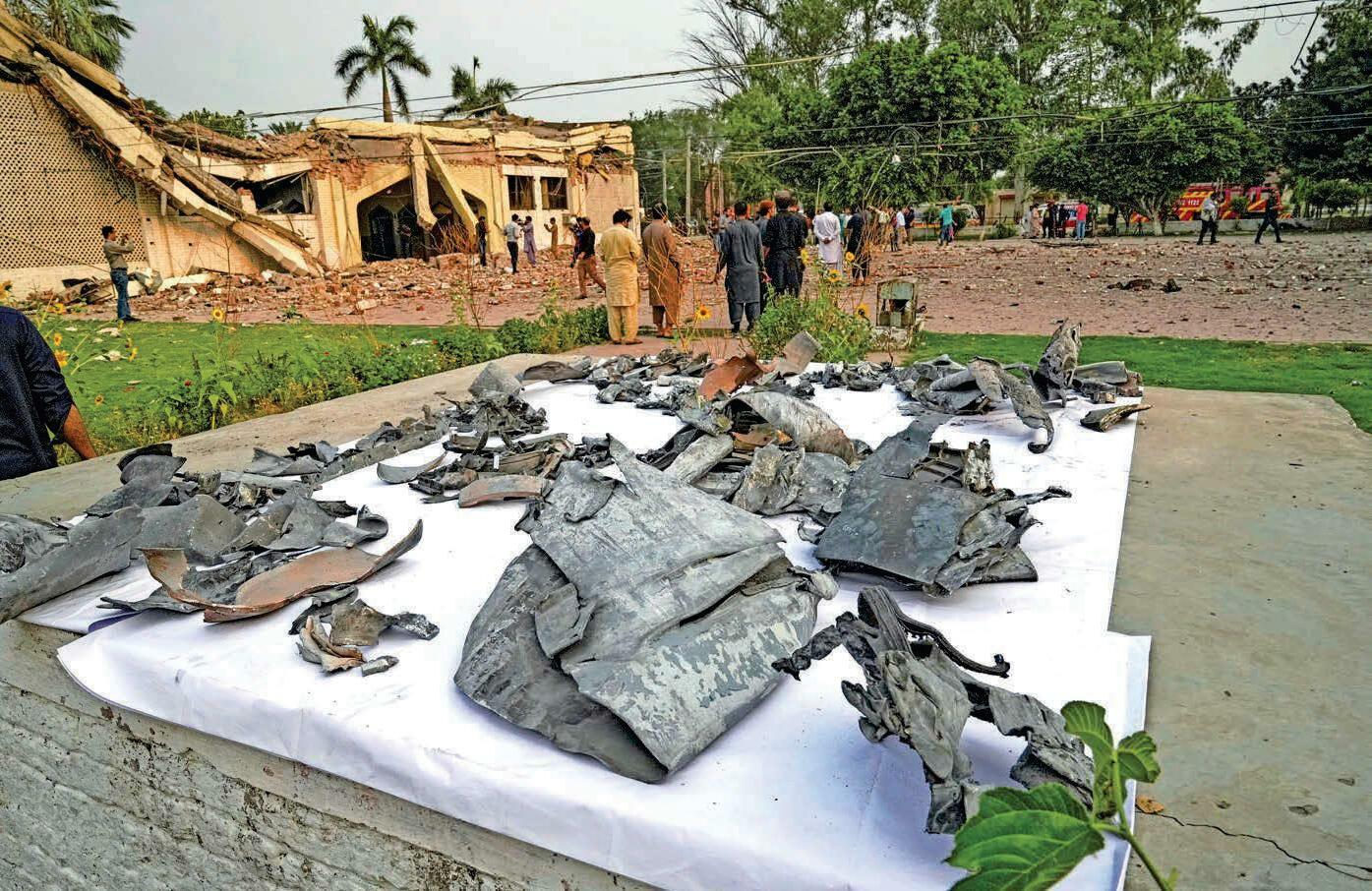
WHEN THE history of the Indian military is written, the early morning of May 10, 2025, will be remembered in golden letters. On this day, the Indian Air Force launched multiple precision strikes, using cruise missiles, on 11 Pakistan Air Force bases—Nur Khan (Chaklala), Rafiqui, Murid, Rahim Yar Khan, Sukkur, Chunian, Pasrur, Sialkot, Bholari, Mushaf (Sargodha) and Skardu. These strikes severely damaged runways, radars, air defence systems, command hubs, hangars, air traffic control towers, UAVs, ammunition depots and AEW (airborne early warning) aircraft. Such was the scale and precision of the attack that the Pakistan military was forced to sue for peace—directly and through US intermediaries—resulting in a ceasefire by that afternoon. Operation Sindoor, launched on May 7, had thus achieved its objective.
The May 10 airstrikes marked the fourth and final stage of escalation in a conflict that began on April 22, following Pakistan-sponsored terror attacks in Pahalgam, Kashmir, which killed 25 tourists and a pony minder. These attacks were attributable to Pakistan's “deep state”—the army, intelligence agencies and terror groups—led by General Asim Munir. Surprisingly, despite a clear military defeat, Munir was promoted to field marshal.
India's initial response to the Pahalgam attack was diplomatic and economic, including suspension of the Indus Water Treaty. Fourteen days later, staying true to its policy of overt, punitive and proportionate retaliation, India launched Operation Sindoor in the early hours of May 7. The operation began with strikes on terror infrastructure across Pakistan, including, for the first time, targets outside Pakistan-occupied Kashmir (PoK)—notably in Sialkot and Bahawalpur in Punjab province.



This story is from the June 22, 2025 edition of THE WEEK India.
Subscribe to Magzter GOLD to access thousands of curated premium stories, and 10,000+ magazines and newspapers.
Already a subscriber? Sign In
MORE STORIES FROM THE WEEK India

THE WEEK India
WHERE THE STORM NEVER REALLY PASSES
Guantánamo Bay, once a symbol of the ‘war on terror’, has emerged as a flashpoint in Donald Trump’s immigration battles, exposing deep tensions between America’s security, legality and moral commitments

10 mins
December 21, 2025

THE WEEK India
Moderation is the key
Most people do not believe me, but I am a moderate man.
3 mins
December 21, 2025

THE WEEK India
OCEAN THERAPY
The Modi-Putin summit unveils a cooperation strategy that will rewire sea trade routes and expand India's maritime connect to the Arctic
3 mins
December 21, 2025

THE WEEK India
Indian Army men fighting for the British against the Japanese were also patriots
Readers in India may be misled by the title of Gautam Hazarika's new book, The Forgotten Indian Prisoners of World War II: Surrender, Loyalty, Betrayal and Hell. It is not about the INA prisoners who were put on trial in the Red Fort by the British. This book is about those Indian soldiers who fought the Japanese in Singapore, Malaya and Burma alongside the British, and who had to surrender, were taken prisoner, put to torture and hard labour by the Japanese, refused to join the INA, and faced death or managed to escape. While recounting their stories, Hazarika also gives an insight into the INA movement. Edited excerpts from an interview with the author:
4 mins
December 21, 2025

THE WEEK India
CHAT WITH NEHRU, QUERY KALAM...
The Prime Ministers' Museum & Library showcases the life and contributions of prime ministers and nation-builders
3 mins
December 21, 2025

THE WEEK India
The art of shifting gears in investing
“Hope is not a strategy,” Hayes growls in one memorable scene, dismissing a teammate’s starry-eyed optimism.
3 mins
December 21, 2025

THE WEEK India
Trouble on the tarmac
It is not IndiGo but Indian aviation that has become too big to fail
4 mins
December 21, 2025

THE WEEK India
SHUX AND BLUE MARBLE
THE 18 DAYS IN SPACE MIGHT HAVE MADE HIM A HOUSEHOLD NAME, BUT GROUP CAPTAIN SHUBHANSHU SHUKLA IS AS GROUNDED AS EVER. AND BEFORE HE SUITS UP FOR HIS NEXT MISSION, THE WEEK'S MAN OF THE YEAR SHARES STORIES FROM HIS LIFE AND SPACE, INCLUDING HOW HE BECAME A 'WATER BENDER'
9 mins
December 21, 2025

THE WEEK India
The parietal lobe
If the frontal lobe is where we decide what to do, the parietal lobe is where we understand where we are. It is the brain's internal GPS, the quiet navigator that lets you put your hand exactly where your teacup is, find the edge of a staircase without staring at it, or scratch the correct side of your head when it itches. When it works well, we move through life gracefully. When it falters, life becomes slapstick comedy.
2 mins
December 21, 2025

THE WEEK India
Area of the globe? Pie is cubed
Floating in his private pool, China's helmsman Mao Zedong shared his strategic vision with visiting Soviet strongman Nikita Khrushchev in 1958: \"You look after Europe, and leave Asia to us.\" Obviously, he expected the US to withdraw into its prewar Monroe world of the Americas, thus making the world tripolar.
2 mins
December 21, 2025
Listen
Translate
Change font size