Try GOLD - Free
Full-court press
THE WEEK India
|June 01, 2025
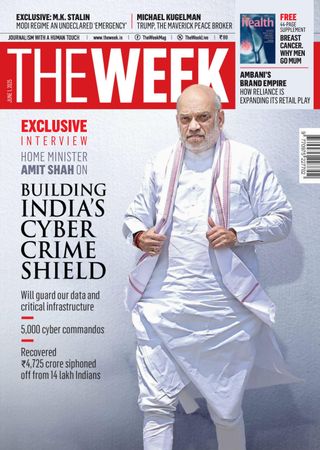
Chief Justice B.R. Gavai's commitment to social justice, and his judicial restraint, offer opportunities for a meaningful legacy. But he only has six months to do so
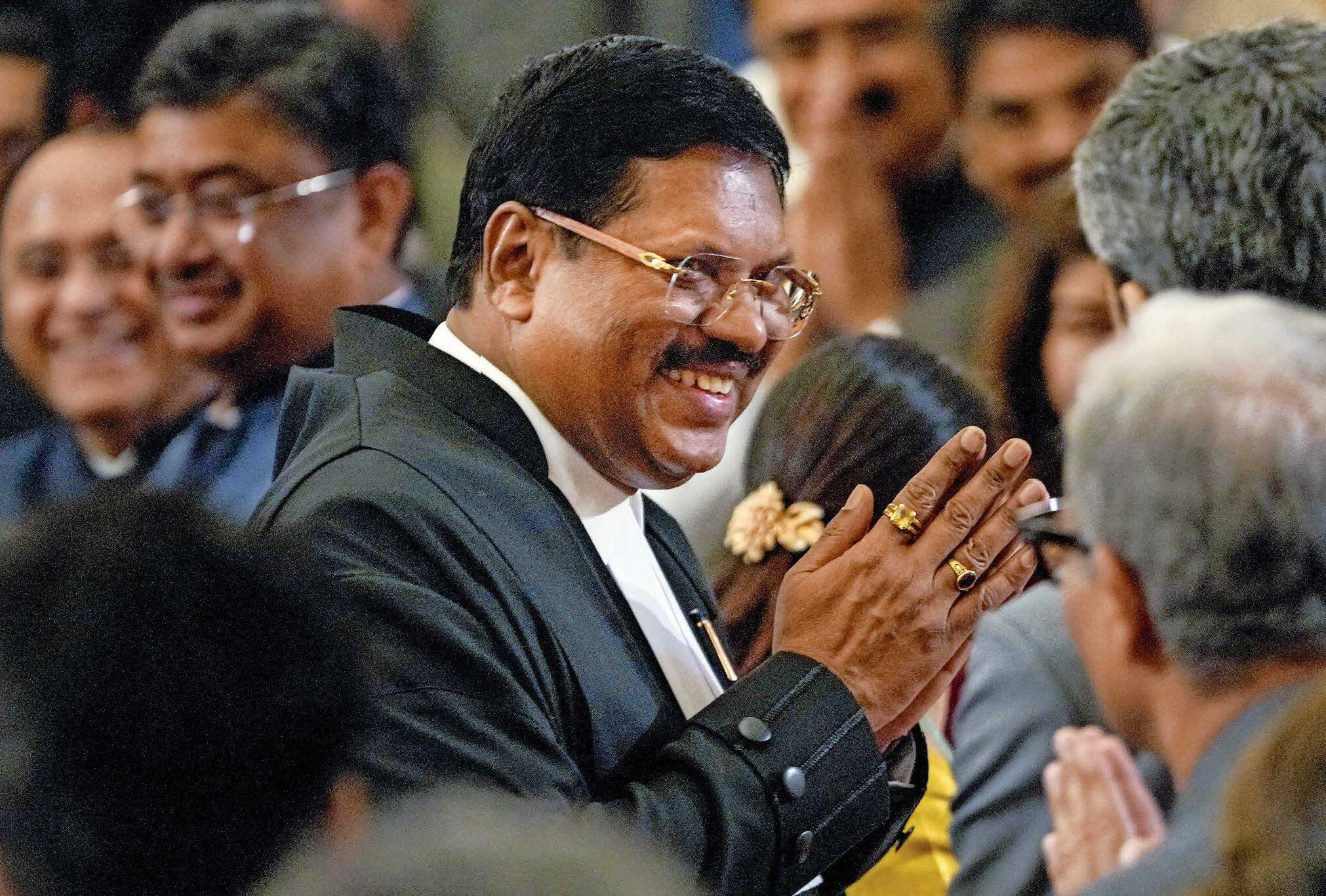
EVERY CORNER OF Chief Justice B.R. Gavai's home resonates with Maharashtrian warmth. Intricate rangoli designs at the entrance, interiors featuring brass lamps and antique copper utensils, a beautifully crafted wooden swing with embroidered cushions, and a courtyard lush with tulsi plants. It is a perfect parcel of regional pride, a piece of Amravati he has carried into the national capital.
A lover of Marathi cuisine, the chief justice is often found enjoying a meal at Maharashtra Sadan in the capital, and still makes it a point to visit his village three times a year—on the birth and death anniversary of his late father, and during the annual fair.
His father, Ramkrishna Suryabhan Gavai, known as Dadasaheb, was a titan in his own right: a parliamentarian, former governor of Bihar and Kerala, and a fierce Ambedkarite. Raised in a Buddhist household, the young Gavai grew up amid debates on justice and dignity, with the Constitution not just a document but a sacred covenant. “I am here only because of Dr B.R. Ambedkar and the Constitution of India,” he told THE WEEK days before he took oath as chief justice. “I am fulfilling my father’s dream.”
At 25, Gavai stepped into the legal arena and honed his craft at the Nagpur Bench of the Bombay High Court. He specialised in constitutional and administrative law, and was elevated to the Bombay High Court as an additional judge in 2003. He served across Mumbai, Nagpur, Aurangabad and Panaji, his rulings a blend of rigour and empathy. In 2019, his ascent to the Supreme Court marked a historic moment: he became the first scheduled caste judge in the apex court since Justice K.G. Balakrishnan's retirement in 2010. Now, as the first Buddhist and second dalit chief justice, the 64-year-old has six months to try and implement his vision and bring about transformative change.

This story is from the June 01, 2025 edition of THE WEEK India.
Subscribe to Magzter GOLD to access thousands of curated premium stories, and 10,000+ magazines and newspapers.
Already a subscriber? Sign In
MORE STORIES FROM THE WEEK India
THE WEEK India
WHERE THE STORM NEVER REALLY PASSES
Guantánamo Bay, once a symbol of the ‘war on terror’, has emerged as a flashpoint in Donald Trump’s immigration battles, exposing deep tensions between America’s security, legality and moral commitments

10 mins
December 21, 2025

THE WEEK India
Moderation is the key
Most people do not believe me, but I am a moderate man.
3 mins
December 21, 2025

THE WEEK India
OCEAN THERAPY
The Modi-Putin summit unveils a cooperation strategy that will rewire sea trade routes and expand India's maritime connect to the Arctic
3 mins
December 21, 2025

THE WEEK India
Indian Army men fighting for the British against the Japanese were also patriots
Readers in India may be misled by the title of Gautam Hazarika's new book, The Forgotten Indian Prisoners of World War II: Surrender, Loyalty, Betrayal and Hell. It is not about the INA prisoners who were put on trial in the Red Fort by the British. This book is about those Indian soldiers who fought the Japanese in Singapore, Malaya and Burma alongside the British, and who had to surrender, were taken prisoner, put to torture and hard labour by the Japanese, refused to join the INA, and faced death or managed to escape. While recounting their stories, Hazarika also gives an insight into the INA movement. Edited excerpts from an interview with the author:
4 mins
December 21, 2025

THE WEEK India
CHAT WITH NEHRU, QUERY KALAM...
The Prime Ministers' Museum & Library showcases the life and contributions of prime ministers and nation-builders
3 mins
December 21, 2025

THE WEEK India
The art of shifting gears in investing
“Hope is not a strategy,” Hayes growls in one memorable scene, dismissing a teammate’s starry-eyed optimism.
3 mins
December 21, 2025

THE WEEK India
Trouble on the tarmac
It is not IndiGo but Indian aviation that has become too big to fail
4 mins
December 21, 2025

THE WEEK India
SHUX AND BLUE MARBLE
THE 18 DAYS IN SPACE MIGHT HAVE MADE HIM A HOUSEHOLD NAME, BUT GROUP CAPTAIN SHUBHANSHU SHUKLA IS AS GROUNDED AS EVER. AND BEFORE HE SUITS UP FOR HIS NEXT MISSION, THE WEEK'S MAN OF THE YEAR SHARES STORIES FROM HIS LIFE AND SPACE, INCLUDING HOW HE BECAME A 'WATER BENDER'
9 mins
December 21, 2025
THE WEEK India
The parietal lobe
If the frontal lobe is where we decide what to do, the parietal lobe is where we understand where we are. It is the brain's internal GPS, the quiet navigator that lets you put your hand exactly where your teacup is, find the edge of a staircase without staring at it, or scratch the correct side of your head when it itches. When it works well, we move through life gracefully. When it falters, life becomes slapstick comedy.
2 mins
December 21, 2025

THE WEEK India
Area of the globe? Pie is cubed
Floating in his private pool, China's helmsman Mao Zedong shared his strategic vision with visiting Soviet strongman Nikita Khrushchev in 1958: \"You look after Europe, and leave Asia to us.\" Obviously, he expected the US to withdraw into its prewar Monroe world of the Americas, thus making the world tripolar.
2 mins
December 21, 2025
Listen
Translate
Change font size