Try GOLD - Free
The Journey Of The Kon-Tiki
Reader's Digest India
|June 2024
Is it possible to cross the Pacific on a wooden raft? Natural scientist Thor Heyerdahl risks everything to prove it
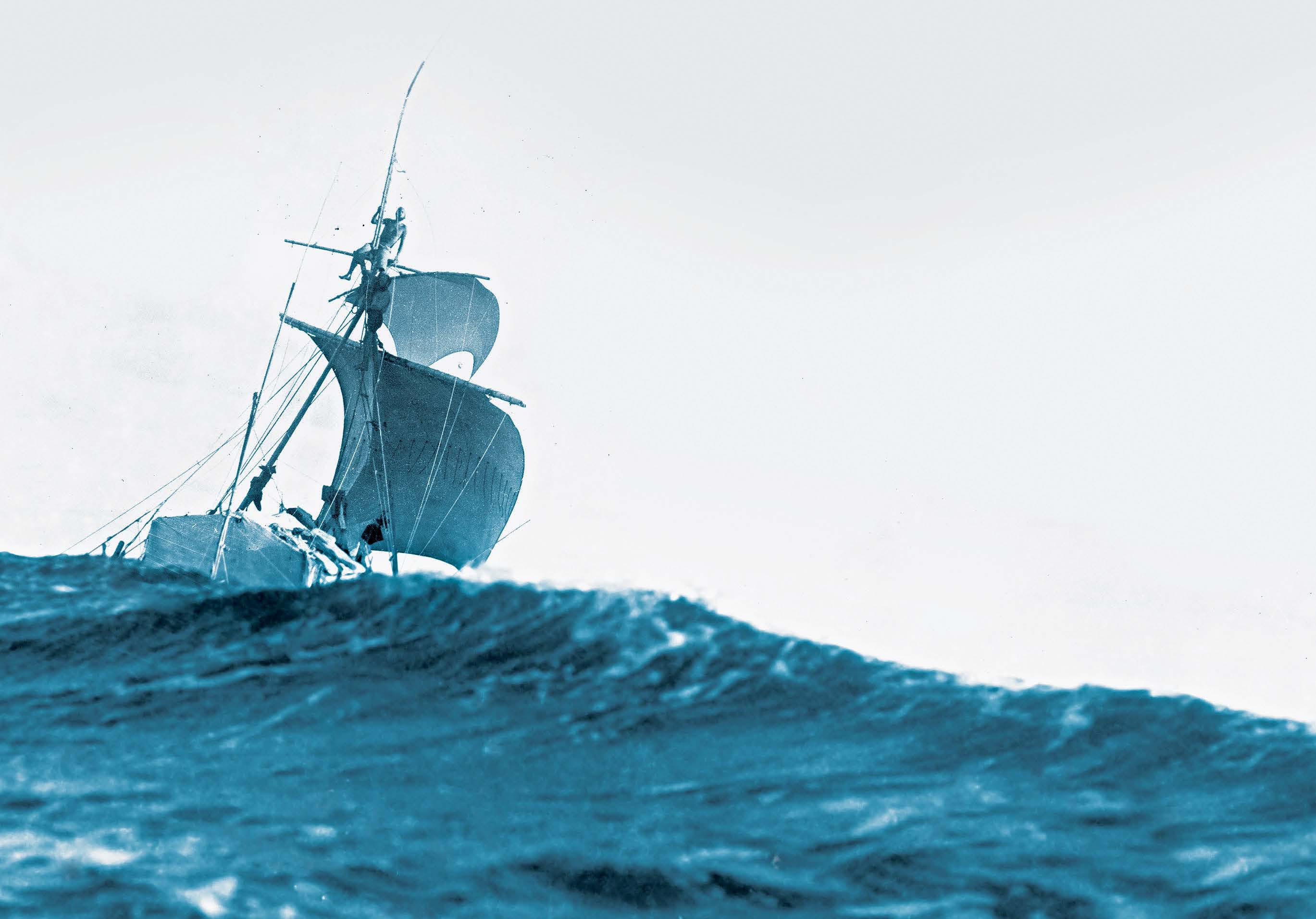
It is a dangerous experiment. In 1947, natural scientist Thor Heyerdahl (above) and five companions set sail from Peru on a wooden raft. Their destination: Polynesia, some 7,000 kilometres away. Heyerdahl wants to prove that the island world in the Pacific was originally settled from South America. Experts ridi- cule the Norwegian. Recent genetic analyses, however, have shone a new light on the adventure.
WITHIN MINUTES, the calm waters of the Pacific Ocean around the Kon-Tiki have turned into a stormy sea: dark clouds chase across the sky. Powerful waves lift the raft by five or six metres, then abruptly send it plummeting into deep, blue-black valleys. It lurches in the wind. And the logs from which the raft is built move against each other.
Thor Heyerdahl, the 32-year-old Norwegian leader of the expedition, clings to the bow in the rigging, when suddenly a cry for help cuts through the roar of the storm. A crew member has slipped from the raft. The man is drifting in the waves, trying to hold on to the rudder blade—in vain.
Heyderdahl yells commands, but no one hears him amid the roar. One crew member tries to throw a lifeline, but it’s caught in its drum. Another hurls the life jacket into the storm; the wind tosses it back onto the deck. The man in distress is barely visible among the waves. The crew cannot turn the vessel; even tacking against the wind is out of the question. Finally, another crew member jumps into the ocean. He crawls through the waves with one arm, holding a life jacket in the other arm, which is moored to the raft by a line.
Twenty metres from the raft, the two men come together between the waves. The crew hastily pulls them back on board using the line.



This story is from the June 2024 edition of Reader's Digest India.
Subscribe to Magzter GOLD to access thousands of curated premium stories, and 10,000+ magazines and newspapers.
Already a subscriber? Sign In
MORE STORIES FROM Reader's Digest India

Reader's Digest India
THE DEATH OF ROBIN HOOD
The English folktale of 'Robin Hood, the archer-outlaw who robs from the rich and gives to the poor, has been a Hollywood staple for ages.

1 min
June, 2026

Reader's Digest India
The Man Behind the Maestro
Beyond the towering reputation of Satyajit Ray lies a more intimate story—of a husband, artist, collaborator and dreamer, seen through the eyes of a trusted companion
3 mins
June, 2026

Reader's Digest India
WHERE HOPE GROWS
YOUNG UGANDANS LEARN HOW TO FARM THEIR LAND SUSTAINABLY IN MOBILE AGRICULTURAL SCHOOLS
7 mins
June, 2026

Reader's Digest India
CLEANING THE TIDE
Can marine pollution be solved for good? The Ocean Cleanup believes the answer lies in stopping plastic before it reaches the sea—and its latest effort targets Mumbai’s trash-clogged waterways
4 mins
June, 2026

Reader's Digest India
GIVE ME SHARKS!
WILL THE GREATEST DREAM OF A DIVER'S LIFE COME TRUE IN THE RED SEA?
8 mins
June, 2026

Reader's Digest India
Kafkaesque: Ten Great Writers Translate the Twentieth Century
When Franz Kafka died at age 40, he was a relatively unknown German-language writer with few takers outside of his native Prague.
1 min
June, 2026

Reader's Digest India
PHOTO FINISH
YOUR Funniest CAPTIONS
1 min
June, 2026

Reader's Digest India
Could He Avoid AI for Two Whole Days?
Spoiler alert: It was harder than you might think!
10 mins
June, 2026

Reader's Digest India
OUR DATA, OURSELVES?
Wearable trackers—from smart watches to rings—can give you stats on everything from your daily step count to minutes of REM sleep. But does more information lead to better health?
9 mins
June, 2026

Reader's Digest India
Yankee Doodle Diss?
Written by a British army surgeon in 1755 and set to an existing tune, ‘Yankee Doodle’ was meant to mock American colonists, with ‘doodle’ meaning ‘fool’ and ‘dandy’ referring to a vain man.
1 min
June, 2026
Listen
Translate
Change font size