Try GOLD - Free
Hope: Blessing or Curse?
Philosophy Now
|April/May 2025
John Creigan considers whether hope helps us thrive or holds us back.
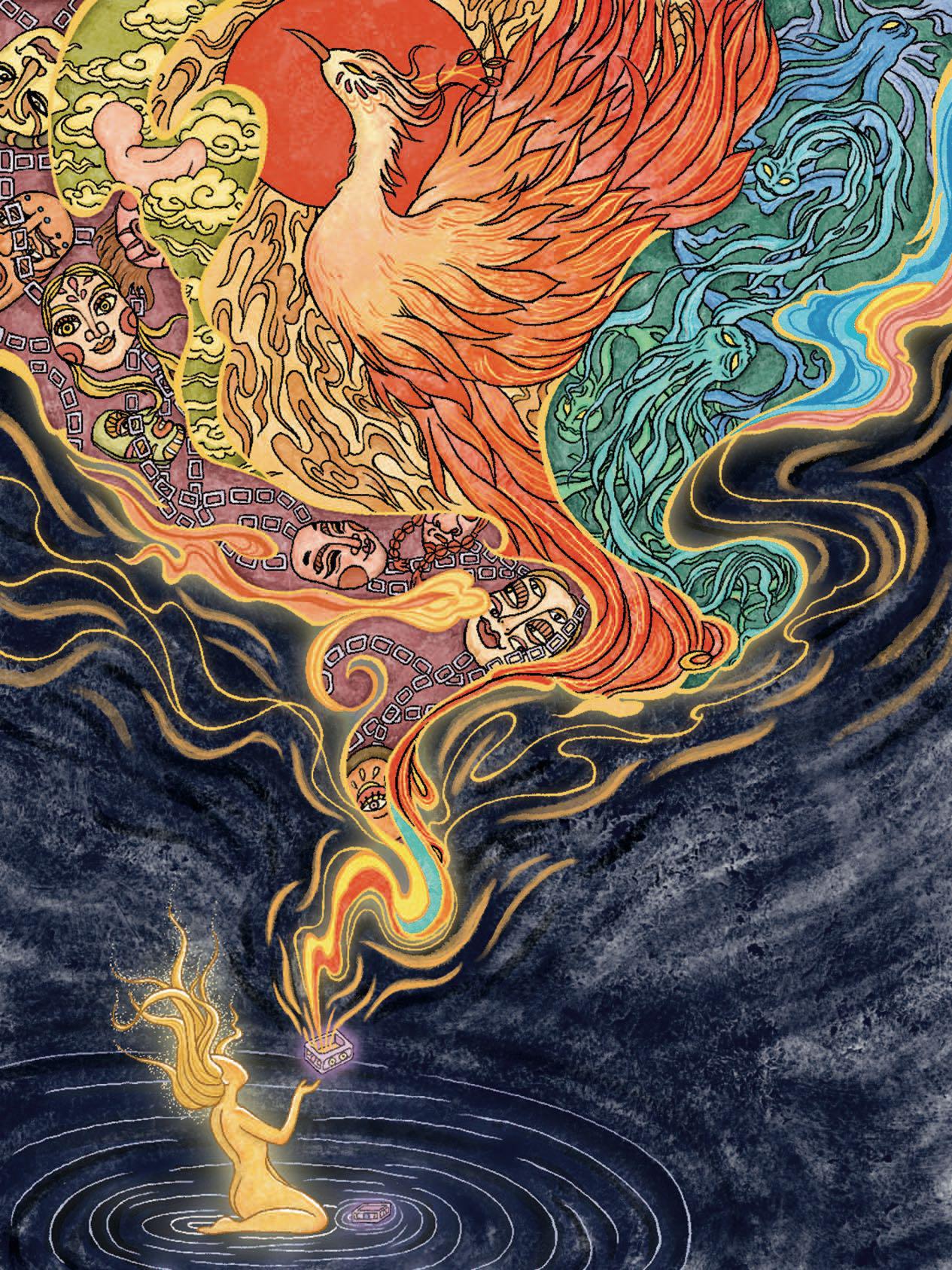
Hope is often celebrated as one of humanity’s greatest virtues — a force that sustains us through adversity by fuelling dreams of a better tomorrow. It’s revered in literature, psychology, and philosophy as a beacon of resilience and optimism. Yet I find myself questioning whether hope is as universally beneficial as we often believe. Could it be that hope, so often hailed as a blessing, contains negative consequences we rarely consider? Is it possible that hope sometimes hinders, rather than helps, human flourishing?
Consider this, for a start: for hope to exist, there must also be doubt. Hope does not thrive (and is not even needed) in certainty. Rather, it presupposes uncertainty about the future, such that what we desire may or may not come to pass. Doubt, then, becomes an essential partner to hope, indeed, the very foundation upon which it rests. So doesn’t our attachment to hope also compel us to tolerate, even embrace, doubt, as an unavoidable aspect of life? And if so, what does this reliance on hope, and the accompanying doubt, mean for how we should take responsibility for shaping our future? For instance, if doubt is needed for hope to exist, would people rather live with doubt, just so they can feel hope? And does our attachment to hope compel us to tolerate uncertainty even when it might be more empowering to let go of hope altogether and face reality? If doubt is hope’s necessary counterpart, might we benefit more from confronting the doubt directly, rather than clinging to hope’s comfort?

This story is from the April/May 2025 edition of Philosophy Now.
Subscribe to Magzter GOLD to access thousands of curated premium stories, and 10,000+ magazines and newspapers.
Already a subscriber? Sign In
MORE STORIES FROM Philosophy Now

Philosophy Now
Bilbo Theorizes About Wellbeing
Eric Comerford overhears Bilbo and Gandalf discussing happiness.

9 mins
December 2025 / January 2026

Philosophy Now
What Women?
Marcia Yudkin remembers almost choking at Cornell
11 mins
December 2025 / January 2026

Philosophy Now
Islamic Philosophers On Tyranny
Amir Ali Maleki looks at tyranny from an Islamic perspective.
4 mins
December 2025 / January 2026

Philosophy Now
Peter Singer
The controversial Australian philosopher defends the right to choose to die on utilitarian grounds
5 mins
December 2025 / January 2026

Philosophy Now
Another Conversation with Martin Heidegger?
Raymond Tallis talks about communication problems.
7 mins
December 2025 / January 2026

Philosophy Now
Letters
When inspiration strikes, don't bottle it up. Email me at rick.lewis@philosophynow.org Keep them short and keep them coming!
17 mins
December 2025 / January 2026

Philosophy Now
The Philosophy of William Blake
Mark Vernon looks at the imaginative thinking of an imaginative artist.
9 mins
December 2025 / January 2026

Philosophy Now
Philosophical Haiku
Peering through life’s lens God in nature is deduced: The joy of being.
1 mins
December 2025 / January 2026

Philosophy Now
Philosophy Shorts
More songs about Buildings and Food' was the title of a 1978 album by the rock band Talking Heads. It was about all the things rock stars normally don't sing about. Pop songs are usually about variations on the theme of love; tracks like Rose Royce's 1976 hit 'Car Wash' are the exception. Philosophers, likewise, tend to have a narrow focus on epistemology, metaphysics and trifles like the meaning of life. But occasionally great minds stray from their turf and write about other matters, for example buildings (Martin Heidegger), food (Hobbes), tomato juice (Robert Nozick), and the weather (Lucretius and Aristotle). This series of Shorts is about these unfamiliar themes; about the things philosophers also write about.
2 mins
December 2025 / January 2026

Philosophy Now
Hedonic Treadmills in the Vale of Tears
Michael Gracey looks at how philosophers have pursued happiness.
8 mins
December 2025 / January 2026
Listen
Translate
Change font size