
Go Unlimited with Magzter GOLD
Get unlimited access to 10,000+ magazines, newspapers and Premium stories for just
Try GOLD - Free
Holey moley!
Country Life UK
|March 22, 2023
Fêted in literature and as reviled in myth as it can sometimes be in real life, the mole is the mammal equivalent of Marmite, says Harry Pearson, as he tunnels into the subterranean world of the 'gentleman in velvet'
-

THE mole can be faulted for many things. His old English name, 'mouldwarp', means 'earth-thrower'. The soil he carelessly flings around causes damage to farm machinery. The soft hills he creates with his subterranean burrowing endangers the limbs of livestock and horses and brings green keepers and groundsmen out in a cold sweat. His mining slices through the roots of crops and causes flowers to wither and flop. His inconsiderate dirt chucking renders silage unpalatable to cattle and can spread listeria. Defenders counter that he aerates the soil, improves drainage and eats the underground grubs that feed on plants. In Germany, in recognition of his environmental work, the mole is protected by law.
Something both friends and foe can agree on, however, is the mole's work ethic. The 5in-long creature digs at a rate that puts the hi-tech boring equipment used by Cross-rail to shame, excavating 20 yards in a single day. In his five-year lifespan, he will build enough tunnels to stretch from Kent to the Pas de Calais. Nor does he prioritise speed over quality. The mole is no cowboy. The tunnels he constructs are sturdy. They can see service for more than 20 years.
Were it not for the havoc he wreaks, this hard-working animal would undoubtedly be an object of wider admiration. As it is, we tread warily when he is around. There are an estimated 40 million moles in Britain (Ireland is as free of moles as it is of snakes, although St Patrick takes no credit in that case). Were they to gather in packs, moles might cause the entire nation to subside. Thankfully, they don't.

This story is from the March 22, 2023 edition of Country Life UK.
Subscribe to Magzter GOLD to access thousands of curated premium stories, and 10,000+ magazines and newspapers.
Already a subscriber? Sign In
MORE STORIES FROM Country Life UK
Country Life UK
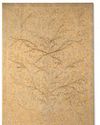
Opposites can attract
As a big bookcase designed by Peter Waals proves large pieces of furniture can do well, a notable collection shows harmony can be born from difference

3 mins
June 03, 2026
Country Life UK
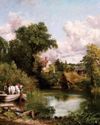
His green and pleasant land
Few artists travelled as little as John Constable, but his deep knowledge of the parts of England he loved gave him insights that others missed. Susan Owens explores the places that delighted him
6 mins
June 03, 2026

Country Life UK
Dreaming of roses
A thousand English roses now bloom in the restored walled garden that forms the heart of this 27-acre estate, writes Charles Quest-Ritson
4 mins
June 03, 2026

Country Life UK
Ring for peace
A COPIOUS quantity of apple strudel became the unintended consequence of a winter walking holiday in the Austrian Tyrol.
2 mins
June 03, 2026
Country Life UK
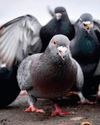
Best of the pests
Pity the feral pigeon: long campaigned against as an urban nuisance, it is the descendant of birds lured into human service, some of which distinguished themselves in wartime
3 mins
June 03, 2026

Country Life UK
Red alert
The time is ripe for tomatoes in every form. We are days into British Tomato Fortnight (June 1–14) and weeks from Royal Ascot (June 16–20), where Bright Tomato has been declared the inaugural Colour of the Year by Ascot creative director Daniel Fletcher.
1 mins
June 03, 2026
Country Life UK
Totally tropical
I FIRST grew pineapple guava, also called feijoa (Acca or Feijoa sellowiana) almost a quarter of a century ago, when there were few nurseries stocking them.
3 mins
June 03, 2026
Country Life UK
Brewed awakening: where London learnt to talk
Rupert Clague explores how caffeine-fuelled conversation in Hanoverian London’s ‘penny universities’ helped shape the modern world—and where that same spirit still lingers today
5 mins
June 03, 2026

Country Life UK
The legacy Percy Shaw and cat's eyes
BEHIND the retina in a cat’s eyes lurks the tapetum lucidum, a layer of tissue that acts as a mirror, or a retroreflector, and allows the animal to see in the dark.
1 mins
June 03, 2026

Country Life UK
Britain is told to spill the beans
HOME-GROWN legumes have a vital role to play in strengthening national food security and reducing the UK's increasing reliance on imported food, the audience heard at last month's UK Legume Research Community Conference, held at the James Hutton Institute in Invergowrie, Perthshire.
2 mins
June 03, 2026
Translate
Change font size