
Go Unlimited with Magzter GOLD
Get unlimited access to 10,000+ magazines, newspapers and Premium stories for just
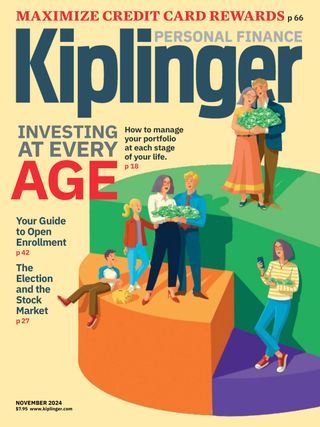
INVESTING AT EVERY STAGE OF LIFE
Kiplinger's Personal Finance
|November 2024
Use our guide to make the right portfolio decisions, no matter your age.

LIFE rarely goes as planned, but moving forward with no idea of where you want to end up is never the way to go. As Benjamin Franklin once said, “If you fail to plan, you’re planning to fail.” That’s especially true when it comes to saving and investing. Wealth isn’t typically built overnight. It takes a series of deliberate moves over time. With that in mind, we’ve crafted a game plan for how best to save and invest at every stage of life.
But first, know that there are several good-practice tenets that apply to all stages. Among them:
Take advantage of free money. No matter what stage of life you’re in, if you have access to a 401(k) or other employer-sponsored retirement- savings plan, aim to contribute at least enough money to earn the full company match—most employers offer one. Many employers contribute to a health savings account, too, if you’re eligible for one.
Automate your savings. There will always be a rationale to put off saving. In your twenties, it’s that you have decades to go before retiring. In your middle years, it’s the financial demands of a house and family. Later, it may be that bucket-list trip you’ve always dreamed of. “People have limited willpower and discipline. Make a one-time good decision and automate your savings,” says SoFi’s Brian Walsh, a certified financial planner. Just as your 401(k) contributions are deducted automatically from your paycheck, you can set up recurring transfers from your bank account to an IRA, a taxable brokerage account or a 529 collegesavings plan.

This story is from the November 2024 edition of Kiplinger's Personal Finance.
Subscribe to Magzter GOLD to access thousands of curated premium stories, and 10,000+ magazines and newspapers.
Already a subscriber? Sign In
MORE STORIES FROM Kiplinger's Personal Finance

Kiplinger's Personal Finance
A Helping Hand for the Homeless
This nonprofit offers shelters, job programs, support in finding a home and more.

2 mins
January 2026

Kiplinger's Personal Finance
Downsizing Advice, Part II
My column on downsizing (see “Living in Retirement,” Oct.) struck a chord with readers. I heard from many who offered advice on successfully culling clutter.
2 mins
January 2026
Kiplinger's Personal Finance
WHY COMPANY GUIDANCE MATTERS
Understanding how corporate profit forecasts affect analysts' estimates and stock ratings can help you make investment decisions.
4 mins
January 2026

Kiplinger's Personal Finance
WHAT SCIENCE REVEALS ABOUT MONEY AND A HAPPY RETIREMENT
Whether you're still planning or already retired, these research-based insights point the way to your best post-work life.
12 mins
January 2026

Kiplinger's Personal Finance
WHAT TO KNOW ABOUT FLOOD INSURANCE
Even if your home is outside a high-risk area, you may want to purchase coverage.
2 mins
January 2026

Kiplinger's Personal Finance
My Retirement Learning Curve
THE NEW WORLD OF RETIREMENT
2 mins
January 2026

Kiplinger's Personal Finance
CREATE A FINANCIAL PLAN WITH THESE TOOLS
Online programs for do-it-yourselfers are better than ever-and they're affordable, too.
9 mins
January 2026

Kiplinger's Personal Finance
2026 MONEY CALENDAR
These key dates and tips will help you make the most of your money in the new year.
7 mins
January 2026
Kiplinger's Personal Finance
Should You Renew Your CD?
AFTER you put money in a certificate of deposit, you can sit back while it collects interest over its term. Once it reaches maturity, you'll face a decision: renew it or withdraw the funds.
1 mins
January 2026

Kiplinger's Personal Finance
GIVING THE BULL THE BENEFIT OF THE DOUBT
KIPLINGER: What do you see ahead for financial markets in 2026? Do you have a target price for the S&P 500?
5 mins
January 2026
Listen
Translate
Change font size