Try GOLD - Free
Setting a STANDARD
Hobby Farms
|November - December 2022
Certified Naturally Grown offers a grassroots option for responsible agricultural production and guidance.
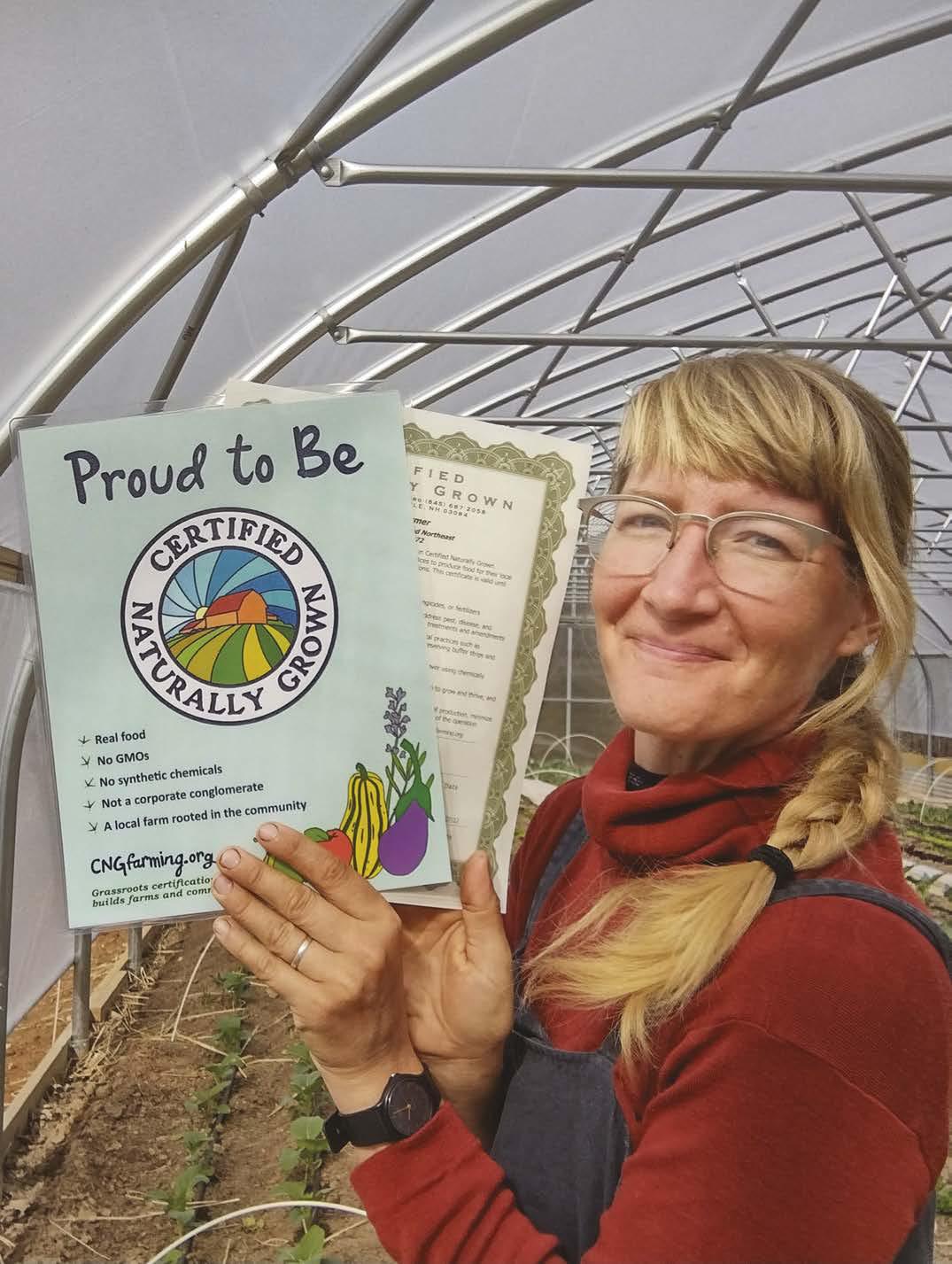
Across the world, trillions of honeybees are hard at work, pollinating vital crops and turning nectar into honey. In various locations near Wilmington, Delaware, more than a million of those bees return home to "microapiaries" under the care of Stephanie Grant.
"I am selective in my locations, as the properties cannot be treated with synthetic herbicides or pesticides," she says. "There needs to be an abundance of natural resources, including a variety of pollen and nectar sources, as well as a water source, and I need to ensure that the safety of the bees and people are always at the forefront. I believe we need to use nature and work with it, not against it." This belief system is what led Grant to pursue Certified Naturally Grown certification for her Sassy Bee Honey two years ago. Largely described as a grassroots alternative to the U.S. Department of Agriculture Certified Organic label, Certified Naturally Grown producers see it as that and more.
"I read the acronym somewhere online, and I did not know what it was, so I researched it," Grant says. "As I read, I thought it was completely in line with my current philosophy and many of the practices I already followed. I did have to make a few modifications to become certified, but they were changes that are for the betterment of the bees, so I was completely on board."
For beekeepers, USDA Certified Organic approval is difficult. To start, the National Organic Program doesn't have an apiculture standard, rather it relies on the livestock standards, a few items on the allowed synthetic-materials list, plus some "draft guidance" standards that have been issued but not made official by the National Organic Standards Board. Because bees can travel miles to forage, a USDA Certified Organic operation must prove their bees forage from plants not treated with prohibited materials in a 1.8-mile radius, which is difficult to come by.

This story is from the November - December 2022 edition of Hobby Farms.
Subscribe to Magzter GOLD to access thousands of curated premium stories, and 10,000+ magazines and newspapers.
Already a subscriber? Sign In
MORE STORIES FROM Hobby Farms
Hobby Farms
SHETLAND SHEEP
With their wide range of colors and fleece types, excellent meat, small size, resistance to disease and ability to take good care of themselves, Shetland sheep are an ideal breed for many small farms.

1 mins
July/August 2026
Hobby Farms
Got (Sheep) Milk?
Here’s a beginner’s guide to dairy sheep.
4 mins
July/August 2026
Hobby Farms
BABYDOLL SOUTHDOWN SHEEP
The North American Babydoll Southdown Sheep Association refers to this diminutive breed as “charming creatures” because of its dispositions and adorable appearance.
1 min
July/August 2026

Hobby Farms
WELL DONE
Happy Hollow Farm has adapted to farming in uncertain water years.
7 mins
July/August 2026
Hobby Farms
Pig Mites & Lice
Learn how to tell lice and mites apart for accurate diagnosis and treatment.
4 mins
July/August 2026
Hobby Farms
Rotational Grazing for All
Better forage, healthier soil and improved weight gain can make the planning worthwhile.
7 mins
July/August 2026
Hobby Farms
Beat the Heat
Easy DIY cooling systems you can set up on your hobby farm to keep your livestock cool and comfortable this summer.
7 mins
July/August 2026
Hobby Farms
HARLEQUIN SHEEP
This U.S.-developed miniature sheep breed is hardy and lambs easily, often having multiple lambs.
1 min
July/August 2026

Hobby Farms
Cherry Tomato Rainbow
Cherry tomatoes may be small, but they can be every bit as flavorful as the juiciest slicer you've ever grown.
6 mins
July/August 2026
Hobby Farms
Natural Selection
Try one of these herbal remedies for goats.
6 mins
July/August 2026
Translate
Change font size