Try GOLD - Free
Robot Operating System 2 (ROS 2): Core Concepts, Architecture, and Real-World Capabilities
Circuit Cellar
|February 2026
The Robot Operating System 2 (ROS 2) is an open-source, middleware framework that addresses the communication and coordination challenges inherent in modern, distributed robotic systems. In this article, Pedro details how ROS 2's architectural foundations successfully address the core limitations of its predecessor, ROS 1, using real-world scenarios, and steps for setting up the ROS 2 Foxy environment on Ubuntu Linux distro, and cross-platform communication between a host PC and a Raspberry Pi module.
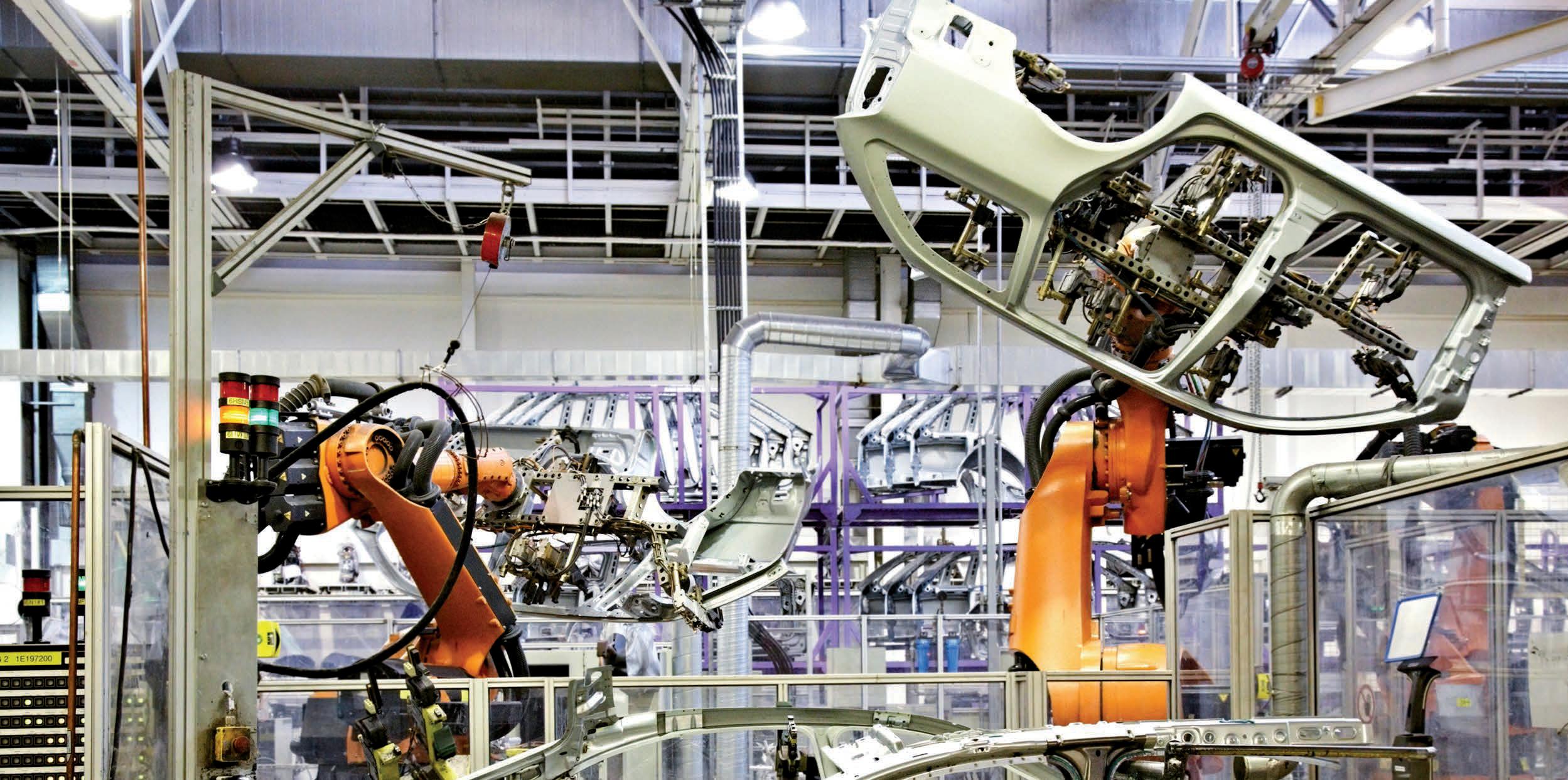
The robotics field is getting more and more collective. It is rapidly moving from monolithic, single-unit systems to highly distributed, heterogeneous, and networked configurations. Modern robots, particularly those designed for complex environments such as industrial floors, public roads, or domestic usage, are seldom single entities. Instead, they function as a tightly integrated collection of specialized, communicating modules: sensors, actuators, control systems, and decision-making algorithms, often distributed across multiple microprocessors, single-board computers (SBCs), and even external computational resources.
This paradigm shift necessitates a powerful, flexible, and utterly reliable communication framework to manage the complexity of data flow, synchronization, and inter-process communication (IPC) within the robot, itself, in addition to network communication with other robots or remote control systems over the network. To fulfill these requirements, ROS 2 comes as the state-of-the-art, robust, and a reliable communication solution for robots.
ROS 2 was designed to support modern industrial requirements, including multi-robot coordination—which means two or more robots working together to achieve a common goal.
This article serves as an in-depth technical review of the ROS 2 framework [1]. I will discuss its core components, analyze its sophisticated decentralized architecture, and illustrate its capabilities in creating distributed systems where reliability and performance are paramount. The focus will be on the widely adopted Foxy “flavor,” demonstrating its usage on an Ubuntu Linux distro, including a practical example. (Note: In this context, a “flavor” is the specific installation option or package set you choose. It determines which components and tools are included in your setup, and defines the scope of the installed software.)
WHAT'S ROS 2?


This story is from the February 2026 edition of Circuit Cellar.
Subscribe to Magzter GOLD to access thousands of curated premium stories, and 10,000+ magazines and newspapers.
Already a subscriber? Sign In
MORE STORIES FROM Circuit Cellar

Circuit Cellar
Inside the Tech: E-Bikes Explained
The Future of Product Developement Nature

5 mins
March 2026
Circuit Cellar
Mesh for Embedded Control
Mesh Networks Are Rewiring Embedded Systems
11 mins
March 2026

Circuit Cellar
A System That Detects, Tracks, and Deters Deer
Using Computer Vision, an Arduino, and a Raspberry Pi 5
14 mins
March 2026

Circuit Cellar
Analog Meets Digital
Part 4: Eliminating Mains Interference with an ADC
19 mins
March 2026

Circuit Cellar
Datasheet: Linux-Based SBCs
SBCs Running Linux Bring Enterprise Power to the Network's Edge
8 mins
March 2026
Circuit Cellar
Running Model Trains Without Human Input
A Raspberry Pi Pico Controls Two Trains
9 mins
March 2026

Circuit Cellar
Connector Requirements for High-Voltage Healthcare Applications
Simplifying Safety and Security
9 mins
March 2026
Circuit Cellar
PIC32CM PL10 MCUs Expand Microchip's ARM Cortex-MO+ Portfolio
Building on decades of experience, Microchip Technology has added PIC32CM PL10 MCUs to its PIC32C family of ARM Cortex-M0+ core devices. PL10 MCUs feature a rich set of Core Independent Peripherals (CIPs), 5V operation, touch capabilities, integrated toolsets and safety compliance.
1 mins
March 2026

Circuit Cellar
From Buffer Overflows to Control Flow Attacks
This article extends the January 2026 article by showing a buffer overflow attack that changes a return value. I also discuss the use of the GCC stack protection feature, and demonstrate that it's not always a bulletproof protection method, even if it is better than doing nothing.
7 mins
March 2026
Circuit Cellar
Another Matter-Enabled MCU: the ESP32-C6
The list of MCUs that support the Matter protocol continues to get longer. In this column, Brian goes in-depth on one of the newer Matter-enabled MCUs and shows just how it compares to some of the alternatives now on the market.
21 mins
March 2026
Listen
Translate
Change font size