
Go Unlimited with Magzter GOLD
Get unlimited access to 10,000+ magazines, newspapers and Premium stories for just
Try GOLD - Free
CIA for SBCs (and More)
Circuit Cellar
|November 2025
Securing Embedded Systems from Evolving Threats

Security for embedded systems takes many forms to protect many components from many threats. For engineers and developers, the key is keeping everything working together for the highest security with the lowest negative impact.
Cybersecurity has many qualities. Simplicity tends not to be among them. And as the processors, computers, controllers, and components used to create embedded control applications have become more capable and complex, security simplicity has receded farther and farther from view.
Embedded system security in 2025 is driven by a variety of factors. First, of course, is the rising complexity and sophistication of the threats facing embedded systems. This is tied directly to the increasing desirability of embedded control and operational technology as targets for malicious activity. Those increasingly sophisticated attacks are being directed at an attack surface that's growing by leaps and bounds.
In security, the “attack surface” is the collection of vulnerable points that present opportunities for malicious activity. Every interface, link, connection, and port presents just such an opportunity and the number of these points has grown by leaps and bounds as embedded systems have become more connected to one another, to back-end IT, and to cloud services.
The connection to systems and services beyond the embedded has brought elements from corporate governance to federal regulation into play. These elements can be prescriptive but tend to be outcome-oriented, though outcomes that are defined by the absence of something can be tricky in their own right.
So, with many factors pushing embedded system security forward, let's look at some of the specifics and how they're having an impact on the systems you build.
WALKING DOWN THE CHAIN


This story is from the November 2025 edition of Circuit Cellar.
Subscribe to Magzter GOLD to access thousands of curated premium stories, and 10,000+ magazines and newspapers.
Already a subscriber? Sign In
MORE STORIES FROM Circuit Cellar
Circuit Cellar
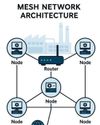
Mesh for Embedded Control
Mesh Networks Are Rewiring Embedded Systems

11 mins
March 2026

Circuit Cellar
A System That Detects, Tracks, and Deters Deer
Using Computer Vision, an Arduino, and a Raspberry Pi 5
14 mins
March 2026

Circuit Cellar
Analog Meets Digital
Part 4: Eliminating Mains Interference with an ADC
19 mins
March 2026

Circuit Cellar
Datasheet: Linux-Based SBCs
SBCs Running Linux Bring Enterprise Power to the Network's Edge
8 mins
March 2026
Circuit Cellar
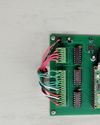
Running Model Trains Without Human Input
A Raspberry Pi Pico Controls Two Trains
9 mins
March 2026

Circuit Cellar
Inside the Tech: E-Bikes Explained
The Future of Product Developement Nature
5 mins
March 2026

Circuit Cellar
Connector Requirements for High-Voltage Healthcare Applications
Simplifying Safety and Security
9 mins
March 2026
Circuit Cellar
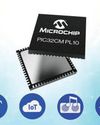
PIC32CM PL10 MCUs Expand Microchip's ARM Cortex-MO+ Portfolio
Building on decades of experience, Microchip Technology has added PIC32CM PL10 MCUs to its PIC32C family of ARM Cortex-M0+ core devices. PL10 MCUs feature a rich set of Core Independent Peripherals (CIPs), 5V operation, touch capabilities, integrated toolsets and safety compliance.
1 mins
March 2026

Circuit Cellar
From Buffer Overflows to Control Flow Attacks
This article extends the January 2026 article by showing a buffer overflow attack that changes a return value. I also discuss the use of the GCC stack protection feature, and demonstrate that it's not always a bulletproof protection method, even if it is better than doing nothing.
7 mins
March 2026

Circuit Cellar
Another Matter-Enabled MCU: the ESP32-C6
The list of MCUs that support the Matter protocol continues to get longer. In this column, Brian goes in-depth on one of the newer Matter-enabled MCUs and shows just how it compares to some of the alternatives now on the market.
21 mins
March 2026
Listen
Translate
Change font size