Try GOLD - Free
Automotive Systems
Circuit Cellar
|April 2025
The Integration of AI and Connectivity in Modern Vehicles

The automotive industry is undergoing a profound transformation, evolving from mechanical constructs into intricate software-driven platforms that leverage advanced technologies such as V2X communication and AI. This article examines the latest innovations in automotive automation, clarifying their implications for safety, efficiency, and the future of interconnected mobility in a rapidly advancing technological landscape.
With a history of over 200 years, the automobile has become one of the largest industries in the world, undergoing many changes in its time. It wasn't until 1968, when Volkswagen replaced the carburetors in the type III fastback (Figure 1) with an electronic fuel injection system with fuel pressure and speed sensors to control fuel output that automobiles even became computerized. In recent years however, the rate of change in automotive technology has increased at an exponential rate with vehicle connectivity, with AI driven safety and autonomous driving, and a plethora of new sensors allowing cars to take in more information than ever before, cars are no longer merely mechanical tools for transportation, but software driven electronic platforms for innovation to push the bounds of and perfect technological capabilities. The classic American symbol of freedom and individuality is now a symbol of the use of interconnected technology in ways unimaginable two decades ago. In this article, I will highlight some of the newest and most exciting automotive technologies and the driving forces behind them; from V2X communication technologies, Edge AI, autonomous driving, cybersecurity, over-the-air(OTA) updates, smart sensors, and the human-machine interfaces that enable more vehicle control than ever before.


This story is from the April 2025 edition of Circuit Cellar.
Subscribe to Magzter GOLD to access thousands of curated premium stories, and 10,000+ magazines and newspapers.
Already a subscriber? Sign In
MORE STORIES FROM Circuit Cellar

Circuit Cellar
Inside the Tech: E-Bikes Explained
The Future of Product Developement Nature

5 mins
March 2026
Circuit Cellar
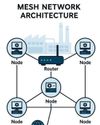
Mesh for Embedded Control
Mesh Networks Are Rewiring Embedded Systems
11 mins
March 2026

Circuit Cellar
A System That Detects, Tracks, and Deters Deer
Using Computer Vision, an Arduino, and a Raspberry Pi 5
14 mins
March 2026

Circuit Cellar
Analog Meets Digital
Part 4: Eliminating Mains Interference with an ADC
19 mins
March 2026

Circuit Cellar
Datasheet: Linux-Based SBCs
SBCs Running Linux Bring Enterprise Power to the Network's Edge
8 mins
March 2026
Circuit Cellar
Running Model Trains Without Human Input
A Raspberry Pi Pico Controls Two Trains
9 mins
March 2026

Circuit Cellar
Connector Requirements for High-Voltage Healthcare Applications
Simplifying Safety and Security
9 mins
March 2026
Circuit Cellar
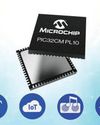
PIC32CM PL10 MCUs Expand Microchip's ARM Cortex-MO+ Portfolio
Building on decades of experience, Microchip Technology has added PIC32CM PL10 MCUs to its PIC32C family of ARM Cortex-M0+ core devices. PL10 MCUs feature a rich set of Core Independent Peripherals (CIPs), 5V operation, touch capabilities, integrated toolsets and safety compliance.
1 mins
March 2026

Circuit Cellar
From Buffer Overflows to Control Flow Attacks
This article extends the January 2026 article by showing a buffer overflow attack that changes a return value. I also discuss the use of the GCC stack protection feature, and demonstrate that it's not always a bulletproof protection method, even if it is better than doing nothing.
7 mins
March 2026
Circuit Cellar
Another Matter-Enabled MCU: the ESP32-C6
The list of MCUs that support the Matter protocol continues to get longer. In this column, Brian goes in-depth on one of the newer Matter-enabled MCUs and shows just how it compares to some of the alternatives now on the market.
21 mins
March 2026
Listen
Translate
Change font size