
Go Unlimited with Magzter GOLD
Get unlimited access to 10,000+ magazines, newspapers and Premium stories for just
Audio Power Amplifiers
Circuit Cellar
|October 2025
Choosing an Audio Amplifier for Your Design
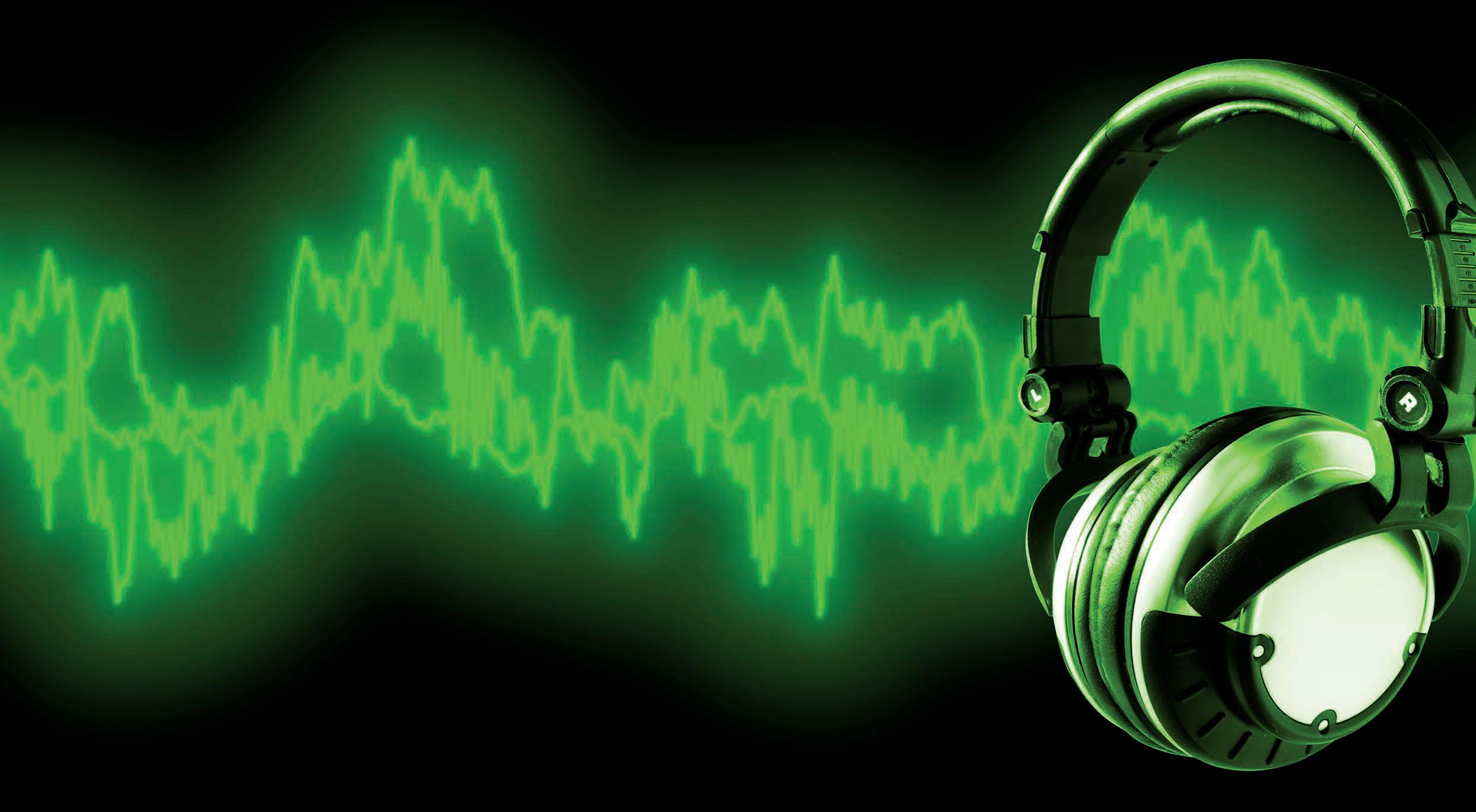
We don't think of audio amplifiers as part of embedded systems, but if you need an audio output, whether for an MP3 player, a warning annunciator, a technician-to-patient voice system in a medical device, or a verbal output for a GPS device, selecting the correct audio components is important.
An audio output consists of several components, starting with something that generates an audio signal, waveshaping and amplifying the signal, and then drives the output device, whether it's a speaker, headphone jack, or other transducer. In this article I'm only going to look at the final output stage: the audio power amplifier.
The output transducer for an audio system is typically a speaker or similar low impedance device. Audio transducers are typically speakers and headphones (which are tiny speakers) with an impedance ranging typically from 2Ω to 32Ω but going up to 600Ω. Due to this, producing usable (that is, audible) output requires an amplifier capable of driving more current into the transducer than is needed for normal signals. For example, to produce 1W of power into an 8Ω speaker requires applying Ohm's power law like this:
P = I2R = V2/R. 1W = I2 x 8Ω, Ι = 350mA. Similarly, V = 2.8V
Specifically, producing 1W into an 8Ω speaker requires 2.8V at 350mA. I calculated these as DC values, but the same principle applies for an AC audio signal. Although generating 2.8V from a 5V or 3.3V embedded system isn't too hard, the 350mA requirement demands more current capability than an MCU output can provide. The audio power amplifier translates a low-level audio signal into sufficient power to drive the speaker (or other transducer).
AMPLIFIER BASICS
Power amplifiers are categorized into five classes: A, B, AB, C, and D. The differences are in how the output power is generated, how the output drive devices are biased, and the efficiency.

This story is from the October 2025 edition of Circuit Cellar.
Subscribe to Magzter GOLD to access thousands of curated premium stories, and 10,000+ magazines and newspapers.
Already a subscriber? Sign In
MORE STORIES FROM Circuit Cellar
Circuit Cellar
The Future of Sensors in Safety Systems Sensing the Stop
How Magnetic Sensors Are Enabling the Next Generation of Braking Systems

5 mins
December 2025

Circuit Cellar
Alif Semiconductor Elevates Generative AI at the Edge with New Support for ExecuTorch Runtime in Its Ensemble MCUs
Alif Semiconductor, the leading global supplier of secure, connected, power efficient Artificial Intelligence and Machine Learning (AI/ML) microcontrollers (MCUs) and fusion processors, announced that developers can now use the ExecuTorch Runtime, a quantization extension of the popular PyTorch ML framework, for AI applications built to run on its Ensemble E4/E6/E8 series of MCUs and fusion processors.
1 min
December 2025

Circuit Cellar
Encrypted MQTT Protocol for Critical Sectors
Mechanisms, Challenges, and Best Practices
3 mins
December 2025
Circuit Cellar
Datasheet: Small Size, Big Power
Smaller Microcontrollers Bring New Possibilities
9 mins
December 2025

Circuit Cellar
Analog Devices Launches ADI Power Studio and New Web-Based Tools
Analog Devices, Inc. (ADI), a global semiconductor leader, announced the launch of ADI Power Studio, a comprehensive family of products that offers advanced modeling, component recommendations, and efficiency analysis with simulation.
1 mins
December 2025
Circuit Cellar
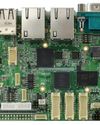
Compact IBR300 2.5" SBC Powered by NXP i.MX 93 from IBASE
IBASE Technology, Inc., a leading provider of rugged embedded computing platforms, announced the release of the IBR300, a 2.5\" RISC-based single board computer (SBC) powered by the NXP i.MX 93 processor with dualcore ARM Cortex-A55 (up to 1.7GHz) and a Cortex-M33 MCU.
1 min
December 2025
Circuit Cellar
Sensors in the Spotlight
The Next Decade of Embedded Sensor Systems
12 mins
December 2025

Circuit Cellar
Bob's Wrap Up
In Bob's last article with Circuit Cellar, he attempts to wrap up a career of more than 50 years as an embedded systems engineer and 14 years with Circuit Cellar. He looks at each of his 58 articles by category and provides some recommendations for his fellow engineers.
7 mins
December 2025

Circuit Cellar
Designing Embedded Software Architectures That Last
I've reviewed hundreds of firmware projects over the years, and one thing always stands out: the most successful projects have a clear, deliberate architecture.
10 mins
December 2025

Circuit Cellar
Broadcom Introduces Industry's First Wi-Fi 8 Silicon Ecosystem Powering the AI Era
Broadcom, Inc. unveiled the first Wi-Fi 8 silicon solutions for broadband wireless, targeting residential gateways, enterprise access points, and smart mobile clients.
1 mins
December 2025
Listen
Translate
Change font size