
Go Unlimited with Magzter GOLD
Get unlimited access to 10,000+ magazines, newspapers and Premium stories for just
Try GOLD - Free
SCRATCH THAT
The New Yorker
|October 24, 2022
What we've lost playing the lottery.

At my local convenience store, and almost surely at yours, too, it is possible to buy upward of fifty different kinds of scratch-off lottery tickets. To do so, you must be at least eighteen years old, even though the tickets look like the décor for a kindergarten classroom. The dominant themes are primary colors, dollar signs, and shiny, as in gold bars, shooting stars, glinting horseshoes, and stacks of silver coins. When you are looking at a solid wall of them, they also resemble—based on the palette, font choices, and general flashy hecticness—the mid-nineties Internet. Some of them are named for other games, such as the Monopoly X5, the Double Blackjack, and the Family Feud, but most are straightforward about the point of buying them: Show Me 10,000!, 100,000 Lucky, Money Explosion, Cash Is King, Blazing Hot Cash, Big Cash Riches. If your taste runs toward Fast Cash or Red Ball Cash Doubler, you can buy one for just a buck; if you prefer VIP Club or 2,000,000 Gold Rush, a single ticket will set you back thirty dollars. All this is before you get to the Pick 3, Pick 4, Powerball, and Mega Millions tickets, which are comparatively staid in appearance—they look like Scantron sheets—and are printed out at the time of purchase.
The strangest of the many strange things about these tickets is that, unlike other convenience-store staples—Utz potato chips, Entenmann’s cinnamon-swirl buns, 1.98 bottles of wine—they are brought to you by your state government. Only Alabama, Alaska, Hawaii, Nevada, and Utah are not in the business of selling lottery tickets. Everywhere else, Blazing Hot Cash and its ilk are, like state parks and driver’s licenses, a government service.
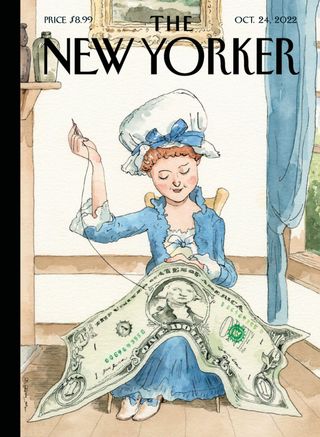

This story is from the October 24, 2022 edition of The New Yorker.
Subscribe to Magzter GOLD to access thousands of curated premium stories, and 10,000+ magazines and newspapers.
Already a subscriber? Sign In
MORE STORIES FROM The New Yorker

The New Yorker
HOW SHOULD A MOTHER BE?
We keep revising the maternal ideal—and keep falling short of it.

11 mins
January 26, 2026

The New Yorker
THE VERMONTER
What happened when Bernie Sanders left Brooklyn for Burlington.
16 mins
January 26, 2026

The New Yorker
BREAKING NEWS
Inside Bari Weiss's hostile takeover at CBS.
37 mins
January 26, 2026

The New Yorker
SCHOOL OF FISH
On the water with a Southern California seafood savant.
7 mins
January 26, 2026

The New Yorker
COLD COMFORT
The wintry triumphs of Helene Schjerfbeck.
6 mins
January 26, 2026

The New Yorker
WON'T BACK DOWN
The stubborn songs of Zach Bryan.
6 mins
January 26, 2026

The New Yorker
POWER AND PROTEST
On January 8th, the twelfth day of mass protests in Iran, which began when shopkeepers, responding to runaway inflation, closed Tehran’s Grand Bazaar, the Iranian government shut down public access to the internet, further shrouding an already largely closed society. Nevertheless, isolated images and details have been smuggled out, giving a hint of how brutal and monumental these events are.
4 mins
January 26, 2026
The New Yorker
Vinson Cunningham on Barry Blitt's "The Politics of Fear"
I was in a yellow cab in high summer when I saw it. Twenty-three at the time, I sometimes skimmed articles about politics on my clunky BlackBerry while cruising through Central Park to my first real job, fundraising for Barack Obama’s 2008 Presidential campaign. Usually, the ride was placid.
2 mins
January 26, 2026

The New Yorker
SHOW OF FORCE
After a chaotic visit to an ICE jail, a congresswoman faces felony charges in Trump's war against his critics.
37 mins
January 26, 2026

The New Yorker
THE ICE CURTAIN
Nome, Alaska, seems farther from Russia than ever.
26 mins
January 26, 2026
Translate
Change font size