Try GOLD - Free
TALI-IHANTALAI
History of War
|Issue 136
Outnumbered and outgunned, the Finns’ spirited defence of a natural choke point turned back the Red Army during the largest battle in the region's history

Lieutenant-Colonel Arvo Roininen, the Finnish 26th Heavy Battery commander, jumped as his radio crackled to life. The date was 30 June, 1944, and reports were coming in that the elite Soviet 63rd Guards Rifle Division was making another attack. Twenty tanks were ready to race forward and smash through the Finnish lines. Roininen’s observers remained at the front under constant bombardment, repeatedly shouting into their radios: “Enemy tanks are in their jumping-off points… all batteries fire!” Roininen passed the message to the commander of artillery, who called in a bombardment from every available gun. Shells screamed over the observers’ heads and turned the tanks into flaming, mangled steel while they were still at their staging posts. One Soviet attack had been repulsed, but several more were to come.
On the Karelian Isthmus, a narrow strip of land between Lake Lagoda and the Gulf of Finland, the Finnish Army waited anxiously for the snow to thaw as winter turned to spring in 1944. Their national survival was at stake, facing attack as soon as the Soviets deemed the ground firm enough for its formidable armoured columns. Should the Red Army smash through the Isthmus, it would be free to break out across Finland. The nation would once more fall under the shadow of Russian subjugation, having enjoyed independence for just 26 years. Meanwhile, swift victory was vital for the Soviets, who wanted to answer the Finnish question before the end of the war and free up troops for the race to Berlin.
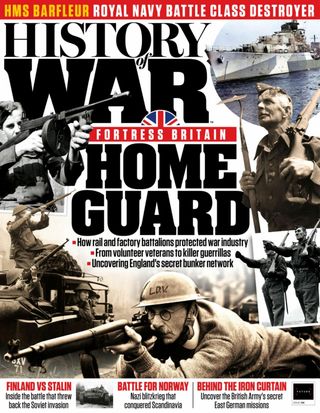

This story is from the Issue 136 edition of History of War.
Subscribe to Magzter GOLD to access thousands of curated premium stories, and 10,000+ magazines and newspapers.
Already a subscriber? Sign In
MORE STORIES FROM History of War
History of War
MORE MISS MONEYPENNY THAN MATA HARI WOMEN SPIES THROUGHOUT THE DECADES
THEY LOOKED LIKE ORDINARY HOUSEWIVES, MOTHERS AND SECRETARIES IN SENSIBLE CLOTHES AND STURDY SHOES. BUT THESE INNOCUOUS WOMEN WERE EMBARKED ON COURAGEOUS AND OFTEN TREACHEROUS MISSIONS AS SECRET AGENTS

4 mins
Issue 153
History of War
THE END OF GREAT POWERS
Full-spectrum analysis of a state's economy, technology, leadership, society and alliances could be a superior way of predicting battlefield performance
3 mins
Issue 153
History of War
THE BATTLE OF JERUSALEM 9 JANUARY - 11 DECEMBER 1917
During a campaign that lasted nearly a year, British and Arab forces defeated the Ottoman Turks and entered the ancient city
7 mins
Issue 153
History of War
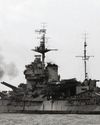
QUEEN ELIZABETH CLASS BATTLESHIP
These five super-dreadnoughts set the standard for early 20th century warship design in speed, firepower and protection and were the first fast battleships of the age
4 mins
Issue 153
History of War
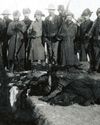
THE MASSACRE AT WOUNDED KNEE
In 1890, US troops killed more than 250 Lakota, at a location that remains the focus of resistance and dark controversy
10 mins
Issue 153
History of War
BORN IN NORTH AFRICA
HOW THE TUNISIA CAMPAIGN FORGED THE 'SPECIAL RELATIONSHIP'
3 mins
Issue 153

History of War
ANTI-TANK MINE
This lightweight General Service Mk V device could immobilise Hitler's heavy tanks and was used during fighting in Northwest Europe
1 mins
Issue 153
History of War
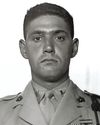
HEROES OF THE MEDAL OF HONOR BALDOMERO LOPEZ
During the daring landings at Inchon in 1950, this first lieutenant sacrificed his life to save his US Marine comrades
6 mins
Issue 153
History of War
NORTH KOREA'S ROCKET REVOLUTION
After the peninsula was divided by a long-term ceasefire, Pyongyang and Seoul raced to build weapons that could obliterate each other
4 mins
Issue 153
History of War
THE GREAT TRAIN RAID THE MOST DARING SAS MISSION OF WWII
DAMIEN LEWIS' LATEST SAS ADVENTURE IS CHARACTERISTICALLY FAST-PACED AND ACTION-PACKED
2 mins
Issue 153
Listen
Translate
Change font size