Try GOLD - Free
Omit Those Needless Words: How to Do Ruthless Editing 101
Writer’s Digest
|May - June 2023
Ten tips to make your writing efficient, yet engaging.

Regardless of what you write, readers have the same expectation-they insist on stories with language that demonstrates economy, effectiveness, and energy. While entire how-to books could be written about each of those goals, this article focuses on the 10 most impactful story-improving editing tips I've shared with students and clients.
With that, let's examine my 10 best editing tips. Apply these as needed to your own writing, regardless of literary medium or genre.
1: DIVIDE AND CONQUER
Many writers find editing to be daunting. It's understandable there are so many ways for words, phrases, sentences, and paragraphs to go wrong. But don't despair. Harold Underdown, Executive Editor at Kane Press, offers this wise advice: "When looking for words to cut, don't just do one pass through your manuscript. Plan multiple passes, each for a different category-adverbs, empty words, words you use too often. In each pass, don't edit, just identify highlighting is good. Then work through the manuscript one last time, considering and deleting or replacing all of the words you highlighted."
In short, revise in stages to avoid being overwhelmed.
2: REMOVE REDUNDANCY
The first draft of a story is where authors discover the story for themselves they're the only audience at that point. Given that, it's easy to see why overwriting is commonplace in early drafts. When it's time to edit, though, redundancy in meaning should be addressed.
The gas line explosion at the Oakview Senior Center was a horrible tragedy.
Building the birdfeeder so close to the house was an unintentional mistake.
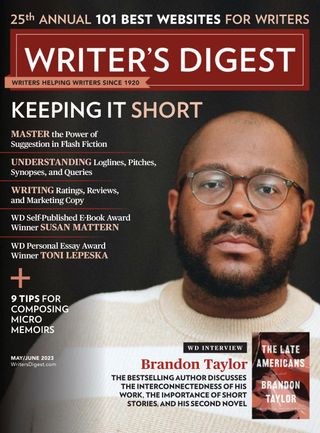

This story is from the May - June 2023 edition of Writer’s Digest.
Subscribe to Magzter GOLD to access thousands of curated premium stories, and 10,000+ magazines and newspapers.
Already a subscriber? Sign In
MORE STORIES FROM Writer’s Digest

Writer’s Digest
Lauren Groff
The three-time National Book Award finalist discusses her new short story collection, Brawler, and the necessity of failure in writing.

14 mins
March / April 2026

Writer’s Digest
Seven
THE CHALLENGE: Write a short story of 650 words or fewer based on the photo below.
2 mins
March / April 2026

Writer’s Digest
Pacing in Nonfiction
It's all about story.
5 mins
March / April 2026
Writer’s Digest
If You're Bored, They're Bored
Five Zero-Draft tricks to ensure tight pacing.
8 mins
March / April 2026

Writer’s Digest
Deities
Gods and goddesses have had power over our imaginations stretching through the ages—whether ancient Norse, Chinese, Mesoamerican, or Greco-Roman, we have a fascination with cosmic beings.
5 mins
March / April 2026
Writer’s Digest
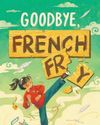
Merging Memory With Imagination
Author Rin-rin Yu's debut middle-grade novel, Goodbye, French Fry, represents a combination of her true childhood experiences and the universal experience of growing into yourself.
5 mins
March / April 2026

Writer’s Digest
Put Yourself in Charge of Your Own Story
Julie Ann Sipos, grand-prize winner of the 33rd annual WD Self-Published Book Awards, on how her career in Hollywood influences her writing style and her business strategy as an indie author.
4 mins
March / April 2026

Writer’s Digest
The Pause Is the Point
How to use stillness to create momentum in your fiction.
10 mins
March / April 2026

Writer’s Digest
Ericka Tiffany Phillips
Ericka Tiffany Phillips is a literary agent at the Stephanie Tade Agency, representing nonfiction authors whose “work have the power to shape culture and catalyze collective transformation,” she says.
2 mins
March / April 2026

Writer’s Digest
Short-Story Dispensers Bring Literature to the Masses
Life is often a wait, whether it's for a commuter train, an appointment with a doctor, or the start of a class.
5 mins
March / April 2026
Translate
Change font size