
Go Unlimited with Magzter GOLD
Get unlimited access to 10,000+ magazines, newspapers and Premium stories for just
Try GOLD - Free
Merging Memory With Imagination
Writer’s Digest
|March / April 2026
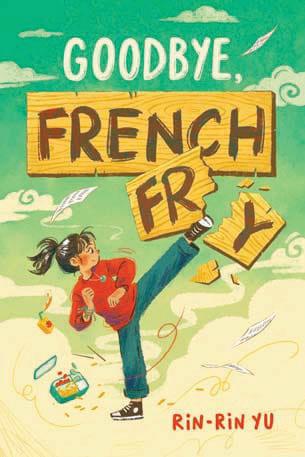
Author Rin-rin Yu's debut middle-grade novel, Goodbye, French Fry, represents a combination of her true childhood experiences and the universal experience of growing into yourself.
When you're writing a story that's somewhat based on your own experiences, it's as if the writing process has been happening your entire life. But the true challenge comes in learning what realities to let go of to let your characters shine in their own way—especially when your hope is to help your young readers see themselves on the page.
Author Rin-rin Yu's debut novel, Goodbye, French Fry, is the story of Ping-Ping, a Chinese American girl living in New York with her parents and her brother, Xy. Her father, an employee at the United Nations, has the chance for a promotion, which means the family might have to move to Kenya. Ping-Ping, already straddling two worlds (one where some don't think she's Chinese enough, the other not American enough), the idea of moving is complicated. As the possibility looms over the family, she continues to navigate the pleasures and pitfalls of childhood: unpracticed piano lessons and nerve-racking recitals, celebrating the Chinese New Year, taking taekwondo lessons with her best friend, accidentally hurting someone who intentionally hurts her, and starting to understand who she is and who she wants to be.
Yu spoke with WD about the experience of writing her debut novel, inserting her childhood memories into the story, and more.
TELL US A LITTLE BIT ABOUT WHAT LED YOU TO WRITE GOODBYE, FRENCH FRY.
I spent years trying to write a book based on my parents' childhoods, but then I realized it would involve a lot of historical research that I did not have time or patience to conduct. ... I decided to write what I actually and accurately knew about them, which was everything from my childhood onward. I was also acutely conscious that there were very few books with American-born Asian characters like me who just go about their suburban lives without much drama or fanfare.

This story is from the March / April 2026 edition of Writer’s Digest.
Subscribe to Magzter GOLD to access thousands of curated premium stories, and 10,000+ magazines and newspapers.
Already a subscriber? Sign In
MORE STORIES FROM Writer’s Digest
Writer’s Digest
Fate and Prophesy
Defying destiny may be just as hazardous as succumbing to it.”

5 mins
May / June 2026
Writer’s Digest
How to Pitch in Person Without Losing the Plot
Conference-ready tips to make sure your story stands out.
5 mins
May / June 2026
Writer’s Digest
How to Handle Money as a Writer
That is, in case you actually make any ...
8 mins
May / June 2026

Writer’s Digest
Dress Your Manuscript for the Job You Want It to Have
Dress Your Manuscript for the Job You Want It to Have How often have you heard the adage “dress for the job you want”? Probably often enough that it’s a cliché.
5 mins
May / June 2026

Writer’s Digest
Mike Chen
The award-winning science-fiction author discusses the importance of fandom, writing for IP giants like Star Wars, and tackling his biggest project yet: a space opera.
13 mins
May / June 2026
Writer’s Digest
Outlaw Openers
There was a time when starting a sentence with And, But, or So felt like breaking the law.
2 mins
May / June 2026
Writer’s Digest
Collaborate to Create
Why co-authoring nonfiction is a pro strategy worth considering.
7 mins
May / June 2026
Writer’s Digest
The Life-Changing Magic of Tidying Up Your Writing Portfolio
Creating an organized online home for your nonfiction writing samples gives you a strategic advantage.
5 mins
May / June 2026
Writer’s Digest
20 Elevator Pitches for Recently Published Books
One of the most important professional skills an author can develop is the ability to craft an enticing elevator pitch for their book.
5 mins
May / June 2026
Writer’s Digest
On Writing & Newsroom Autobiography
Today, the rise of 24-hour cable news has dramatically reshaped how we consume information.
2 mins
May / June 2026
Listen
Translate
Change font size