Try GOLD - Free
Choosing Violence
Writer’s Digest
|July - August 2024
The secret to writing animal characters.

Many, many years ago my wife, The Duchess, wanted to get a dog. I'd never had a dog, and my concept of dog ownership was limited to the knowledge that dogs needed to be walked, and The Duchess, being fancy, was never going to do the dogwalking. I pictured myself out in the midst of a blizzard picking up dog poop while she lounged at home in front of a raging fire, probably drinking brandy or something. So, I advocated for a cat instead: I'd had a cat as a child, a marshmallow-esque tabby inexplicably named Missy who was so low-maintenance it's possible I imagined her. So, once again, I thought I'd outsmarted my wife.²
We adopted a sickly tuxedo cat we named Pierre. Not long after, The Duchess turned to me and said, "We've had one cat, yes. What about the second cat?" And that is the story of how I came to have five chaotic cats prowling around my house instead of one orderly dog.³
A few years ago, I decided to finally find ways to monetize those cats. My initial efforts involving a Cat Circus ended in failure and property damage. So, I pivoted to my only skill and started writing stories about the furry little demons. I wound up writing an entire story cycle featuring cat detectives solving dark, violent crimes; I've published a few of them.5 All writing is also a learning experience, and what I realized while working on these stories is simple: Writing animal characters can go wrong in many, many ways.
Neither Cute Nor Cuddly
There's an ancient tradition of animal characters in literature, and some folks automatically think of Disney animation and the cozy creatures found in children's stories like Winnie-the-Pooh. But you'll find animals from all over the anthropomorphic scale throughout literature, some quite dark and many amounting to very realistic depictions.
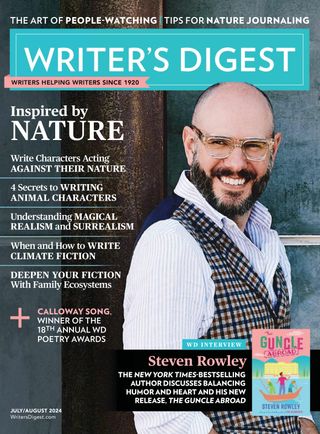

This story is from the July - August 2024 edition of Writer’s Digest.
Subscribe to Magzter GOLD to access thousands of curated premium stories, and 10,000+ magazines and newspapers.
Already a subscriber? Sign In
MORE STORIES FROM Writer’s Digest

Writer’s Digest
Lauren Groff
The three-time National Book Award finalist discusses her new short story collection, Brawler, and the necessity of failure in writing.

14 mins
March / April 2026

Writer’s Digest
Seven
THE CHALLENGE: Write a short story of 650 words or fewer based on the photo below.
2 mins
March / April 2026

Writer’s Digest
Pacing in Nonfiction
It's all about story.
5 mins
March / April 2026
Writer’s Digest
If You're Bored, They're Bored
Five Zero-Draft tricks to ensure tight pacing.
8 mins
March / April 2026

Writer’s Digest
Deities
Gods and goddesses have had power over our imaginations stretching through the ages—whether ancient Norse, Chinese, Mesoamerican, or Greco-Roman, we have a fascination with cosmic beings.
5 mins
March / April 2026
Writer’s Digest
Merging Memory With Imagination
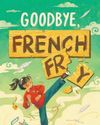
Author Rin-rin Yu's debut middle-grade novel, Goodbye, French Fry, represents a combination of her true childhood experiences and the universal experience of growing into yourself.
5 mins
March / April 2026

Writer’s Digest
Put Yourself in Charge of Your Own Story
Julie Ann Sipos, grand-prize winner of the 33rd annual WD Self-Published Book Awards, on how her career in Hollywood influences her writing style and her business strategy as an indie author.
4 mins
March / April 2026

Writer’s Digest
The Pause Is the Point
How to use stillness to create momentum in your fiction.
10 mins
March / April 2026

Writer’s Digest
Ericka Tiffany Phillips
Ericka Tiffany Phillips is a literary agent at the Stephanie Tade Agency, representing nonfiction authors whose “work have the power to shape culture and catalyze collective transformation,” she says.
2 mins
March / April 2026

Writer’s Digest
Short-Story Dispensers Bring Literature to the Masses
Life is often a wait, whether it's for a commuter train, an appointment with a doctor, or the start of a class.
5 mins
March / April 2026
Listen
Translate
Change font size