
Go Unlimited with Magzter GOLD
Get unlimited access to 10,000+ magazines, newspapers and Premium stories for just
Try GOLD - Free
Reducing the Risk Around Pesticides
Successful Farming
|February 2025
Consider these top safety tios when working around necessary chemicals.
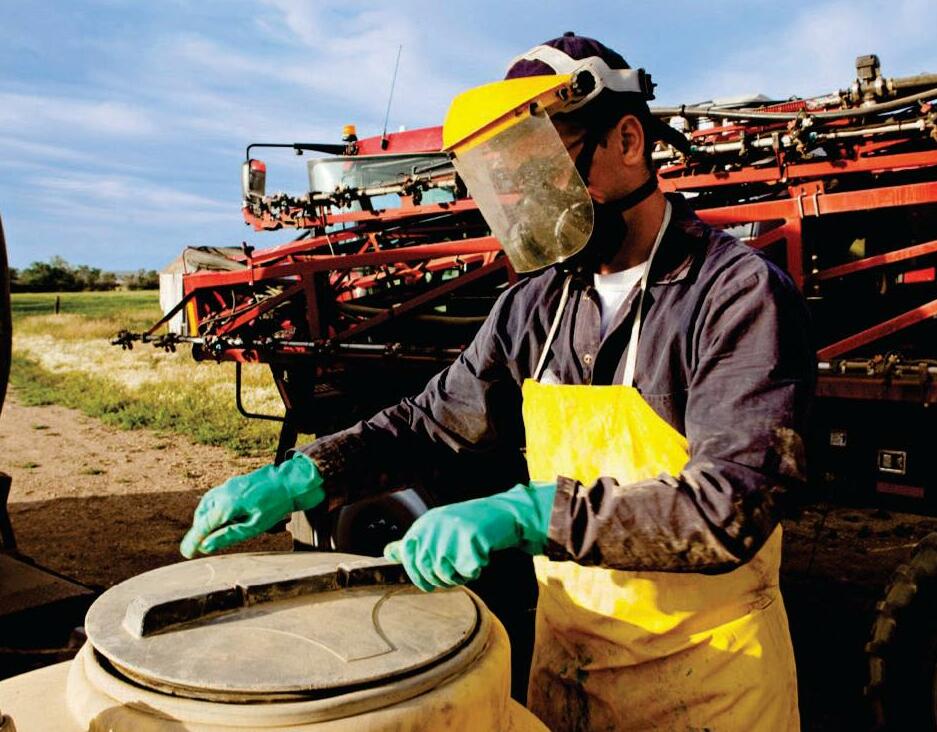
Pesticides are powerful tools on the farm, but they are not without risk. Understanding the essentials of pesticide safety can help prevent unintended exposure for people and the environment. February is National Pesticide Safety Education Month, and this is a great time to review pesticide safety practices on the farm.
"Today, pesticides are used in and around homes, apartments, workplaces, farms, and a myriad of other settings to control weeds, insects, disease-causing organisms, rodents, and other pests," said Fred Whitford, PhD, director of Purdue Pesticide Programs at Purdue University. "That means everyone benefits when we focus on pesticide safety education."
Below are some top considerations to stay safe when working with and around pesticides.
Pesticide Applicator License
For farmers adding restricted use pesticides (RUPS) to their management plans, obtaining a pesticide applicator certification is an important first step. Without one, farmers cannot buy RUPs from their co-ops or other local dealers.
Each state has its own certification program. In Iowa, there are two main types of pesticide applicator certifications:
• A private applicator certification is for anyone using a RUP on land they own or lease. For most farmers, a private applicator certification should be sufficient on their own farms.
• Commercial applicator licenses are divided into several subcategories. Certifications are required for anyone looking to be paid for pesticide application services.
A commercial applicator must be certified for each category of pesticide they apply.
In Iowa, the Department of Agriculture and Land Stewardship (IDALS) oversees all pesticide applicator certifications. Each person looking to obtain a certification must pass an exam covering the basics of pesticide use.


This story is from the February 2025 edition of Successful Farming.
Subscribe to Magzter GOLD to access thousands of curated premium stories, and 10,000+ magazines and newspapers.
Already a subscriber? Sign In
MORE STORIES FROM Successful Farming
Successful Farming
Make Forested Land Pay Without Cutting a Tree
Landowners can grow high-value, nontimber crops, like ginseng, under existing trees.

4 mins
February 2026
Successful Farming
New Fendt Optimum With Precision Planting Tech
The Optimum is available in five configurations, with a variety of options.
1 mins
February 2026

Successful Farming
The Widening Net
Experts discuss how government aid can inflate input costs.
4 mins
February 2026
Successful Farming
Opportunity Is Knocking
It’s a good time to buy if you’re in the market for a high-horsepower tractor.
4 mins
February 2026

Successful Farming
SUPERCYCLE SLUMP
What will it take for corn and soybean prices to climb again?
5 mins
February 2026

Successful Farming
Ready, Set, Plant!
New research from universities, on-farm trials, and seed companies is reshaping how growers decide which crop to plant first.
8 mins
February 2026

Successful Farming
Get Planting Prep Right
Spending time servicing your planter during the winter pays off when conditions are right to head to the field.
2 mins
February 2026

Successful Farming
Leaving Lasting Impact
A central Iowa community came together to support FFA, agricultural education, and the next generation of leaders in agriculture.
2 mins
February 2026
Successful Farming
Dwight Mogler
This Iowa producer shares how his family stays united as the multigenerational farm grows.
3 mins
February 2026

Successful Farming
Diagnosing Equipment Repairs
Off-the-shelf and manufacturer AI tools can help farmers repair machinery faster.
3 mins
February 2026
Listen
Translate
Change font size