Try GOLD - Free
Power Dressing
Forbes India
|March 06, 2026
The sartorial choices of politicians in India represent not just their roots, but also their political ideologies and personal ambitions
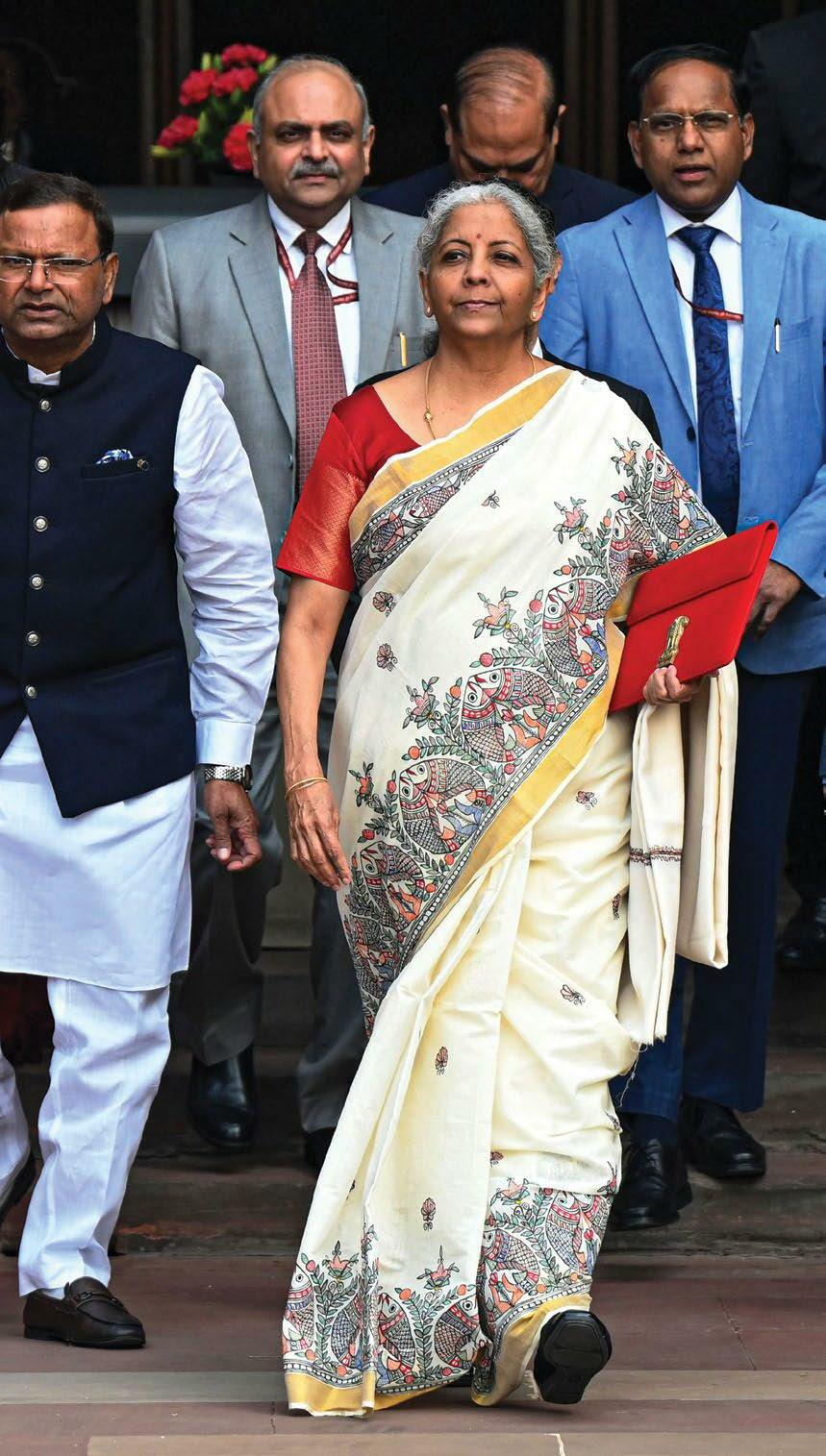
When Nirmala Sitharaman walks into Parliament to present the Union Budget, alongside the discussion on the country's finances there emerges a parallel banter on the saree the finance minister is wearing. Over the nine Union Budgets that Sitharaman has presented, her choice of attire has come to indicate the government's focus areas.
In 2019, while presenting her first Budget, which focussed on women-led development, rural infrastructure and small businesses—sectors deeply associated with weaving economies—she wore a Mangalgiri saree from Andhra Pradesh. Sitharaman conveys much more than fashion statements with her choice of sarees.
In 2021, with the economy still reeling under the impact of the pandemic-induced lockdowns, she wore a Pochampalli ikkat from Telangana, while announcing sizeable allocations for textile parks under the PM MITRA scheme.
In 2022, her choice of a Bomkai saree from Odisha reflected a Budget that sharpened its focus on infrastructure and the development in India's eastern states. The symbolism continued in 2025, when she wore a Madhubani saree gifted by Padma Shri awardee Dulari Devi, honouring Bihar's folk art tradition, as the state headed into elections. Sitharaman's choice of sarees reflects what many political leaders have practised over decades in India: Sending unspoken signals to their countrymen and colleagues about their ideologies and intent. Politics in India has always been big on symbolism, and the attire of political leaders is another manifestation of it.
Think khadi. In the years following Independence, politicians wore the fabric that had come to represent India's rebellion against British imperialism. Wearing garments made of the coarse, undyed, hand-spun, handwoven fabric was as much of a political statement, for both men and women leaders, as it was about forging a connection with the masses who could ill afford any other kind of clothing.
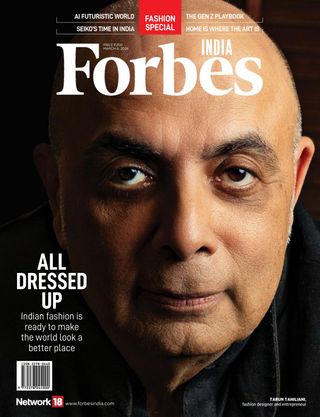

This story is from the March 06, 2026 edition of Forbes India.
Subscribe to Magzter GOLD to access thousands of curated premium stories, and 10,000+ magazines and newspapers.
Already a subscriber? Sign In
Listen
Translate
Change font size