Try GOLD - Free
Labour Reset
Forbes India
|December 12, 2025
India's biggest labour code overhaul promises simpler compliance and social security, but employers face shifts in costs, payroll structures and state-level uncertainties
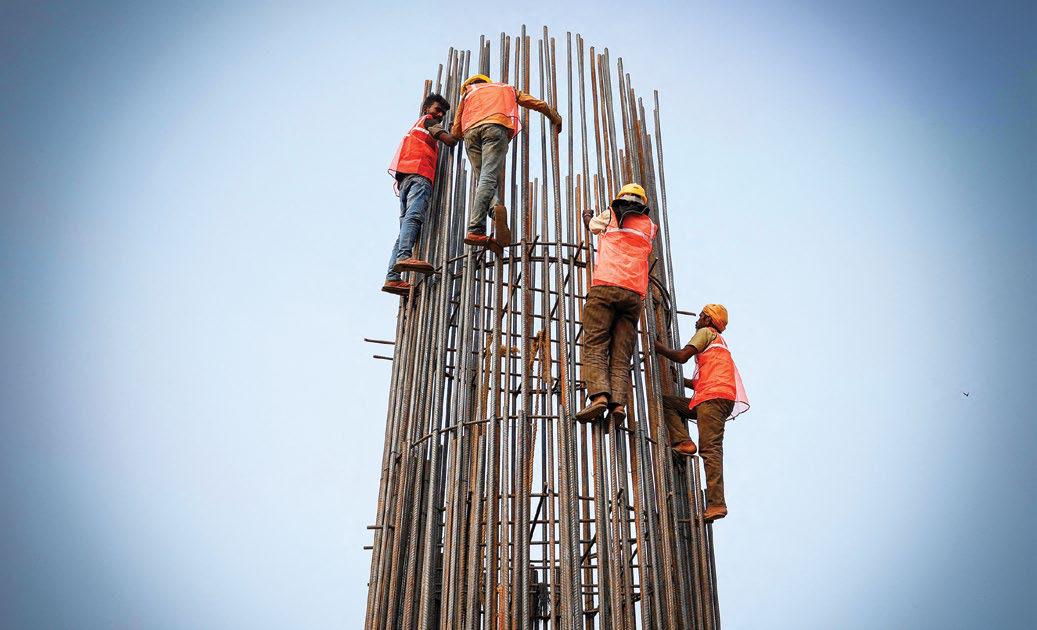
THE CONSOLIDATED LABOUR
reform project was rolled out on November 21 with the enforcement of the Code on Wages 2019, the Industrial Relations Code 2020, the Code on Social Security 2020, and the Occupational Safety, Health and Working Conditions (OSHWC) Code 2020. Together, they subsume 29 earlier laws. The Ministry of Labour and Employment describes the shift as a move to a “future-ready workforce” through measures such as single registration, a unified annual return and digital systems, including the Shram Suvidha portal.
THE CHANGES
The Code on Wages 2019 now mandates universal minimum wages and requires employers to follow strict timelines for salary payments. The Code on Social Security 2020 extends the Employees' Provident Fund (EPF), the Employees' State Insurance Corporation (ESIC) and other welfare benefits to gig and platform workers for the first time. Fixed-term employees are eligible for gratuity after one year of service. The OSHWC Code 2020 introduces annual health checkups for eligible workers, limits weekly working hours and places ceilings on overtime.
SHIFTING PAY STRUCTURES
For employers, the most immediate and disruptive change is the unified definition of wages. Basic pay, dearness allowance and retaining allowance must constitute at least half of an employee's total remuneration. This raises the base used to calculate statutory outflows such as EPF contributions, ESIC premiums, statutory bonus, gratuity and retrenchment compensation.


This story is from the December 12, 2025 edition of Forbes India.
Subscribe to Magzter GOLD to access thousands of curated premium stories, and 10,000+ magazines and newspapers.
Already a subscriber? Sign In
Listen
Translate
Change font size