
Go Unlimited with Magzter GOLD
Get unlimited access to 10,000+ magazines, newspapers and Premium stories for just
Try GOLD - Free
AI: Who Will Teach the Teachers?
Forbes India
|November 14, 2025
India will need a million AI-trained graduates by 2026. As colleges rush to meet this demand, students aren't the only ones being upskilled—new methods and tools are helping train their teachers too
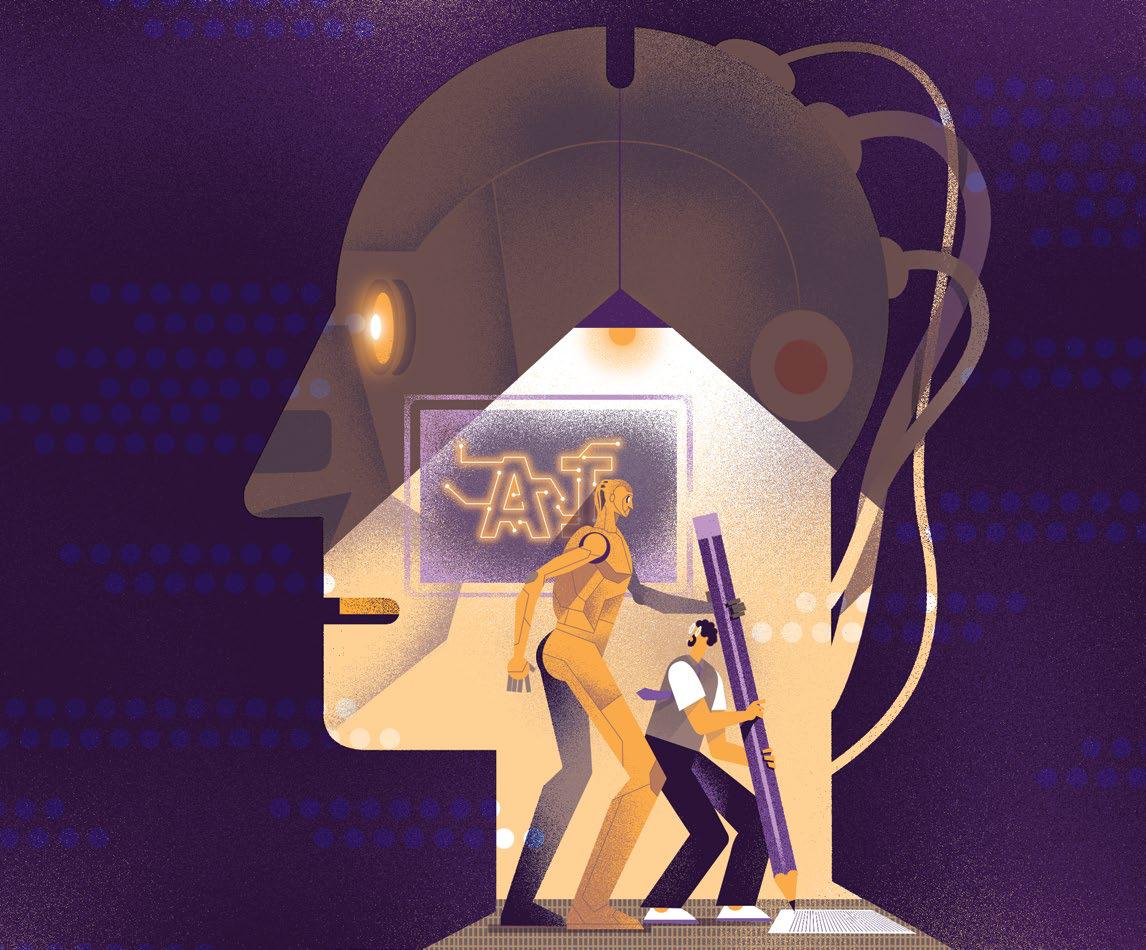
Picture this: You are a teacher, standing by a blackboard, looking over 40 students in a typical Indian school classroom.
You try your best, but did that boy in the corner, or that girl in the fourth row, understand what you said?
Enter Ms Curie: Your artificial intelligence (AI) assistant that immediately brings down the teacher-student ratio to 1:1.
Developed by the LEAD group, an edtech company that provides digital learning solutions to more than 8,500 schools across India, Ms Curie is one of many tools that the group is working on to help train teachers to be AI-forward—but more on that later.
An April report from the Asian Development Bank (ADB) and Google.org, titled 'AI for All: Building an AI-Ready Workforce in Asia-Pacific', highlights a significant skill gap among Indian youth: Only one in five Indian youth (aged 15 to 29) has participated in AI upskilling programmes. The report warns that AI and automation could displace many Indian workers, especially those in low-skilled, repetitive jobs, unless urgent action to upgrade skills is taken.
India is on the precipice of a massive surge in demand for AI professionals, and will need an estimated 1 million skilled individuals as early as 2026, according to a government report titled 'India's AI Revolution: A Roadmap to Viksit Bharat', released in June.
As the country aspires to become a $23-35 trillion economy by 2047, higher education, especially in engineering, will have to undergo a huge transformation, to meet evolving job market demands shaped by AI, automation and interdisciplinary innovation. A big part of that equation is to first upskill the faculty that teaches these graduates.
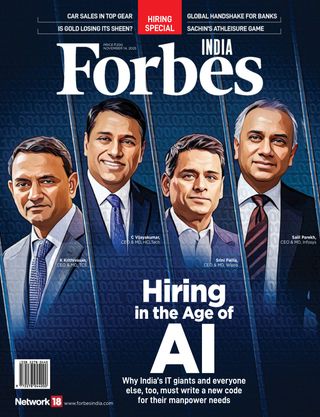

This story is from the November 14, 2025 edition of Forbes India.
Subscribe to Magzter GOLD to access thousands of curated premium stories, and 10,000+ magazines and newspapers.
Already a subscriber? Sign In
Listen
Translate
Change font size