Try GOLD - Free
Transkei traders: glimpses of a bygone era
Farmer's Weekly
|June 24, 2022
Being a trader in the verdant hills of the old Transkei had a romance, not to mention a fragrance, all of its own, recalls Graham Jooste.

The Transkei (‘Beyond the Kei River’) was the first of apartheid South Africa’s Bantustans. Declared a ‘homeland’ for the Xhosa people, with Umtata (now Mthatha) its capital, it was given nominal autonomy by Prime Minister Hendrik Verwoerd in 1963. In 1976 it was declared independent of South Africa, the only country that acknowledged it as a legal entity. It became part of the Eastern Cape in 1994.
Long before the Europeans arrived, the region was divided into kingdoms, each ruled by its own king around whose ‘Great Place’ his subjects settled.
The population density was low and the people were self-sufficient. There was no need for commerce or trade with the world, whether westward beyond the Kei River or eastward towards the Zulu kingdom. There were no towns or villages in the Western sense. Most importantly, there was only one culture, and strangers who settled in the region were integrated into that culture.
Contact with the colonists, in contrast, brought about slow but steady social change.
As early as 1660, Jan van Riebeeck, the Dutch governor of the Cape, sent a ship to the Kei area to investigate the potential for trade with the local inhabitants, but it was unable to send parties ashore for exploration purposes. In 1752, August Beutler, an ensign employed by the Dutch East India Company, headed an official expedition from Cape Town to assess the economic potential of the land across the Kei.
Some 40 years later, Joachim van Reenen led another official expedition, ostensibly in search of survivors from the ill-fated Grosvenor, which had sunk off the Lusikisiki coast.


This story is from the June 24, 2022 edition of Farmer's Weekly.
Subscribe to Magzter GOLD to access thousands of curated premium stories, and 10,000+ magazines and newspapers.
Already a subscriber? Sign In
MORE STORIES FROM Farmer's Weekly

Farmer's Weekly
Christmas books to charm and delight
During the holiday season, one usually takes a well-earned break from the daily rutt, and there is no better time to catch up on some reading. Patricia McCracken has selected a wide spectrum of titles to tuck into.

4 mins
December 19-26, 2025

Farmer's Weekly
From chance to choice: a women's rise to farming success
Many raisin producers assume that retiring without a son to take over the farm means the end of the family business. Alcois Blaauw, this year's winner of the Raisins SA Female Producer Award, proves that assumption to be wrong. Glenneis Kriel reports.
4 mins
December 19-26, 2025

Farmer's Weekly
Grandparents below, and kids upstairs!
Dear Jonno,My wife and I want to escape to the countryside.
1 min
December 19-26, 2025
Farmer's Weekly
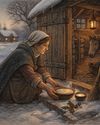
The Unseen Protector
The belief in the Unseen Protector or Unseen Shepherd endured for around 600 years, from the 13th century up until the 19th century. The farmer or his wife would provide a bowl of fresh cream and gruel to appease a spirit, whose blessing was imperative for a good summer harvest and animal health and fertility.
2 mins
December 19-26, 2025
Farmer's Weekly
THE HITCHING POST
I am a 67-year-old farmer residing on a farm near Harding in KwaZulu-Natal.
1 mins
December 19-26, 2025
Farmer's Weekly
Pet-friendly family accommodation in the Waterberg
With travel time of only a little over three hours from Johannesburg and 30 minutes from Vaalwater, guests will find Waterberg Cottages in Limpopo. Guests can plan a family-friendly holiday or weekend with plenty of activities to keep everyone occupied on this peaceful 2 500ha private game reserve.
4 mins
December 19-26, 2025
Farmer's Weekly
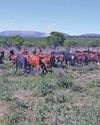
The Shuman legacy continues under the watchful eye of a fifth-generation farmer
Ken Shuman, co-owner of Hilson Shuman Farming, is committed to carrying on his father's towering legacy through innovation and adaptation.
9 mins
December 19-26, 2025
Farmer's Weekly
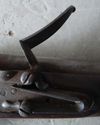
History's most famous musket
The Brown Bess musket was the standard issue firearm for British forces from 1722 to 1838. As Mike Burgess writes, this much-loved weapon contributed significantly to the consolidation of the British Empire that by 1922 was in control of a quarter of the earth's surface.
4 mins
December 19-26, 2025

Farmer's Weekly
Muddy soil can cause lameness due to footrot
It is important to clean legs and hooves and check for lameness in horses on a daily basis, especially when there is heavy rain
2 mins
December 19-26, 2025

Farmer's Weekly
The role of family farmers in sub- Saharan Africa
As part of the United Nations' recognition of family farming as a vital component of the global agricultural landscape, the decade between 2019 to 1928 was declared the Decade for Family Farming globally. Annelie Coleman compiled this report.
6 mins
December 19-26, 2025
Translate
Change font size