Try GOLD - Free
The growing power of aloe: South Africa's green gold
Farmer's Weekly
|December 5-12, 2025
South Africa is home to more than 500 species of aloe, of which Aloe ferox, commonly known as bitter aloe or Cape aloe, has long been prized for its medicinal and cosmetic properties. Unlike A. vera, which dominates global markets and is cultivated extensively in tropical and subtropical regions, A. ferox is indigenous to South Africa and grows naturally across the semiarid regions of the Western and Eastern Cape.
Although its production remains relatively small compared to the global aloe market, A. ferox continues to attract attention for its sustainability, drought tolerance, and potential contribution to rural development and job creation.
Speaking to Farmer's Weekly, Andries Cronjé, managing director of Organic Aloe, says the industry stands at a critical juncture, one that requires collaboration, innovation, and value unlocking throughout the entire value chain.
"Aloe production can be divided into two components, namely Aloe vera, which is not indigenous to South Africa, and A. ferox, which is indigenous," he adds.
While A. vera is cultivated under irrigation in various parts of the world, A. ferox thrives in South Africa’s drier climates, particularly around Albertinia, and Mossel Bay along the Garden Route. These regions are known for their semiarid conditions, an environment where A. ferox not only survives but flourishes naturally.
The plant’s hardy nature allows it to withstand long dry spells, making it an ideal candidate for climate-resilient agriculture.
THE ANATOMY OF A RESILIENT PLANT
The A. ferox plant's thick, spiny leaves contain two valuable products: a bitter, yellow sap known as aloin, and a clear inner gel. The aloe is traditionally used as a natural laxative, while the gel is valued for its soothing, moisturising, and healing properties.
Farmers and harvesters, known locally as ‘tappers’, extract the sap by slicing the leaves, packing this into stawels, allowing the yellow bitter sap to drip to be collected when the process has stopped. On-farm processing often involves boiling the sap to produce a dark, crystalline resin used in a range of pharmaceutical, cosmetic, and nutraceutical applications.

This story is from the December 5-12, 2025 edition of Farmer's Weekly.
Subscribe to Magzter GOLD to access thousands of curated premium stories, and 10,000+ magazines and newspapers.
Already a subscriber? Sign In
MORE STORIES FROM Farmer's Weekly

Farmer's Weekly
Pastry delights and cupcakes
The versatility of pastry in baking and cooking is best flaunted by two vastly different recipes appealing to the sweet and savoury tooth, while a novel way to bake those Christmas-themed cupcakes will also go down well.

4 mins
December 5-12, 2025

Farmer's Weekly
Specialised spider-hunting wasps
Wasps are apex predators of the insect world and have developed many survival strategies. One group of wasps focuses on hunting spiders to provide a source of food for their larval offspring
2 mins
December 5-12, 2025
Farmer's Weekly
From bulls to boardrooms: farming part-time as a professional
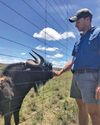
Maintaining a farm requires time, resources, and commitment. Farming part-time while being fully employed elsewhere can seem daunting and risky. Although it certainly presents unique challenges, it is feasible for some. Koot Klopper and Herman van Heerden spoke to Henning Naudé about how excellent time management and the delegation of resources, as part-time farmers, successfully keep their farms productive.
5 mins
December 5-12, 2025

Farmer's Weekly
Holy Shiitake: mastering the science of gourmet fungi
Mushroom production is inherently the practice of expanding mycelium. But since wanted and unwanted fungi flourish under the same circumstances, a mushroom farmer's biggest challenge is ensuring the right fungi prevails. Lindi Botha reports on Rory Brooks' learning curve.
9 mins
December 5-12, 2025
Farmer's Weekly
No more 'secret' price hikes?
'Secret' electricity price hikes in South Africa have been curbed in a game-changing court ruling, explains Felix Dube, lecturer in the Department of Law at the University of Venda.
4 mins
December 5-12, 2025
Farmer's Weekly
The cutworm scourge, and how to control it
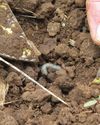
The dominant cutworm, Agrotis segetum, is causing renewed, costly damage to South African maize, soya bean, and sunflower.
5 mins
December 5-12, 2025
Farmer's Weekly
Legislative gap requires a rethink on biosecurity controls
Since the dawn of democracy, the agriculture sector has cemented its place as one of the essential and trusted pillars for economic growth, job creation, and foreign earnings in South Africa.
2 mins
December 5-12, 2025

Farmer's Weekly
From kitchen experiments to a thriving meat empire
What started as an after-hours kitchen project in the Truter household has grown into the fully fledged meat empire Deli-Co. Brothers Pieter and Hendri Truter told Glenneis Kriel how they turned a local favourite into a multigenerational family business.
7 mins
December 5-12, 2025
Farmer's Weekly
Brushing up on your 'cow speak'
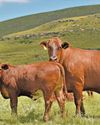
Experienced stockman and cattle judge Willie de Jager spoke to Sabrina Dean about some of the basics of reading cattle behaviour and how best to handle these animals.
8 mins
December 5-12, 2025

Farmer's Weekly
Corporate day job fuels farming dream
Marius Smit lives in the middle of Gauteng in Centurion and spends his workdays in the fast-paced high-stress corporate sector as a group forensic head for Discovery.
5 mins
December 5-12, 2025
Listen
Translate
Change font size