
Go Unlimited with Magzter GOLD
Get unlimited access to 10,000+ magazines, newspapers and Premium stories for just
Pollination's bitter truth
Farmer's Weekly
|July 01, 2022
With bees pollinating approximately one-third of the world's crops, commercial pollination services are a crucial and sought-after resource for many farmers. However, unscrupulous industry players are doing more harm than good, exacerbating the problem of dwindling bee populations.

FAST FACTS
Wild bee populations are dwindling.
Unscrupulous beekeepers are catching bees and moving them from farm to farm to use them for their pollination services.
Bees are being overworked, resulting in their starvation and making them abscond their hives.
Farmer Giovanna Secco stands in silence among the sweet-smelling macadamia and papaya blossoms on her farm in Lows Creek, Mpumalanga. "Where are the bees?" she asks. It should be one of the busiest times of year for pollinators on the farm, but despite the fact that Secco has hired around 300 hives, at R90 000/month, the bees and their comforting buzzing are absent.
Secco has reason to be concerned. Studies show that without bees, nut set of macadamia trees would reach only 30%. The industry is therefore desperate for bees, and it's not the only one. The Mpumalanga Lowveld is also a hotspot for avocado, citrus and papaya production, and it is estimated that twice as many bees will be needed here within a decade to pollinate the growing orchards, all of which flower at the same time.
A recent, chilling study by Dr Hannelie Human of the University of Pretoria's Department of Entomology and Zoology shows that 70% of South Africa's migratory bees have been lost.
The number of beekeepers is also dwindling, and this is exacerbating the crisis. Beekeeper Michel Lenferna says there are more beekeepers exiting the industry than entering it.
"Vandalism, low honey prices, and a decline in honey production in colonies are making it harder for beekeeping to be sustainable. This will push the supply of, and demand for, pollination services to an unfavourable level for farmers, and there's a real risk that there won't be any bees in the future," he says.


This story is from the July 01, 2022 edition of Farmer's Weekly.
Subscribe to Magzter GOLD to access thousands of curated premium stories, and 10,000+ magazines and newspapers.
Already a subscriber? Sign In
MORE STORIES FROM Farmer's Weekly

Farmer's Weekly
Christmas books to charm and delight
During the holiday season, one usually takes a well-earned break from the daily rutt, and there is no better time to catch up on some reading. Patricia McCracken has selected a wide spectrum of titles to tuck into.

4 mins
December 19-26, 2025

Farmer's Weekly
From chance to choice: a women's rise to farming success
Many raisin producers assume that retiring without a son to take over the farm means the end of the family business. Alcois Blaauw, this year's winner of the Raisins SA Female Producer Award, proves that assumption to be wrong. Glenneis Kriel reports.
4 mins
December 19-26, 2025

Farmer's Weekly
Grandparents below, and kids upstairs!
Dear Jonno,My wife and I want to escape to the countryside.
1 min
December 19-26, 2025
Farmer's Weekly
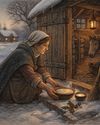
The Unseen Protector
The belief in the Unseen Protector or Unseen Shepherd endured for around 600 years, from the 13th century up until the 19th century. The farmer or his wife would provide a bowl of fresh cream and gruel to appease a spirit, whose blessing was imperative for a good summer harvest and animal health and fertility.
2 mins
December 19-26, 2025
Farmer's Weekly
THE HITCHING POST
I am a 67-year-old farmer residing on a farm near Harding in KwaZulu-Natal.
1 mins
December 19-26, 2025
Farmer's Weekly
Pet-friendly family accommodation in the Waterberg
With travel time of only a little over three hours from Johannesburg and 30 minutes from Vaalwater, guests will find Waterberg Cottages in Limpopo. Guests can plan a family-friendly holiday or weekend with plenty of activities to keep everyone occupied on this peaceful 2 500ha private game reserve.
4 mins
December 19-26, 2025
Farmer's Weekly
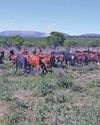
The Shuman legacy continues under the watchful eye of a fifth-generation farmer
Ken Shuman, co-owner of Hilson Shuman Farming, is committed to carrying on his father's towering legacy through innovation and adaptation.
9 mins
December 19-26, 2025

Farmer's Weekly
History's most famous musket
The Brown Bess musket was the standard issue firearm for British forces from 1722 to 1838. As Mike Burgess writes, this much-loved weapon contributed significantly to the consolidation of the British Empire that by 1922 was in control of a quarter of the earth's surface.
4 mins
December 19-26, 2025

Farmer's Weekly
Muddy soil can cause lameness due to footrot
It is important to clean legs and hooves and check for lameness in horses on a daily basis, especially when there is heavy rain
2 mins
December 19-26, 2025

Farmer's Weekly
The role of family farmers in sub- Saharan Africa
As part of the United Nations' recognition of family farming as a vital component of the global agricultural landscape, the decade between 2019 to 1928 was declared the Decade for Family Farming globally. Annelie Coleman compiled this report.
6 mins
December 19-26, 2025
Translate
Change font size