Try GOLD - Free
Desert cattle operation reaps rewards of regenerative agriculture
Farmer's Weekly
|August 01-08, 2025
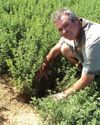
Kalahari farmer Willie Storm has used regenerative agriculture practices to improve his cattle stocking capacity from the area norm of around 21ha per large stock unit (LSU) to 5ha/LSU. He spoke to Sabrina Dean.
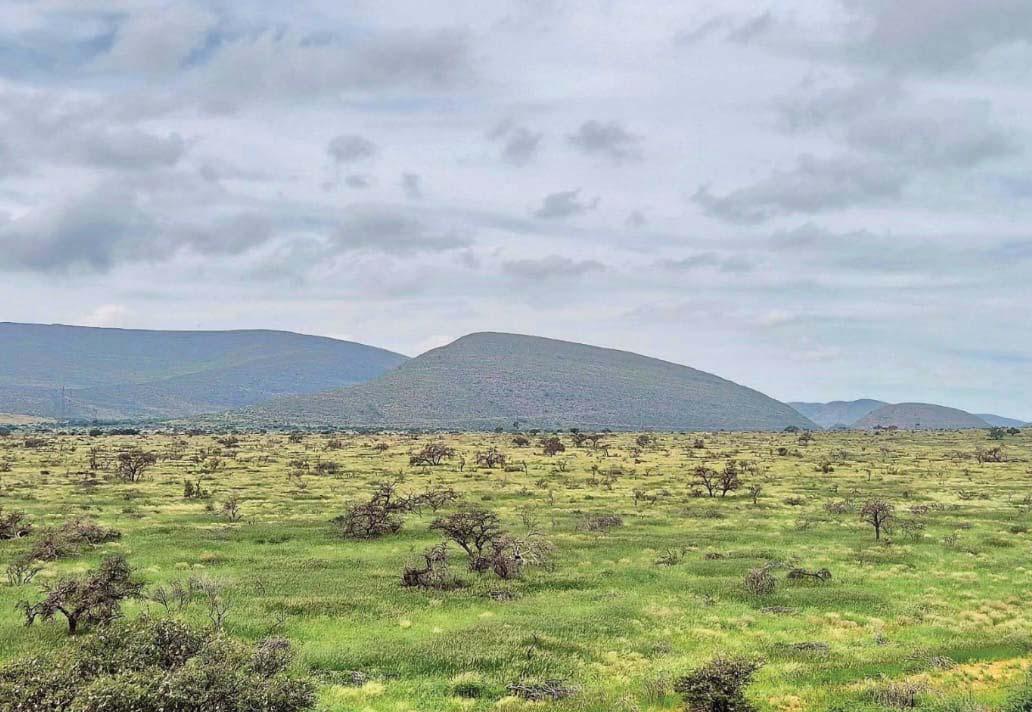
The farm Elliesrust is located near Olifantshoek in the Kalahari and was purchased by Willie Storm from his father in 2003. Storm's son Michiel joined him in 2019 and will be the fourth generation to work the family farm.
It is a dry, arid region, with average rainfall measurement of about 250mm. The Langeberg mountain range runs through it, creating terrain that is a 50/50 mix of plains and mountainous areas.
"We live in a semi-desert area. Rainfall is low and there are times when we get no rain at all. The Kalahari is a world of extremes," says Storm.
In light of this, he has been implementing a regenerative agriculture approach at his farm for nearly two decades. In this time, he has grown his initial cow herd from 175 head to about 475 head. He was this year also named the fourth Veeplaas Climate-Smart Ambassador after having previously been a runner-up.
It has not been an easy journey, and has required significant financial investment and mental shifts across a variety of farming and management practices.
This has included his approach to veld management and bush clearing, stocking rates and grazing systems, and also suitability of the animals he is farming with.
DROUGHT RESISTANCE
When Storm began farming there in 1995, he leased 4 000ha of land from his father. Storm says his father and grandfather left a legacy of good infrastructure, including fences, handling facilities, watering points and large earth dams constructed as far back as the 1930s to capture rainfall runoff.
Unfortunately, the legacy did not extend to the grass, the soil and the biodiversity of the land. "What I do is to measure the grazing on the land and that is something they never did," he says.

This story is from the August 01-08, 2025 edition of Farmer's Weekly.
Subscribe to Magzter GOLD to access thousands of curated premium stories, and 10,000+ magazines and newspapers.
Already a subscriber? Sign In
MORE STORIES FROM Farmer's Weekly

Farmer's Weekly
More about growing vegetable seedlings in trays
By considering various factors and tailoring care to specific vegetable needs, you can produce healthy, robust seedlings ready for transplanting into the garden, writes Shane Brody.

2 mins
March 27 - April 3, 2026

Farmer's Weekly
Prodigy of agriculture and land is now a presidential envoy
Wandile Sihlobo will be armed by state powers to accelerate any decision-making that the Presidency deems crucial to grow the sectors of agriculture and land
2 mins
March 27 - April 3, 2026

Farmer's Weekly
Notes from the Western Cape agricultural roadshow
We spent time last week engaging with agribusinesses and farmers in the Western Cape. The primary agricultural focus of the province is various fruits, citrus, table grapes, wine, wheat, barley, livestock, and aquaculture, among many value chains.
3 mins
March 27 - April 3, 2026

Farmer's Weekly
AGOA's promise fades under new US tariffs
Although the African Growth and Opportunity Act has been extended for another year, new US reciprocal tariffs have largely erased its duty-free benefits. Recent modelling shows sharp declines in African exports to the US, particularly in apparel-dependent economies such as Lesotho and Madagascar.
4 mins
March 27 - April 3, 2026

Farmer's Weekly
Egon Zunckel: a lifetime of learning from the soil
The Zunckel name is synonymous with no-till farming in South Africa. Egon Zunckel, a pioneer in the field and a passionate advocate for soil health, shared with Lindi Botha the lessons he has learnt over the years about building resilient soils and sustainable farming systems.
10 mins
March 27 - April 3, 2026
Farmer's Weekly
Researchers explore new tools to combat herbicide resistance
Research by students from Stellenbosch University aimed at combatting herbicide resistance was highlighted during a recent technical trial information day hosted by the Western Cape Department of Agriculture.
6 mins
March 27 - April 3, 2026

Farmer's Weekly
Lepas leaps into South Africa as the latest Chery-owned brand
Lepas has become Chinese carmaker Chery's latest local subbrand with the introduction of the L4 compact SUV. The Citizen's Charl Bosch reports.
2 mins
March 27 - April 3, 2026
Farmer's Weekly
La Rhone Limousins: a small mixed herd turned renowned stud
The Western Cape is not typically known for cattle farming, particularly in its fruit-growing regions. Yet nestled among the orchards below the mountains of Tulbagh is a Limousin stud that has made a name for itself. AJ du Toit of La Rhone Limousins spoke to Henning Naudé about producing high-quality genetics now found on farms in all nine provinces.
6 mins
March 27 - April 3, 2026
Farmer's Weekly
Nitrogen: no easy fix
Products that claim to herald a nitrogen revolution that will boost global food production are nothing more than snake oil, say scientists.
4 mins
March 27 - April 3, 2026

Farmer's Weekly
Potato soup
Rich, creamy, and indulgent, this soup is the ultimate in comfort food.
1 mins
March 27 - April 3, 2026
Listen
Translate
Change font size